Africa’s Best Photography Safari Countries: A Photographer’s Ranked Guide
Wildlife photography in Africa is shaped by factors that ordinary safari travelers may not prioritise but that photographers regard as the difference between ordinary and extraordinary images: light quality, vehicle positioning control, subject habituation, scene composition options, and the variety of photographic subjects available within a single itinerary. Different countries perform very differently on each of these criteria, and the best Africa photography safari destination is not necessarily the one with the most wildlife — it is the one that combines the subjects, the access conditions, and the landscape context most effectively for the images a specific photographer is trying to create.
Photography Ranking: The Key Criteria
Evaluating Africa photography safari destinations on the criteria that most influence photographic outcomes produces a ranking that differs significantly from standard wildlife tourism rankings.
Light Quality and Timing
Golden hour light — the warm, low-angle illumination of early morning and late afternoon — produces the most atmospheric and technically flattering conditions for wildlife photography, and the ability to be in the right location at the right time is essential for maximising its use. East Africa’s clear, thin air at altitude produces light of exceptional quality compared to the hazier atmosphere of lowland tropical countries — Serengeti sunrises are famous among wildlife photographers for the colour temperature and clarity that the Tanzanian plateau’s elevation provides. Operators who allow extended stays at specific sightings during golden hour rather than rushing between locations serve photographers’ needs fundamentally differently from guides focused on maximising the number of species seen per drive, and choosing an operator with a photography-sympathetic approach is as important as choosing the right country.
Private vehicle hire — which removes the obligation to share decision-making about timing and positioning with non-photographer co-travelers — is the single most effective upgrade available to photography safari clients in any East Africa country. Private vehicles allow the guide to position for optimal light angle and background composition at every sighting, to remain at a specific scene for as long as the subject’s behaviour is interesting rather than moving on when other vehicle occupants have finished, and to access off-road positions in parks where this is permitted. The incremental cost of a private vehicle over a shared safari vehicle pays back in photographic productivity for any serious photographer in ways that no other safari upgrade matches.
Country Rankings for Photography
Each of East Africa’s main safari countries has specific photographic strengths and weaknesses that make different types of photography more or less achievable within their specific park conditions.
Kenya: Best for Open Savannah and Big Cat Photography
Kenya ranks as East Africa’s best country for open savannah wildlife photography, driven by the Masai Mara’s combination of photogenic subjects, open terrain, and guiding excellence. The Mara’s resident lion prides — particularly the Marsh Pride and the various other named families whose territories are known to experienced guides — provide sustained access to behavioural sequences that reward extended observation and allow photographers to work scenes over multiple drives rather than relying on single fleeting encounters. Cheetah photography in the Mara is possibly the finest in the world because the open terrain allows complete visibility of the hunting sequence from sprint through kill, in lighting conditions and at distances that allow sharp action photography throughout.
Amboseli’s elephant and Kilimanjaro composition is the most iconic safari photography subject in Africa and is immediately distinctive in any wildlife photography portfolio. The visual drama of large-tusked elephant bulls against a snow-capped Kilimanjaro background in early morning golden light is the image that many photographers visiting Africa are most specifically seeking, and Amboseli in clear morning conditions is the only place it is achievable. The reliability of clear Kilimanjaro views is highest in January and February and in October, which suggests timing Amboseli photography visits around these months where possible rather than accepting the cloudier conditions of the rains and migration peak.
Tanzania: Best for Migration Drama and Landscape
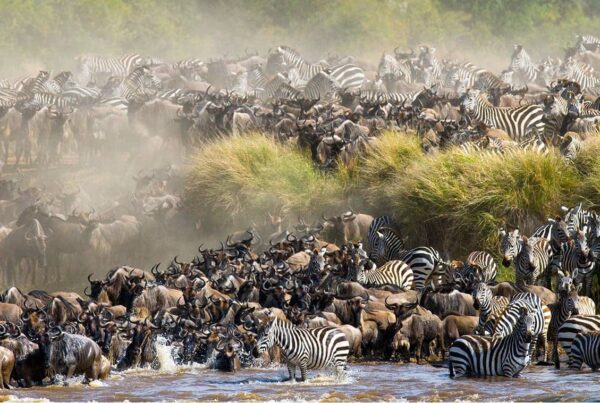
Tanzania ranks second for overall photography safari value, with the Serengeti’s migration sequences between January and March (calving season) and July through October (river crossings in the north) producing wildlife photography subjects of global significance. The January calving season in the southern Serengeti provides sustained access to predator and prey interactions across an open short-grass landscape that offers clean, unobstructed compositions — a cheetah sprinting across flat open ground in morning light creates opportunities for the full hunting sequence photography that journalists and documentary filmmakers prioritise above almost any other African photographic subject. The Mara River crossing sequences in the northern Serengeti from July to October produce dramatic, chaotic water action photography that demands patience and positioning skill to capture well, and the reward for both is world-class photographic results.
The Serengeti’s landscape photography potential — baobab trees silhouetted against orange sunset skies, kopje rock formations rising from flat plains, the endless horizon of the short grass plains at first light — provides compositional elements that East African landscape photography beyond the wildlife subject requires. Tanzania’s landscape variety between the Serengeti, Ngorongoro Crater, and the volcanic Crater Highlands creates a range of scenic backdrops that Kenya’s more uniform savannah landscape cannot match. Photographers who want both exceptional wildlife and landscape portfolio results find Tanzania’s geographical variety more stimulating than Kenya’s more consistent savannah character.
Uganda: Best for Primate and Forest Photography
Uganda ranks as East Africa’s premier destination for primate and forest wildlife photography. Mountain gorilla photography in Bwindi’s dense equatorial forest creates specific technical challenges — low light levels, subjects that move through obstructing vegetation, one-hour time limits — that reward photographers who have adapted their technique for forest conditions: higher ISO capacity cameras, fast lenses appropriate for low-light environments, and the patience to wait for the brief clear views that the vegetation occasionally provides between longer obscured periods. The gorilla portraits achievable at Bwindi — adult faces in dappled light, infants clinging to mothers, the silverback turning to regard the camera with an expression that is recognisably self-aware — are among the most powerful wildlife portrait images available in the world, and the technical challenge of achieving them in difficult conditions makes the successful result more rewarding.
Chimpanzee photography in Kibale Forest creates its own distinct technical demands: fast-moving subjects in canopy light that changes constantly as the chimps swing between branches, with moments of high expression and social interaction that reward long consecutive hours of shooting rather than the brief focused encounters that gorilla trekking permits allow. The habituation experience permit at Kibale — which allows up to four hours with the chimpanzees — is the most generous time allocation for primate photography available in East Africa and produces the highest volume of quality photographic opportunities per day that any Uganda wildlife experience offers.
Plan Your Safari
Photography safari itineraries require specific vehicle arrangements, guide briefings on photography needs, and timing adjustments that standard safari packages do not automatically accommodate. African Wild Trekkers designs photography safari packages across Kenya, Tanzania, Uganda, and Rwanda that specifically account for photographic priorities: private vehicle hire, photography-sympathetic guides who understand golden hour positioning, and accommodation in locations that provide early morning and late afternoon access to key wildlife areas without long transit drives that consume the best light.
Photography safari add-ons including private vehicle upgrades, extended stay permits where available, and specialist photography guide pairing are available for any East Africa itinerary. Contact us with the specific photographic subjects and landscape qualities you are targeting and we will design the safari that puts you in the right place at the right time.
Contact African Wild Trekkers at africanwildtrekkers.com/contact with your photography priorities and travel dates and we will design the best East Africa photography safari within 24 hours.