Yellow Fever Vaccination: Which African Countries Require the Certificate?
Yellow fever vaccination is one of the few health requirements for Africa travel that can genuinely stop you at the border. Not as a medical outcome, but as a bureaucratic one. Many African countries require proof of yellow fever vaccination as a condition of entry.
Travelers arriving without the International Certificate of Vaccination (the “yellow card”) at countries with mandatory requirements may face denial of entry. In some cases, vaccination at the border may be offered in conditions that fall short of clinical standards. Understanding which countries require the certificate, which require it only under specific circumstances.
And how to navigate the process of obtaining a valid certificate is straightforward once the requirements are explained clearly. It can be confusing if the information is pieced together from multiple outdated or contradictory sources.
Yellow fever is a potentially fatal viral haemorrhagic fever that Aedes mosquitoes transmit in the “yellow fever belt” of sub-Saharan Africa and tropical South America. The vaccine is highly effective a single dose provides lifelong immunity in the vast majority of recipients.
Mandatory vaccination requirements at the borders of yellow fever-endemic countries serve both to protect the vaccinated traveler and to prevent the importation of the virus into countries where the mosquito vector is present but the disease is not currently circulating.
The 2016 revision of the International Health Regulations updated the certificate’s validity from ten years to lifetime. This eliminated the previous requirement to revaccinate every decade. Individual countries’ entry policies do not always reflect current WHO recommendations, however, and some maintain their own, more restrictive requirements.
Countries Requiring Yellow Fever Certificate
East Africa and Central Africa Requirements
Uganda, Rwanda, and Their Neighbors
Uganda requires a yellow fever vaccination certificate for all travelers aged one year and above, with no exceptions for travelers arriving from non-endemic countries. The requirement is strictly enforced at Entebbe International Airport and at land border crossings.
Travelers who arrive without a valid certificate face the real possibility of vaccination at the airport health post. Using vaccines and conditions that may not meet the traveler’s standards. Alternatively, they may face denial of entry. The certificate must show the batch number, date of administration, and the stamp of a certified vaccination center.
Rwanda has similar requirements for travelers arriving from yellow fever-endemic countries. The practical advice for travelers combining Rwanda and Uganda is to obtain the vaccination before both destinations rather than attempting to identify which specific entry point requires it.
Kenya requires yellow fever certificates from travelers arriving from countries where yellow fever transmission risk exists. This list includes most of sub-Saharan Africa and tropical South America. The specific countries for which the certificate is required changes periodically as the WHO updates its list of countries with yellow fever risk.
Travelers routing through any West or Central African country before arriving in Kenya should confirm the current requirements at the time of travel. Tanzania, like Kenya, requires the certificate for travelers arriving from endemic countries rather than universally.
The requirement applies to all travelers transiting through airports in yellow fever-endemic countries even if they did not leave the transit area. This requirement catches some travelers who transit through West African hubs between their origin country and Tanzania.
Southern Africa Requirements
Botswana, Zambia, and Zimbabwe all require yellow fever certificates from travelers arriving from endemic countries. South Africa requires the certificate for travelers aged one year and above who have visited or transited through a yellow fever-endemic country in the 12 days before arrival. This time window reflects the disease’s incubation period.
Namibia requires the certificate for travelers coming from endemic countries. The Southern Africa requirements are less universally applicable than Uganda’s blanket requirement.
They can still catch travelers on multi-country Africa itineraries who transit through an endemic country even for a brief period. A traveler routing through Addis Ababa, Nairobi, Kampala, or any West African hub en route to Southern Africa may face certificate requirements that would not apply if traveling directly from a non-endemic origin country.
Mozambique requires the certificate from travelers arriving from endemic countries including Kenya, Tanzania, and Uganda. All three are popular preceding destinations for travelers continuing to Mozambique for post-safari beach stays. This requirement is not always communicated by accommodation providers or travel agents. Travelers completing an East Africa safari circuit before a Mozambique beach stay are among those most likely to encounter the requirement without being aware of it. The practical advice for all multi-country African itineraries is to obtain yellow fever vaccination regardless of whether the specific combination of origin and destination countries technically requires it. The certificate’s value in preventing border complications far exceeds the minor inconvenience of obtaining a vaccine you might not strictly need.
Obtaining the Yellow Fever Vaccine
Clinics, Certificates, and Timing
Where to Get the Vaccination
Yellow fever vaccination must be administered by a certified vaccination center. Not every general practitioner or pharmacy is authorized to administer the vaccine and issue the internationally recognized certificate. In the UK, yellow fever vaccination is available at travel clinics and some pharmacies that hold Yellow Fever Vaccination Centre status.
The NHS provides a directory of approved centers. In the US, the CDC provides a list of authorized yellow fever vaccination clinics. The vaccine is not available at general practitioner offices but is available at many travel health clinics, county health departments, and some university student health centers. Australian travelers can access the vaccine at travel medicine clinics and some GPs who have registered with the Therapeutic Goods Administration as authorized administrators.
The vaccine requires at least ten days to provide protection before the certificate becomes valid. This requirement is written into the International Health Regulations and reflected in the certificate’s format. The certificate shows both the date of vaccination and the date from which the certificate is valid ten days after administration.
Travelers who obtain the vaccination fewer than ten days before departure are traveling to an endemic country before the certificate is technically valid. This can cause complications at border health control even if the vaccine itself has already begun providing protection. The ten-day requirement is another reason to begin the vaccination process at least six to eight weeks before departure rather than in the final days before travel.
Medical Exemptions and Contraindications
Yellow fever vaccine is a live attenuated vaccine and is contraindicated for several categories of travelers. These include infants under six months, immunocompromised individuals (including those on immunosuppressive medications, with HIV/AIDS and a low CD4 count, or with active cancer), those with severe egg allergies (the vaccine is produced in eggs), those with thymus disease.
And those aged 60 and over in some guidelines due to higher rates of serious adverse reactions in older travelers. Pregnant people should ideally delay travel to endemic areas until after delivery. If travel is unavoidable, the risk-benefit assessment is complex and requires specialist consultation.
Travelers who cannot receive vaccination for medical reasons can obtain a medical exemption letter from a physician or travel clinic. This may be accepted at some borders as an alternative to the certificate. Though acceptance is at the discretion of border health authorities and is not guaranteed.
Serious adverse reactions to yellow fever vaccine. Vaccine-associated neurotropic disease and vaccine-associated viscerotropic disease. Are rare but can be severe and potentially fatal. The risk of these reactions is higher in first-time vaccinees, in those over 60, and in those with thymus disease.
This represents a genuine medical consideration that must be weighed against the risk of yellow fever infection in the specific travel context. For healthy travelers under 60 without contraindications, the benefit-risk calculation strongly favors vaccination.
Particularly for travel to areas of high yellow fever risk like Uganda and parts of West Africa. The clinician administering the vaccine should review the traveler’s complete medical history and current medications before administering. They should also observe the traveler for at least 30 minutes post-injection to monitor for immediate reactions.
Practical Tips for the Yellow Card
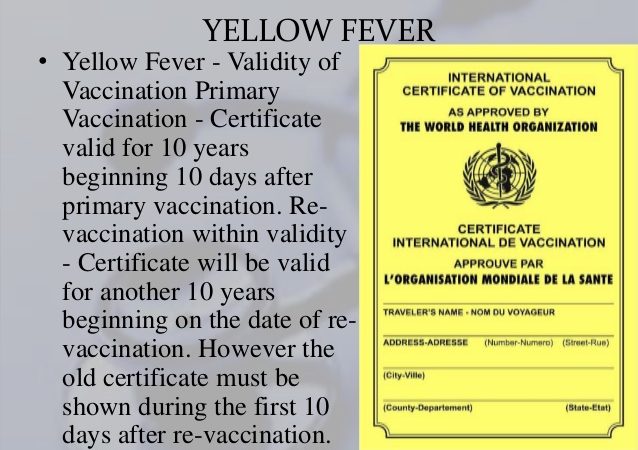
The International Certificate of Vaccination is a specific document. A yellow cardboard booklet in the original WHO format. That must be completed correctly to be accepted at border health control. The certificate must include: your full name as it appears on your passport, your date of birth, the name and address of the vaccination center, the type of vaccine administered, the date of administration, the batch number of the vaccine.
And the signature and official stamp of the administering clinician. Missing any of these elements. Particularly the batch number or the stamp. Can result in the certificate being rejected at a border health post. You may be required to be revaccinated or denied entry. Before leaving the clinic, verify that all required fields are completed and legible.
Carrying the yellow card with your passport at all times during Africa travel is strongly advised. Some border health checks occur at airport arrival gates rather than at formal border control desks. Having the card immediately accessible prevents delays and complications.
Photographing the certificate and storing the image in a secure cloud storage location provides a backup if the physical card is lost. Most border authorities require the original physical certificate rather than a photograph, however. Some countries are introducing digital vaccination certificate systems that may eventually replace the paper yellow card. As of 2026, the physical International Certificate of Vaccination remains the universally required format at African border health control points.
Plan Your Safari
Yellow fever vaccination and certificate verification should be among the first items addressed in your Africa safari preparation timeline. At least six to eight weeks before departure. This allows time for the ten-day certificate validity period and to address any medical questions before travel. African Wild Trekkers provides country-by-country vaccination requirement information as part of our pre-departure briefing. We ensure no client arrives at an African border without the required documentation.
We flag yellow fever and other vaccination requirements for every country on your itinerary at the booking stage. This gives you the information you need to begin health preparation well ahead of departure without needing to research each destination independently.
Contact African Wild Trekkers at africanwildtrekkers.com/contact with your destination countries and travel dates and we will include complete vaccination requirement information alongside your itinerary design within 24 hours.