Tanzania Safari in January: Calving Herds and Why It Is an Underrated Month
January in Tanzania: The Month Most Travellers Overlook
January is one of Tanzania’s most underrated safari months and, for specific wildlife priorities, one of the best months to visit the country. The conventional safari calendar points travelers toward the dry season from June through October for peak wildlife conditions, and this guidance is accurate for the general northern circuit experience. But January offers something genuinely exceptional that the dry season cannot: the wildebeest calving season, when approximately 400,000 wildebeest calves are born within a few weeks on the Serengeti’s southern short-grass plains. This draws predators in the highest concentrations of the year and produces wildlife interactions of extraordinary frequency and intensity. Travelers who understand what January actually delivers consistently rank the January Serengeti experience among the finest wildlife encounters of their lives.
January also offers practical advantages beyond the calving spectacle. Accommodation prices across most northern circuit lodges and camps are 15 to 30 percent lower than July and August peak rates. Camp availability is significantly better with much less competition for the most desirable locations. The fresh green landscape of the short-rains period creates a visual environment profoundly different from the golden dry-season savannah that most safari photography documents. Understanding what January’s trade-offs actually are — rather than assuming that “green season” means poor game viewing — is the most useful preparation for deciding whether this underrated month belongs in your Tanzania travel planning.
The Calving Season: January’s Defining Wildlife Event
Why 400,000 Calves Mean More Than It Sounds
The Mechanics and Timing of Wildebeest Calving
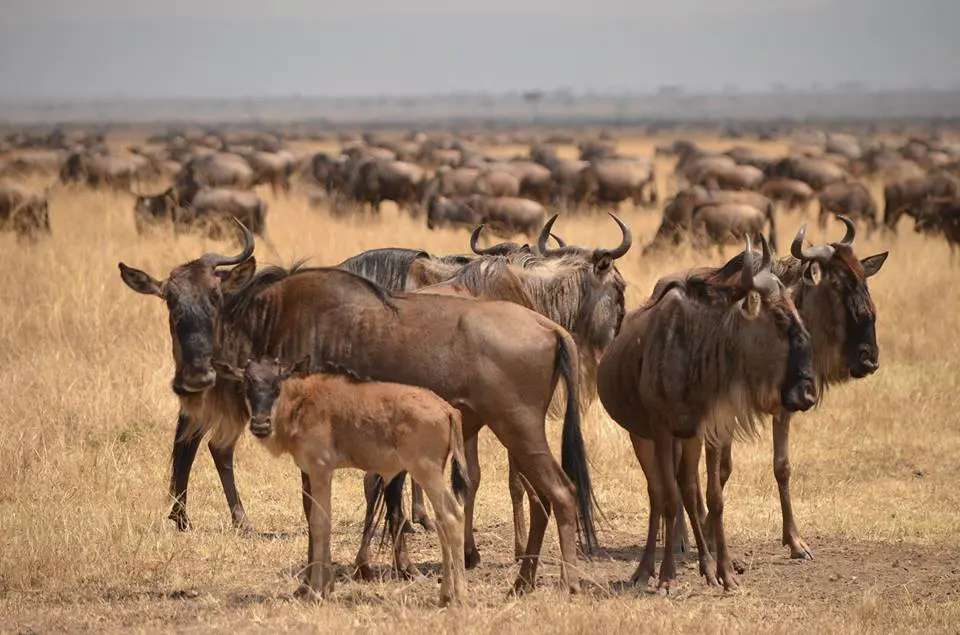
The southern Serengeti’s short-grass plains around Ndutu — a small seasonal lake and camp area on the border of the Ngorongoro Conservation Area and the Serengeti — host the wildebeest calving season from approximately late December through late February. The timing is determined by rainfall patterns and grass phenology: the short rains that fall from October through December produce the nutritious short grass growth that drives the pregnant wildebeest herds southward to the plains where they give birth. Wildebeest synchronize their calving to an extraordinary degree—the majority of calves across the entire 1.5-million-strong herd arrive within a 3 to 4 week window. This biological strategy overwhelms predator consumption capacity and improves individual calf survival rates.
The practical effect for safari visitors is an almost surreal density of newborn calves across the Ndutu plains in January and early February—calves hours to days old attempting their first unsteady walks, calves suckling from their mothers in the long grass, calves separated from their mothers and calling with increasing desperation as predators close in. The predator response to this concentrated prey is equally dramatic: cheetahs, lions, wild dogs, and hyenas are all active on the plains in numbers typically observed only at peak migration season. Predation rates during calving season produce more witnessed kills per hour of game drive time than any other period in the Tanzania safari year.
Ndutu: The Calving Season Epicentre
The Ndutu area at the southern tip of the Serengeti ecosystem is the epicenter of the January calving experience and the base for the most productive calving season game drives. Several small camps operate around Lake Ndutu—Ndutu Safari Lodge, Migration Camp, and several smaller seasonal tented options—all of which have direct access to the short-grass calving plains without the long drive from central Serengeti that would otherwise be required each morning. Staying at Ndutu rather than at Seronera or other central Serengeti camps is the most practical way to maximize the calving season experience. Early morning arrival at the calving plains—before the day’s predator activity moves on—is critical for the best encounter quality.
Game drives from Ndutu in January operate across flat, open plains where visibility is excellent — the very short grass of the calving zone removes the vegetation cover that makes wildlife harder to find in other areas. The combination of abundant prey (calves), abundant predators, and excellent visibility creates conditions where significant wildlife events happen continuously throughout the day. Many Ndutu January visitors describe seeing more predation events in a single morning game drive than they experienced across an entire week of dry-season game driving elsewhere. The quality of these encounters—watching a cheetah stalk, catch, and begin eating a calf fifty meters from the vehicle while lions approach from the other side—is of a visceral intensity that must be experienced rather than described.
Green Season: What the January Landscape Is Actually Like
Understanding the Visual Environment
The Short-Grass Plains: Lush and Photogenic in January
The January landscape of the southern Serengeti short-grass plains is not the stereotypical “green season” tangle of tall grass and impenetrable vegetation that some travelers imagine when they hear the term. The short-grass plains of Ndutu and the southern Serengeti are naturally low-growing grasslands—the specific grass species here stay short regardless of rainfall.
Visibility for game viewing is as good in January as in the dry season and better than in the long-grass central and northern Serengeti areas even when those are dry. The January landscape is green, fresh, and richly colored compared to the tawny dry-season palette. The combination of green grass, abundant wildflowers, and dramatic afternoon thunderclouds creates photographic conditions of unusual beauty.
The full Serengeti ecosystem in January has a much higher proportion of grass and vegetation than in July or August, and game drives in the western corridor or northern Serengeti areas are indeed more challenging in terms of finding animals in dense vegetation. But game drives focused on the Ndutu short-grass plains, where the calving happens—the specific area and activity that makes January genuinely exceptional—occur in terrain of excellent visibility on the same type of open plain that defines dry-season game drive conditions at their most productive. The “green season” framing can mislead visitors into expecting poor game viewing in January when the reality in the calving zone is often the opposite.
Practical Advantages of a January Tanzania Safari
Prices, Availability, and Crowd Levels
Lower Costs and Better Camp Availability
January accommodation prices across Tanzania’s northern circuit are typically 20 to 30 percent below the July to August peak rates at the same properties. This saving is significant across a 7- to 10-day safari and can mean the difference between accessing a mid-range camp versus a luxury tented camp at the same total trip budget. Camp availability in January is also much better than in peak season—the same properties that require booking 9 to 12 months ahead for August dates often have January availability with 3 to 4 months’ notice.
The most desirable Ndutu area camps that are virtually impossible to book for July to August can be confirmed for January itineraries with relatively standard advance planning.
Crowd levels at sightings in January are dramatically lower than in July and August. A lion family on a kill in Ndutu in January may draw five to eight vehicles. The same sighting in the northern Serengeti in August might draw thirty to fifty vehicles from multiple camps arriving within minutes of the first radio report.
For travelers who specifically dislike vehicle concentrations at wildlife sightings and prioritize the feeling of exclusivity at encounters, January provides this at the Ndutu calving zone in conditions that approach what the southern Tanzania parks deliver year-round. The quality of the encounter is meaningfully improved by the absence of crowd pressure on guides to move on once other vehicles begin jostling for position.
What January Is Not Good For
Honest Trade-offs of the Green Season
Mara River Crossings Are Not Happening in January
The Mara River crossings — Tanzania’s most famous and most photographed wildlife spectacle — do not occur in January. The migration sits in the south during January, and the northern Serengeti Mara River crossings happen from July through October. If the Mara River crossing is the non-negotiable centerpiece of your Tanzania safari, January is the wrong month, and a July through September visit is required.
The calving season and the Mara crossings are the migration’s two most spectacular chapters, and they occur at opposite ends of the year. The choice between them is entirely a matter of which form of spectacle appeals more to each specific traveler.
Some tracks in the Ngorongoro Conservation Area and the Serengeti western corridor can be muddy and difficult in January following rain. Some camps in flood-prone areas may limit certain activities during or immediately after heavy rainfall. Track conditions almost never affect game drives on the short-grass plains around Ndutu because the flat, well-drained terrain drains quickly after rain.
Guests planning crater descents or western Serengeti circuits should confirm current track conditions with their operator before January travel. January is generally the month of short, sharp afternoon thunderstorms rather than all-day rain. Morning game drives proceed without weather interference on the vast majority of January safari days.
Plan Your Safari
January Tanzania safaris focused on the calving season require a Ndutu-centered itinerary rather than a standard northern circuit route. The ideal January itinerary spends 3 to 4 nights at a Ndutu area camp for the calving zone game drives, followed by 2 nights at Tarangire or 2 nights in the central Serengeti for variety and optionally 1 night at the Ngorongoro rim for the crater descent. This structure covers the January highlights without extending the trip unnecessarily beyond what the season’s specific offerings justify.
African Wild Trekkers designs January calving season itineraries specifically around Ndutu accommodation and the optimal calving zone game drive circuits. We select guides with expertise in the specific predator-prey dynamics of the calving season that add interpretive depth to what is often the most intense wildlife encounter experience on the Tanzania northern circuit. All January packages include confirmed Ndutu area accommodation and private vehicle access to the calving plains from first light.
Contact African Wild Trekkers at africanwildtrekkers.com/contact with your January Tanzania travel dates. We will design your calving season itinerary and confirm all accommodation and availability within 24 hours.