How to Spot the Big Five: Expert Advice from Professional Guides in Africa
The Big Five: What You Are Actually Looking For
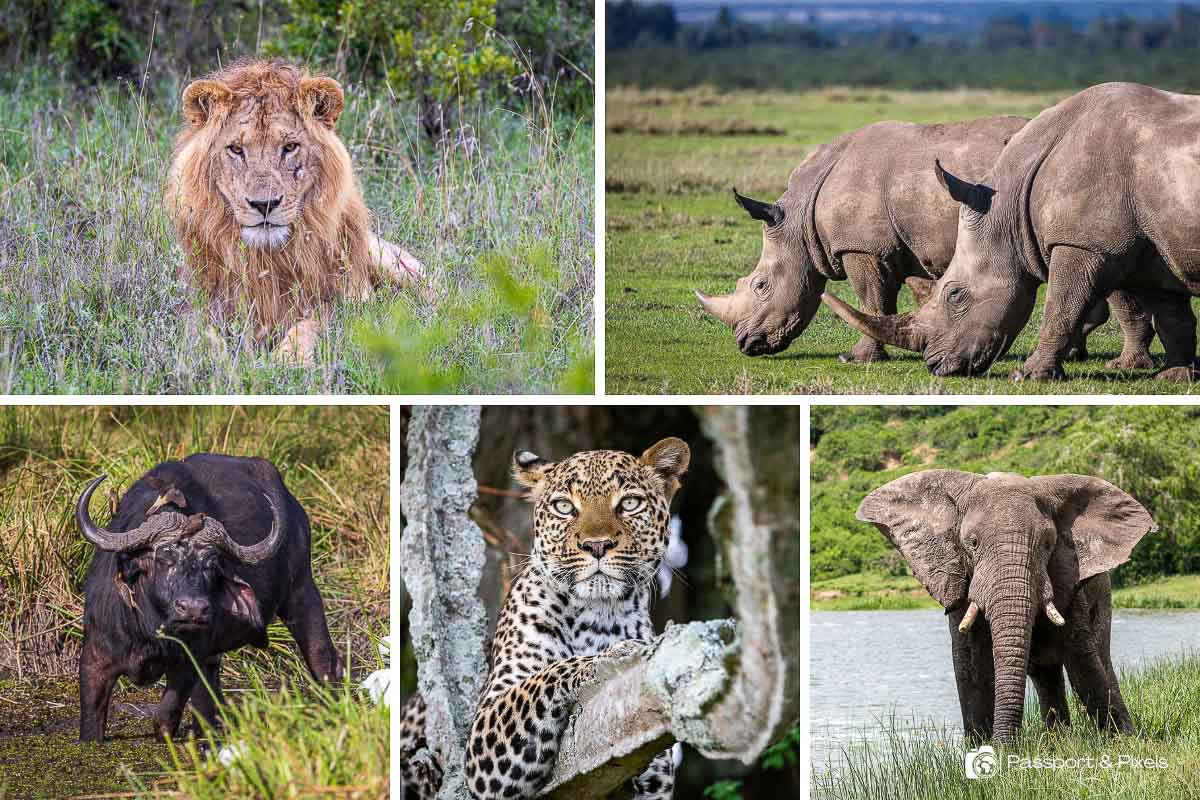
The term “Big Five” originated with 19th-century big game hunters who rated African animals by the difficulty and danger of hunting them on foot — not by their size. The five animals — lion, leopard, elephant, Cape buffalo, and rhino — share a specific characteristic: all five are capable of killing a human on foot. All five require a different set of field skills to approach safely. The term has migrated entirely into tourism usage in the decades since hunting in most of Africa gave way to photographic safari. “Completing the Big Five”. Seeing all five species on a single safari. Is the commonly used benchmark that most first-time safari travelers set themselves as a trip objective. Understanding how each species actually lives, what environments it prefers. And what behavioral and ecological signals indicate its presence allows safari travelers to participate actively in the sighting process. Rather than waiting passively for their guide to announce the next encounter.
The most important reframe for any safari traveler approaching the Big Five as a checklist is this: the quality of each individual encounter matters far more than the number of species ticked. A five-minute vehicle sighting of a distant rhino through heat haze produces a weaker and less memorable experience than a 45-minute observation of a pride of lions interacting at dawn 15 meters from the vehicle. Professional guides universally rate the quality of the encounter — duration, proximity, behavioral richness, context — above species count. Travelers who share that perspective consistently rate their safaris more highly than those focused on accumulation. This guide provides the field knowledge that produces better quality encounters with each of the five, not simply more frequent ones.
Finding Lion and Leopard
The Two Big Cats
How to Find Lions
Lions rest for up to 20 hours per day. The challenge of finding them is rarely about catching them in active movement. It is most often about locating the patch of shade, thicket, or long grass in which a pride or coalition has chosen to sleep through the heat of the day. The ecological signals that indicate lion presence in an area are available and readable before you ever see the animal itself. The alarm calls of impala. A sharp, explosive bark repeated two or three times. Indicate a predator detected at close range. They often locate the predator more precisely than scanning the landscape randomly. Vultures gathering on a tree or dropping toward a point in the grass indicate a carcass that lions may be feeding on, resting beside, or returning to. The behavior of zebra, wildebeest, and buffalo herds also signals predator presence. When they graze compactly and face inward rather than spread loosely in relaxed feeding mode, a predator is nearby. Radio communication between vehicles in the same park or conservancy is the most efficient real-time sighting information system. Guides who maintain active radio contact with colleagues operate a distributed sighting intelligence network that any single vehicle’s observation capacity cannot replicate.
Early morning game drives in the hour immediately after dawn produce the highest lion encounter rates for a straightforward reason. Lions that hunted during the night are returning toward their resting areas and remain visible and active in the open as dawn light grows. The tracks and drag marks of a kill overnight are fresh in the early morning dust. They lead a skilled tracker directly to the pride resting at or near the kill site. The flattened grass and distinctive smell of a lion rest site persist for hours after the pride has moved on. They provide directional information — in combination with the freshness of the tracks — about how recently the animals occupied that position and which direction they traveled. The best lion sighting guide tip that any professional gives first-time safari guests is deceptively simple: stay longer at any lion encounter than your instinct tells you to. Lions in a group almost always produce behavioral interactions. Play, greeting, suckling of cubs, social grooming, territorial communication. In the extended observation period that a brief 10-minute visit never reaches.
How to Find Leopards
Leopard sightings represent the most satisfying Big Five accomplishment for many safari travelers precisely because leopards are the most difficult of the five to locate. They are a genuinely nocturnal and expert concealment species that uses the vertical dimension of the landscape. Tree canopy, rocky outcrops, dense riparian thicket. In ways that make them effectively invisible at 20 meters in the vegetation they favor. The first skill in leopard finding is learning to scan vertically as well as horizontally. Most game drive guests naturally scan the eye-level horizon for movement. They miss the leopard lying along a horizontal tree branch 10 meters above the ground, visible only as a dangling tail below the branch line. Acacia trees with large horizontal branches at canopy level, sycamore figs with spreading crowns above luggas and dry riverbeds. And wild date palms along river edges are all preferred leopard resting sites. A systematic vertical scan reveals them before the animal detects the vehicle and moves into concealment.
Alarm calls from smaller mammals and birds locate leopards more precisely than any other field sign in dense woodland. The explosive scolding call of a fork-tailed drongo following a leopard through the bush, the chattering alarm call of vervet monkeys in a tree above a stationary leopard. And the loud alarm bark of baboons detecting a leopard at close range all identify the predator’s exact location. Experienced guides drive directly to the source of the alarm rather than scanning the area generally. Fresh drag marks — the deep furrow left by a carcass dragged to a tree for caching, with paw prints on either side — provide the most specific possible indication that a leopard is somewhere in the immediate area with a kill cached above. The leopard is almost certainly resting within 200 meters. Arriving at this sign in the early morning before heat has fully developed produces the most reliable leopard encounters in the repertoire of experienced bush guides.
Finding Elephant, Buffalo, and Rhino
The Remaining Three
Elephant and Buffalo: The Most Reliably Located
Elephant and Cape buffalo are, practically speaking, the two easiest Big Five species to locate in any game reserve that holds them in healthy numbers. This is not because they lack the ability to disappear. It is because their size, social behavior. And ecological requirements make their locations broadly predictable across the landscape. Elephants follow well-established routes between water, mineral salt licks, and favored feeding areas. These routes produce the compressed earth highways of elephant trails that crisscross every major elephant range. Active elephant use leaves fresh tracks and dung within the preceding 24 hours. The direction of travel and the age of the dung tell an experienced tracker where the herd was heading and roughly when it passed. Fresh dung still steams in the morning cool. Slightly older dung has lost its smell at distance. Old dung has dried completely. Elephants also produce substantial sound even when out of visual range. The crack of broken branches, the deep rumble of low-frequency communication between herd members. And the sound of large bodies moving through dense bush all locate elephants beyond the limit of visual detection.
Buffalo herds in dry season concentrate at water sources for drinking and wallowing. Any permanent waterhole, dam, or river section is an extremely reliable location for large buffalo aggregations in the midday hours when bulls and cows both seek water and mud to cool themselves and reduce parasite load. The size of buffalo herds ranges from bachelor bull groups of 5 to 20 animals to breeding herds of 300 to over a thousand. A large herd at a waterhole can dominate a game drive’s afternoon hours with behavioral observation and photographic opportunities. Old buffalo bulls — the “Dagga Boys” that older guides point out with particular affection — separate from herds and seek the densest riverine thicket available. They produce the most dramatic and threatening close-range vehicle encounters of any buffalo situation. Their solitary status, experience, and diminishing tolerance for the approach of vehicles create interactions that require a guide’s most careful vehicle management and distance assessment.
Finding Rhino: The Rarest Encounter
Rhino sightings require specific strategic planning. The white and black rhino populations across Africa are geographically concentrated in a relatively small number of protected areas with active conservation management. Southern white rhino are most reliably seen in South Africa’s Hluhluwe-iMfolozi Park. Where the breeding program that saved the species from extinction began. The Kruger National Park’s southern sections, and the Eastern Cape’s private reserves. Black rhino — more endangered and more solitary — occur in meaningful numbers at Ol Pejeta in Kenya, Lewa Wildlife Conservancy, Etosha National Park in Namibia, Namibia’s private rhino conservancies. And selected Southern Africa reserves including the Phinda and Sabi Sand private reserves. The guide’s knowledge of current rhino locations within a specific park or conservancy is the primary determinant of rhino sighting success. Rhino are territorial and individuals use well-known home ranges that experienced local guides track regularly. Asking your guide directly about recent rhino sightings and the current location of known individuals produces better rhino encounter rates than any landscape-reading field skill. The animals’ low density and large home range make systematic searching inefficient without the benefit of current local intelligence about where specific individuals have been seen most recently.
Plan Your Safari
African Wild Trekkers selects safari destinations and specific private concessions for every itinerary with Big Five encounter quality as a primary criterion. We choose parks and private reserves where the specific wildlife densities, guide quality. And vehicle access standards maximize the probability and quality of each Big Five encounter. Rather than simply visiting the most famous names on the safari map.
We brief every client before their safari on the specific Big Five situation in each destination on their itinerary. Which species are most abundant. Which are most difficult to find. Which require specific strategies that their guide will employ. Every traveler arrives in the bush understanding what they are looking for and why. This produces a richer and more participatory wildlife experience than arriving with no field intelligence.
Contact African Wild Trekkers at africanwildtrekkers.com/contact with your destination interests and travel dates and we will design a Big Five safari itinerary that maximizes your encounter quality within 24 hours.