info@africanwildtrekkers.com

info@africanwildtrekkers.com

Boma Dinners and Bush Feasts

The South African Braai: More Than a Barbecue

The braai — the South African term for an open-fire grill that encompasses both the physical apparatus and the entire social ritual surrounding it — is the most culturally significant food tradition in Southern African safari cuisine and deserves explanation as a cultural institution rather than simply a cooking method. A South African braai is not the casual weekend barbecue of Anglo-American food culture; it is a deliberate, multi-hour social event built around the fire itself as the organizing principle of the evening, with specific firewood choices, specific meat preparations, and a specific sequence of arrival at the table that reflect a culinary tradition as codified and meaningful to its practitioners as a formal French dinner service is to its own. The hardwood fires used in safari lodge braais — typically acacia or mopane, both producing long-burning coals with minimal flame that create even, predictable heat rather than the variable flare-ups of softwood or charcoal — take an hour of patient attention to reach the ideal cooking stage, and the conversation and sundowner drinks that happen around the fire during this waiting period are considered as important a part of the braai as the food itself.

Game meat features prominently in the braai and broader dining traditions of Southern African safari lodges, and the variety available — impala, kudu, warthog, eland, springbok, and occasionally buffalo at lodges where sustainable game management produces surplus animals — introduces safari guests to a protein category that has no equivalent in their home food culture and that consistently surprises with its quality. Impala is the most widely served and arguably the most versatile of the Southern African game meats, with a flavor profile closer to high-quality lamb than to the gamey heaviness that Europeans sometimes associate with venison, and a lean fat-free texture that grills beautifully over hardwood coals to a medium-rare finish that premium safari lodges consistently achieve. Kudu provides a richer, deeper flavor with slightly more textural complexity — perhaps the closest comparison is to the best Scottish venison crossed with a South American capybara note that is unusual and immediately appealing — while warthog loin grilled over a braai fire develops a subtle sweetness from its natural fat marbling that makes it one of the most approachable and crowd-pleasing of the game meats for guests who are trying African wildlife meat for the first time.

Boma Dinners and Bush Feasts

The boma dinner — served in a traditional thorn-fenced enclosure lit by lanterns, fire-lit torches, and the central cooking fire that serves as both heat source and theatrical backdrop — is the dining format that most consistently becomes the single most atmospheric and emotionally resonant meal of any Southern African safari stay. Most safari lodges include at least one boma dinner in a week-long stay, and the experience of being seated on camp chairs around a circular fire under a dark sky thick with Southern Hemisphere stars while traditional drumming plays in the background and the aromas of a slowly turning spit create an anticipation that no dining room environment can replicate. The menu at a boma dinner is typically more elaborate than the lodge’s standard restaurant offering — multiple game meat dishes served buffet-style with traditional starches, relishes, and vegetable preparations that express the specific South African or East African food culture of the lodge’s region — and the format encourages guests to eat broadly, try unfamiliar dishes, and share comments with fellow guests in a way that the formal table service of a dinner does not.

Pap and sheba — the Southern African staple of mealie meal porridge served with a tomato and onion relish — appears on most boma dinner menus alongside the game meat as an authentic representation of the regional food culture that sustains the lodge’s local staff and surrounding communities. Guests who try pap for the first time often have an initial hesitation about a starchy, unflavored grain base that has no direct equivalent in European or American food culture, and then discover that eaten as intended — torn with the fingers and dipped into a richly flavored relish, or used to scoop up a sauce of slow-cooked game meat — it transforms from a plain background into an excellent eating vehicle that demonstrates the culinary logic of the dish entirely. This is a common pattern with authentic regional African foods that appear on safari lodge menus: they are usually best explained by the guide or a willing lodge staff member who grew up eating them, and understanding the food’s cultural origin and correct eating technique unlocks a genuine appreciation that replication from the buffet table alone does not produce.

East African and International Safari Cuisine

Swahili Flavors and East African Ingredients

East African safari lodge cuisine reflects the complex cultural history of the coast and interior — the Arab and Indian Ocean spice trade influences that shaped Swahili cooking over centuries of maritime commerce, the British colonial culinary templates that East African hospitality absorbed and adapted, and the contemporary farm-to-table movement that the most progressive East African lodge chefs have embraced through direct relationships with small-scale producers growing specialty ingredients in the highland farms that supply the region’s best urban restaurants. The result in the best Kenya and Tanzania safari lodges is a cuisine that is neither purely traditional nor purely international but a sophisticated synthesis that uses local ingredients — coastal coconut cream, highland red onions, Lake Victoria tilapia, Zanzibar spices, Kilimanjaro arabica coffee — in preparations that balance familiar technique with genuinely distinctive flavor profiles that could only come from this specific region of the world.

Mandazi — the light, slightly sweet fried dough triangles that appear at East African breakfast tables — ugali — the dense maize meal equivalent of Southern Africa’s pap, eaten across Kenya, Tanzania, and Uganda as the daily staple — nyama choma (roasted meat, most often beef or goat grilled over hardwood) and sukuma wiki (sautéed collard greens with onion and tomato) all appear in various forms across East African safari lodge menus as authentic regional dish representations. Chai — the milky spiced tea brewed directly with milk rather than added after steeping, consumed across East Africa from morning through evening in a ritual frequency that makes it as omnipresent as coffee in a Scandinavian workplace — is a safari experience in itself when prepared correctly with the right balance of cardamom, cinnamon, ginger, and black tea that varies by region and by the specific preferences of the lodge staff who brew it. Drinking proper Kenyan or Tanzanian chai at a small table outside your tent as the African morning comes to life around you is a sensory experience that many safari guests describe in food writing terms as one of the most genuine and affecting small pleasures of their entire trip.

Plan Your Safari

African Wild Trekkers selects lodges in part on the quality and authenticity of their cuisine, because we know from consistent guest feedback that food is a major determinant of overall lodge satisfaction and that a beautiful setting with poor cooking is ultimately a more disappointing experience than a simpler setting with excellent food. We brief our lodge contacts on the dietary preferences and requirements of every guest group before arrival, ensuring that special meals and alternative preparations are ready on the first day rather than requiring repeated requests during the stay.

For guests with specific culinary interests — those who want to learn to prepare a specific bush dish, visit a local market to understand regional ingredient culture, or simply discuss the food’s cultural context with the lodge chef over a kitchen tour — we incorporate these activities into itineraries on request. African safari food is a genuinely rewarding subject for curious travelers, and the best lodge chefs are as passionate about sharing their culinary culture as the best guides are about sharing their ecological knowledge.

Contact African Wild Trekkers at africanwildtrekkers.com/contact with your dietary requirements and food interests and we will match you with the lodges whose cuisine best expresses the food culture of your chosen African destination within 24 hours.

Food on Safari: Much Better Than You Expect

Food is consistently one of the biggest positive surprises for first-time safari visitors who arrive with reasonable but modest expectations about what remote African bush camps and lodges can produce from their kitchens, and find instead a culinary experience that is frequently more thoughtful, more locally specific, and more genuinely delicious than the restaurant meals they enjoyed in the gateway cities at the start of their trip. The explanation for this consistently high food quality in remote locations lies in a combination of factors: the highly competitive premium safari market rewards lodges that excel at every touchpoint including cuisine, the isolation of bush camps creates genuinely captive dinner guests who notice and remember food quality in a way that transient hotel guests often do not, and the most talented chefs in African hospitality have increasingly chosen to work in bush camp environments where their creativity is valued and their connection to local produce is immediate and rewarding in ways that city restaurant kitchens often are not.

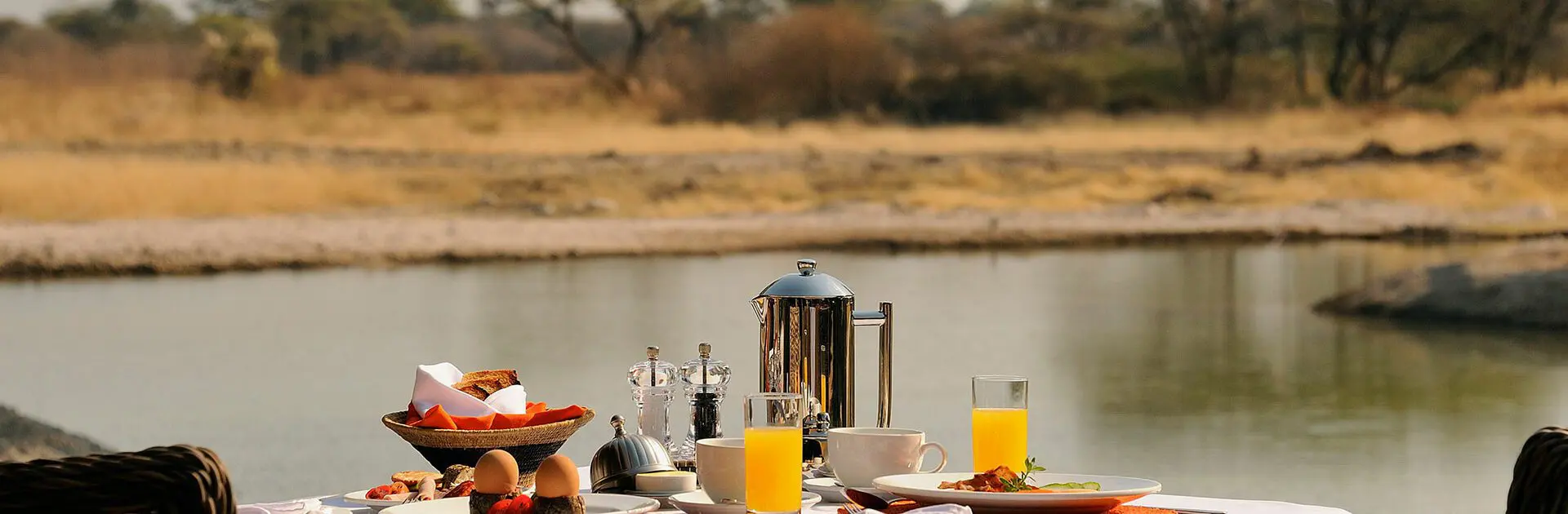
The structure of food service on an African safari follows the rhythm of the game drive day, and understanding this structure helps guests appreciate the culinary context of each meal rather than simply consuming it as fuel between activities. An early morning wake-up produces a small offering of coffee or tea with rusks or biscuits before the predawn game drive departure — functional rather than elaborate, designed to provide enough calories and caffeine for the three to four hours of activity that follow without the heaviness of a full meal eaten at 5 AM. The return from the morning drive around 9 to 10 AM produces the brunch moment that is often the lodge’s most inventive meal of the day — a full cooked breakfast that transitions gradually into a late-morning spread of cold meats, cheeses, fresh fruit, pastries, and African breads that guests consume at whatever pace and in whatever sequence their appetite dictates after hours of fresh air and wildlife-induced enthusiasm. Lunch — typically lighter than the brunch, served around 1 to 2 PM — bridges the midday rest period before the afternoon game drive, while dinner is the communal social meal of the day, served after the return from the evening drive and the sundowner at 7:30 or 8 PM in the communal dining area or around a fire under the stars.

Safari Cuisine by Region and Tradition

Southern African Food Traditions

The South African Braai: More Than a Barbecue

The braai — the South African term for an open-fire grill that encompasses both the physical apparatus and the entire social ritual surrounding it — is the most culturally significant food tradition in Southern African safari cuisine and deserves explanation as a cultural institution rather than simply a cooking method. A South African braai is not the casual weekend barbecue of Anglo-American food culture; it is a deliberate, multi-hour social event built around the fire itself as the organizing principle of the evening, with specific firewood choices, specific meat preparations, and a specific sequence of arrival at the table that reflect a culinary tradition as codified and meaningful to its practitioners as a formal French dinner service is to its own. The hardwood fires used in safari lodge braais — typically acacia or mopane, both producing long-burning coals with minimal flame that create even, predictable heat rather than the variable flare-ups of softwood or charcoal — take an hour of patient attention to reach the ideal cooking stage, and the conversation and sundowner drinks that happen around the fire during this waiting period are considered as important a part of the braai as the food itself.

Game meat features prominently in the braai and broader dining traditions of Southern African safari lodges, and the variety available — impala, kudu, warthog, eland, springbok, and occasionally buffalo at lodges where sustainable game management produces surplus animals — introduces safari guests to a protein category that has no equivalent in their home food culture and that consistently surprises with its quality. Impala is the most widely served and arguably the most versatile of the Southern African game meats, with a flavor profile closer to high-quality lamb than to the gamey heaviness that Europeans sometimes associate with venison, and a lean fat-free texture that grills beautifully over hardwood coals to a medium-rare finish that premium safari lodges consistently achieve. Kudu provides a richer, deeper flavor with slightly more textural complexity — perhaps the closest comparison is to the best Scottish venison crossed with a South American capybara note that is unusual and immediately appealing — while warthog loin grilled over a braai fire develops a subtle sweetness from its natural fat marbling that makes it one of the most approachable and crowd-pleasing of the game meats for guests who are trying African wildlife meat for the first time.

Boma Dinners and Bush Feasts

The boma dinner — served in a traditional thorn-fenced enclosure lit by lanterns, fire-lit torches, and the central cooking fire that serves as both heat source and theatrical backdrop — is the dining format that most consistently becomes the single most atmospheric and emotionally resonant meal of any Southern African safari stay. Most safari lodges include at least one boma dinner in a week-long stay, and the experience of being seated on camp chairs around a circular fire under a dark sky thick with Southern Hemisphere stars while traditional drumming plays in the background and the aromas of a slowly turning spit create an anticipation that no dining room environment can replicate. The menu at a boma dinner is typically more elaborate than the lodge’s standard restaurant offering — multiple game meat dishes served buffet-style with traditional starches, relishes, and vegetable preparations that express the specific South African or East African food culture of the lodge’s region — and the format encourages guests to eat broadly, try unfamiliar dishes, and share comments with fellow guests in a way that the formal table service of a dinner does not.

Pap and sheba — the Southern African staple of mealie meal porridge served with a tomato and onion relish — appears on most boma dinner menus alongside the game meat as an authentic representation of the regional food culture that sustains the lodge’s local staff and surrounding communities. Guests who try pap for the first time often have an initial hesitation about a starchy, unflavored grain base that has no direct equivalent in European or American food culture, and then discover that eaten as intended — torn with the fingers and dipped into a richly flavored relish, or used to scoop up a sauce of slow-cooked game meat — it transforms from a plain background into an excellent eating vehicle that demonstrates the culinary logic of the dish entirely. This is a common pattern with authentic regional African foods that appear on safari lodge menus: they are usually best explained by the guide or a willing lodge staff member who grew up eating them, and understanding the food’s cultural origin and correct eating technique unlocks a genuine appreciation that replication from the buffet table alone does not produce.

East African and International Safari Cuisine

Swahili Flavors and East African Ingredients

East African safari lodge cuisine reflects the complex cultural history of the coast and interior — the Arab and Indian Ocean spice trade influences that shaped Swahili cooking over centuries of maritime commerce, the British colonial culinary templates that East African hospitality absorbed and adapted, and the contemporary farm-to-table movement that the most progressive East African lodge chefs have embraced through direct relationships with small-scale producers growing specialty ingredients in the highland farms that supply the region’s best urban restaurants. The result in the best Kenya and Tanzania safari lodges is a cuisine that is neither purely traditional nor purely international but a sophisticated synthesis that uses local ingredients — coastal coconut cream, highland red onions, Lake Victoria tilapia, Zanzibar spices, Kilimanjaro arabica coffee — in preparations that balance familiar technique with genuinely distinctive flavor profiles that could only come from this specific region of the world.

Mandazi — the light, slightly sweet fried dough triangles that appear at East African breakfast tables — ugali — the dense maize meal equivalent of Southern Africa’s pap, eaten across Kenya, Tanzania, and Uganda as the daily staple — nyama choma (roasted meat, most often beef or goat grilled over hardwood) and sukuma wiki (sautéed collard greens with onion and tomato) all appear in various forms across East African safari lodge menus as authentic regional dish representations. Chai — the milky spiced tea brewed directly with milk rather than added after steeping, consumed across East Africa from morning through evening in a ritual frequency that makes it as omnipresent as coffee in a Scandinavian workplace — is a safari experience in itself when prepared correctly with the right balance of cardamom, cinnamon, ginger, and black tea that varies by region and by the specific preferences of the lodge staff who brew it. Drinking proper Kenyan or Tanzanian chai at a small table outside your tent as the African morning comes to life around you is a sensory experience that many safari guests describe in food writing terms as one of the most genuine and affecting small pleasures of their entire trip.

Plan Your Safari

African Wild Trekkers selects lodges in part on the quality and authenticity of their cuisine, because we know from consistent guest feedback that food is a major determinant of overall lodge satisfaction and that a beautiful setting with poor cooking is ultimately a more disappointing experience than a simpler setting with excellent food. We brief our lodge contacts on the dietary preferences and requirements of every guest group before arrival, ensuring that special meals and alternative preparations are ready on the first day rather than requiring repeated requests during the stay.

For guests with specific culinary interests — those who want to learn to prepare a specific bush dish, visit a local market to understand regional ingredient culture, or simply discuss the food’s cultural context with the lodge chef over a kitchen tour — we incorporate these activities into itineraries on request. African safari food is a genuinely rewarding subject for curious travelers, and the best lodge chefs are as passionate about sharing their culinary culture as the best guides are about sharing their ecological knowledge.

Contact African Wild Trekkers at africanwildtrekkers.com/contact with your dietary requirements and food interests and we will match you with the lodges whose cuisine best expresses the food culture of your chosen African destination within 24 hours.