Iconic Sundowner Spots on the Continent
Sundowner Snacks and Bush Canapés
The snacks that accompany the sundowner drinks at quality safari lodges represent a concentrated expression of the lodge kitchen’s creativity and local ingredient sourcing, ranging from the simple dried biltong and fresh watermelon that suffice at more modestly resourced camps to the elaborate canapé selections — miniature crocodile spring rolls, warthog carpaccio on seed crackers, sweet potato and peanut brochettes, game-meat pâté with rooibos jelly — that premier lodges in Botswana, Kenya’s Mara ecosystem, and South Africa’s private reserves produce from their on-site kitchens. The intention in both cases is the same: to provide a bridge between the afternoon drive and the evening meal that satisfies but does not overfill, that complements the drinks served, and that reflects the local food culture of the surrounding landscape rather than defaulting to the generic canapé selection of any international hotel. The best sundowner snacks tell you where you are — you could not be eating warthog biltong and marula fruit chutney anywhere but Southern Africa, and that specificity of flavor is part of the total sensory experience of place that the sundowner ritual is designed to deliver.
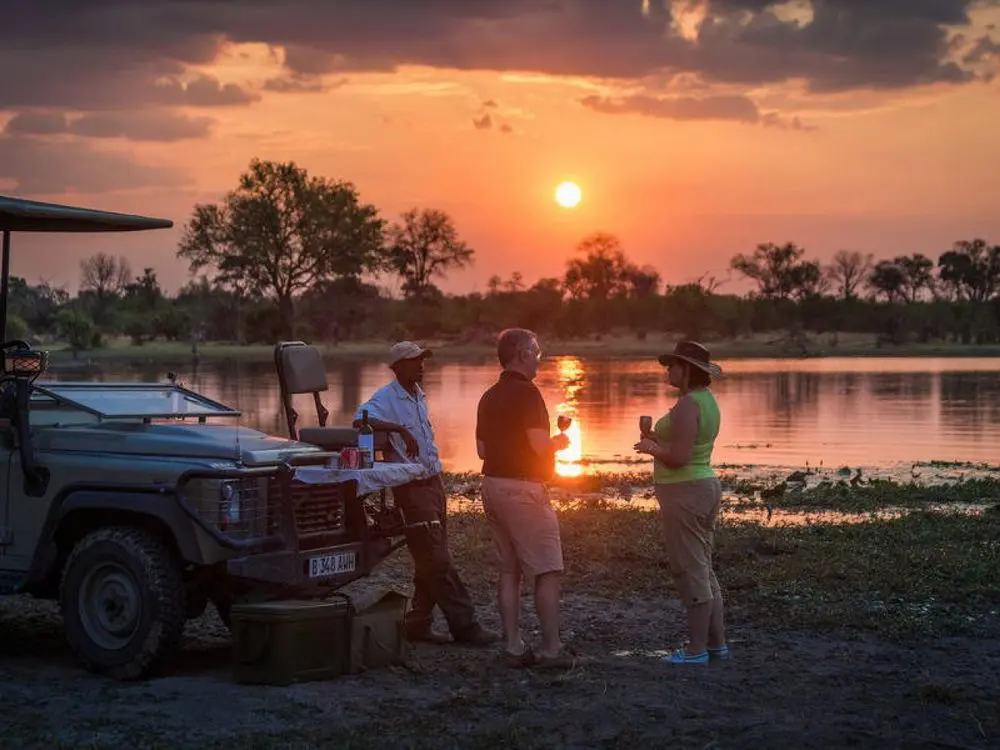
The logistics of producing high-quality sundowner food in a game reserve environment — where the kitchen may be forty minutes away from the chosen sundowner spot and where the guide is simultaneously responsible for vehicle security, animal awareness, and guest hospitality — reveal the operational planning that distinguishes well-resourced lodges from those where the sundowner is an afterthought rather than a designed experience. Premier lodges prepare sundowner boxes in the kitchen before each afternoon drive departure, packing insulated containers with pre-prepared canapés, chilled drinks, appropriate glassware and linen napkins, a folding table and camp chairs, and the specific accompaniments — lemon slices, ice sealed in vacuum bags, cocktail napkins — that transform a roadside stop into a memorable occasion. The guide or tracker who produces this setup with practiced efficiency in sixty seconds after vehicle stop, pouring the first drinks before guests have fully descended from the vehicle, demonstrates the operational competence that the best African safari hospitality is built on — invisible in execution, completely apparent in effect.
The Best Sundowner Locations Across Africa
Iconic Sundowner Spots on the Continent
From the Serengeti Plains to the Okavango Delta
The Serengeti’s open plains during the great wildebeest migration offer sundowner conditions of such extraordinary visual scale that the experience defies adequate description in any language that has not been invented specifically for African sunsets. Sitting on the vehicle roof platform as the sun drops toward the horizon on the western Serengeti, with wildebeest moving in their thousands across the plain in every direction simultaneously and the sky deepening from blue through violet to orange and finally to the deep burgundy red that precedes full dark — this is the visual and emotional experience that serious Africa travelers describe as the single moment that crystallizes everything the continent is and means, compressed into twenty minutes of light that will not repeat in exactly this form. The Ngorongoro Crater’s caldera rim provides equally dramatic sundowner conditions from a completely different geographic perspective, looking down into the world’s largest intact volcanic caldera as its floor turns golden in late afternoon light and the hippo pools of the crater lake reflect the sky’s changing color back upward at precisely the angle that makes the whole scene feel constructed by a cinematographer rather than occurring naturally.
The Okavango Delta’s water-based sundowner — conducted from a motorboat drifting silently through lily-covered channels as the sun sets behind papyrus screens and African fish eagles call from dead fever trees in the middle distance — provides the most atmosphere-distinctive sundowner experience in Africa by virtue of its complete uniqueness to this specific place. No other African safari destination combines water-level sunset observation with the specific botanical setting of the world’s largest inland delta, and the cocktail of sensory information — warm engine-off silence, the lapping of water against the hull, the distant hippo snort, the fish eagle’s tremulous cry, the last direct sunlight turning the papyrus amber before it extinguishes entirely — creates an experience that guests who have had sundowners in fifteen other African destinations consistently describe as their most memorable. The hippo’s habit of surfacing directly beside a stationary sundowner boat with no forewarning and a blast of exhaled breath that can be felt as well as heard adds an occasional element of pure wildlife drama to an otherwise contemplative occasion that nobody who experiences it ever forgets or fails to describe at length to every subsequent person who asks what their Africa trip was like.
Plan Your Safari
African Wild Trekkers considers the sundowner location one of the important planning details in any safari itinerary, and we specifically brief the guides at every lodge on our recommended lists about the photographic and experiential priorities of each guest group before their arrival. We know which viewpoints in each destination produce the most consistently excellent sunset conditions, which waterhole positions create the wildlife-plus-sunset combinations that generate the most memorable images, and which operators invest the most care in producing sundowner food and drink experiences that match the ambition of the setting.
For honeymoon couples and guests celebrating special occasions, we work with lodges to arrange private sundowner setups at locations away from the main vehicle stop — a private table set on a kopje with champagne on ice, a candlelit boat platform anchored in a specific channel of the delta where the sunset angle is optimal — that transform a beautiful shared experience into an intimate, irreplaceable personal one. These arrangements require advance planning and direct communication with the lodge, and handling them as part of your pre-trip preparation is something we manage as a standard part of our special occasion safari service.
Contact African Wild Trekkers at africanwildtrekkers.com/contact with your destination and any special occasion details and we will build a safari that delivers the most extraordinary sundowner experiences available in your chosen part of Africa within 24 hours.
The Classic Gin and Tonic and Its Safari Variations
The gin and tonic occupies a position of near-totemic significance in safari sundowner culture that its simple ingredient list does not entirely explain, but whose history provides important context. The gin and tonic was developed by British colonial officers in India as a practical delivery mechanism for quinine — the antimalarial compound derived from cinchona bark that was dissolved in tonic water and made more palatable by the addition of gin — and the drink’s association with the colonial-era African bush is therefore both historical and atmospheric rather than simply a matter of taste preference. Premium safari lodges across East and Southern Africa serve gin and tonics made with artisanal African gins — Inverroche from South Africa’s fynbos, Nyoro from Uganda’s highlands, and Procera from Kenya, among others — that express the botanical diversity of the African landscape in their flavor profiles, making the drink both locally rooted and internationally recognizable simultaneously. Served over hand-cut ice, garnished with a citrus slice and a sprig of local herb or a dried botanical from the surrounding bush, and handed to you as the sun touches the horizon on the Serengeti, this is a drink that transcends its component parts entirely and becomes something that most safari guests describe as the best gin and tonic they have ever tasted — a response that is partly about the ingredients but overwhelmingly about the context.
Beyond gin and tonic, the sundowner drinks menu at quality safari lodges reflects the full range of Southern and East African beverage culture with offerings that vary considerably between operators and destinations. South African wines — particularly Pinotage, Chenin Blanc, and the dry Sauvignon Blancs of the Stellenbosch and Elgin regions — appear on many sundowner selections, as do Castle Lager and Windhoek Lager for guests who prefer a cold beer watched cold in the field. Malawi Gin from Nyala Distillery, Kenyan craft spirits from Delmere Estate, and Amarula cream liqueur made from marula fruit — the same fruit that elephant famously seek out when it ferments on the ground, though the story of elephant deliberately getting drunk on fallen marula fruit is somewhat more mythologized than the behavior supports — all make appearances on sundowner menus that reflect the genuine ambition of contemporary African lodge hospitality to present something locally resonant rather than simply replicating the international hotel bar. Non-alcoholic sundowner options have evolved dramatically across quality lodges with the growth of mindful drinking culture, and sparkling ginger and hibiscus cordials, fresh pressed juices from local fruits, and the extraordinary diversity of African herbal infusions provide genuinely interesting alcohol-free alternatives that are worth requesting even for drinkers who appreciate the full-strength option on most evenings.
Sundowner Snacks and Bush Canapés
The snacks that accompany the sundowner drinks at quality safari lodges represent a concentrated expression of the lodge kitchen’s creativity and local ingredient sourcing, ranging from the simple dried biltong and fresh watermelon that suffice at more modestly resourced camps to the elaborate canapé selections — miniature crocodile spring rolls, warthog carpaccio on seed crackers, sweet potato and peanut brochettes, game-meat pâté with rooibos jelly — that premier lodges in Botswana, Kenya’s Mara ecosystem, and South Africa’s private reserves produce from their on-site kitchens. The intention in both cases is the same: to provide a bridge between the afternoon drive and the evening meal that satisfies but does not overfill, that complements the drinks served, and that reflects the local food culture of the surrounding landscape rather than defaulting to the generic canapé selection of any international hotel. The best sundowner snacks tell you where you are — you could not be eating warthog biltong and marula fruit chutney anywhere but Southern Africa, and that specificity of flavor is part of the total sensory experience of place that the sundowner ritual is designed to deliver.
The logistics of producing high-quality sundowner food in a game reserve environment — where the kitchen may be forty minutes away from the chosen sundowner spot and where the guide is simultaneously responsible for vehicle security, animal awareness, and guest hospitality — reveal the operational planning that distinguishes well-resourced lodges from those where the sundowner is an afterthought rather than a designed experience. Premier lodges prepare sundowner boxes in the kitchen before each afternoon drive departure, packing insulated containers with pre-prepared canapés, chilled drinks, appropriate glassware and linen napkins, a folding table and camp chairs, and the specific accompaniments — lemon slices, ice sealed in vacuum bags, cocktail napkins — that transform a roadside stop into a memorable occasion. The guide or tracker who produces this setup with practiced efficiency in sixty seconds after vehicle stop, pouring the first drinks before guests have fully descended from the vehicle, demonstrates the operational competence that the best African safari hospitality is built on — invisible in execution, completely apparent in effect.
The Best Sundowner Locations Across Africa
Iconic Sundowner Spots on the Continent
From the Serengeti Plains to the Okavango Delta
The Serengeti’s open plains during the great wildebeest migration offer sundowner conditions of such extraordinary visual scale that the experience defies adequate description in any language that has not been invented specifically for African sunsets. Sitting on the vehicle roof platform as the sun drops toward the horizon on the western Serengeti, with wildebeest moving in their thousands across the plain in every direction simultaneously and the sky deepening from blue through violet to orange and finally to the deep burgundy red that precedes full dark — this is the visual and emotional experience that serious Africa travelers describe as the single moment that crystallizes everything the continent is and means, compressed into twenty minutes of light that will not repeat in exactly this form. The Ngorongoro Crater’s caldera rim provides equally dramatic sundowner conditions from a completely different geographic perspective, looking down into the world’s largest intact volcanic caldera as its floor turns golden in late afternoon light and the hippo pools of the crater lake reflect the sky’s changing color back upward at precisely the angle that makes the whole scene feel constructed by a cinematographer rather than occurring naturally.
The Okavango Delta’s water-based sundowner — conducted from a motorboat drifting silently through lily-covered channels as the sun sets behind papyrus screens and African fish eagles call from dead fever trees in the middle distance — provides the most atmosphere-distinctive sundowner experience in Africa by virtue of its complete uniqueness to this specific place. No other African safari destination combines water-level sunset observation with the specific botanical setting of the world’s largest inland delta, and the cocktail of sensory information — warm engine-off silence, the lapping of water against the hull, the distant hippo snort, the fish eagle’s tremulous cry, the last direct sunlight turning the papyrus amber before it extinguishes entirely — creates an experience that guests who have had sundowners in fifteen other African destinations consistently describe as their most memorable. The hippo’s habit of surfacing directly beside a stationary sundowner boat with no forewarning and a blast of exhaled breath that can be felt as well as heard adds an occasional element of pure wildlife drama to an otherwise contemplative occasion that nobody who experiences it ever forgets or fails to describe at length to every subsequent person who asks what their Africa trip was like.
Plan Your Safari
African Wild Trekkers considers the sundowner location one of the important planning details in any safari itinerary, and we specifically brief the guides at every lodge on our recommended lists about the photographic and experiential priorities of each guest group before their arrival. We know which viewpoints in each destination produce the most consistently excellent sunset conditions, which waterhole positions create the wildlife-plus-sunset combinations that generate the most memorable images, and which operators invest the most care in producing sundowner food and drink experiences that match the ambition of the setting.
For honeymoon couples and guests celebrating special occasions, we work with lodges to arrange private sundowner setups at locations away from the main vehicle stop — a private table set on a kopje with champagne on ice, a candlelit boat platform anchored in a specific channel of the delta where the sunset angle is optimal — that transform a beautiful shared experience into an intimate, irreplaceable personal one. These arrangements require advance planning and direct communication with the lodge, and handling them as part of your pre-trip preparation is something we manage as a standard part of our special occasion safari service.
Contact African Wild Trekkers at africanwildtrekkers.com/contact with your destination and any special occasion details and we will build a safari that delivers the most extraordinary sundowner experiences available in your chosen part of Africa within 24 hours.
What Is a Safari Sundowner and Where Did It Come From?
The safari sundowner is a tradition so deeply embedded in the culture of African bush travel that it is now inseparable from the experience itself — the moment each afternoon when the game drive vehicle pauses at a carefully chosen viewpoint, the guide or tracker steps down to fold out a small table and produce cold drinks and snacks from the vehicle’s storage box, and the group settles into a collective quietness that is part contemplation, part celebration, and wholly African in its unhurried appreciation of where you are and what surrounds you. The word “sundowner” entered Southern African English through the colonial-era practice of drinking a sundowner whisky or gin at the moment the sun touched the horizon — a ritual that served the practical purpose of marking the boundary between the working bush day and the social evening, and the psychological purpose of providing a daily moment of enforced pause in environments where the pressures of farming, hunting, or ranger work rarely paused voluntarily. The safari industry adopted and refined this tradition as a natural fit for the afternoon game drive’s natural conclusion, and it has become one of the most anticipated and consistently well-regarded components of the African lodge experience across every level of the market.
What distinguishes the safari sundowner from simply stopping for drinks is the deliberateness of its staging — the chosen location, the timing in relation to the actual solar horizon, the quietness that descends as conversation gives way to observation, and the specific atmospheric quality of African late afternoon light that no other landscape on earth quite replicates. The best sundowner stops are chosen by guides with an eye for both the horizon view and the wildlife context — a waterhole where elephant are drinking in silhouette against the orange sky, a kopje overlooking a plain where a cheetah family is resting on termite mounds in the last warm light, or a river bank where a family of hippos surfaces and submerges in the bronze water below. The drinks and snacks are secondary to the setting; the ritual is the frame within which the Africa that surrounds you is given its due acknowledgment after hours of active searching and occasional intense excitement, and the transition from movement to stillness creates a contemplative space that many safari guests describe as among the most deeply restorative moments of their lives.
What Is Served at a Safari Sundowner
Classic Drinks and Snacks of the African Bush
The Classic Gin and Tonic and Its Safari Variations
The gin and tonic occupies a position of near-totemic significance in safari sundowner culture that its simple ingredient list does not entirely explain, but whose history provides important context. The gin and tonic was developed by British colonial officers in India as a practical delivery mechanism for quinine — the antimalarial compound derived from cinchona bark that was dissolved in tonic water and made more palatable by the addition of gin — and the drink’s association with the colonial-era African bush is therefore both historical and atmospheric rather than simply a matter of taste preference. Premium safari lodges across East and Southern Africa serve gin and tonics made with artisanal African gins — Inverroche from South Africa’s fynbos, Nyoro from Uganda’s highlands, and Procera from Kenya, among others — that express the botanical diversity of the African landscape in their flavor profiles, making the drink both locally rooted and internationally recognizable simultaneously. Served over hand-cut ice, garnished with a citrus slice and a sprig of local herb or a dried botanical from the surrounding bush, and handed to you as the sun touches the horizon on the Serengeti, this is a drink that transcends its component parts entirely and becomes something that most safari guests describe as the best gin and tonic they have ever tasted — a response that is partly about the ingredients but overwhelmingly about the context.
Beyond gin and tonic, the sundowner drinks menu at quality safari lodges reflects the full range of Southern and East African beverage culture with offerings that vary considerably between operators and destinations. South African wines — particularly Pinotage, Chenin Blanc, and the dry Sauvignon Blancs of the Stellenbosch and Elgin regions — appear on many sundowner selections, as do Castle Lager and Windhoek Lager for guests who prefer a cold beer watched cold in the field. Malawi Gin from Nyala Distillery, Kenyan craft spirits from Delmere Estate, and Amarula cream liqueur made from marula fruit — the same fruit that elephant famously seek out when it ferments on the ground, though the story of elephant deliberately getting drunk on fallen marula fruit is somewhat more mythologized than the behavior supports — all make appearances on sundowner menus that reflect the genuine ambition of contemporary African lodge hospitality to present something locally resonant rather than simply replicating the international hotel bar. Non-alcoholic sundowner options have evolved dramatically across quality lodges with the growth of mindful drinking culture, and sparkling ginger and hibiscus cordials, fresh pressed juices from local fruits, and the extraordinary diversity of African herbal infusions provide genuinely interesting alcohol-free alternatives that are worth requesting even for drinkers who appreciate the full-strength option on most evenings.
Sundowner Snacks and Bush Canapés
The snacks that accompany the sundowner drinks at quality safari lodges represent a concentrated expression of the lodge kitchen’s creativity and local ingredient sourcing, ranging from the simple dried biltong and fresh watermelon that suffice at more modestly resourced camps to the elaborate canapé selections — miniature crocodile spring rolls, warthog carpaccio on seed crackers, sweet potato and peanut brochettes, game-meat pâté with rooibos jelly — that premier lodges in Botswana, Kenya’s Mara ecosystem, and South Africa’s private reserves produce from their on-site kitchens. The intention in both cases is the same: to provide a bridge between the afternoon drive and the evening meal that satisfies but does not overfill, that complements the drinks served, and that reflects the local food culture of the surrounding landscape rather than defaulting to the generic canapé selection of any international hotel. The best sundowner snacks tell you where you are — you could not be eating warthog biltong and marula fruit chutney anywhere but Southern Africa, and that specificity of flavor is part of the total sensory experience of place that the sundowner ritual is designed to deliver.
The logistics of producing high-quality sundowner food in a game reserve environment — where the kitchen may be forty minutes away from the chosen sundowner spot and where the guide is simultaneously responsible for vehicle security, animal awareness, and guest hospitality — reveal the operational planning that distinguishes well-resourced lodges from those where the sundowner is an afterthought rather than a designed experience. Premier lodges prepare sundowner boxes in the kitchen before each afternoon drive departure, packing insulated containers with pre-prepared canapés, chilled drinks, appropriate glassware and linen napkins, a folding table and camp chairs, and the specific accompaniments — lemon slices, ice sealed in vacuum bags, cocktail napkins — that transform a roadside stop into a memorable occasion. The guide or tracker who produces this setup with practiced efficiency in sixty seconds after vehicle stop, pouring the first drinks before guests have fully descended from the vehicle, demonstrates the operational competence that the best African safari hospitality is built on — invisible in execution, completely apparent in effect.
The Best Sundowner Locations Across Africa
Iconic Sundowner Spots on the Continent
From the Serengeti Plains to the Okavango Delta
The Serengeti’s open plains during the great wildebeest migration offer sundowner conditions of such extraordinary visual scale that the experience defies adequate description in any language that has not been invented specifically for African sunsets. Sitting on the vehicle roof platform as the sun drops toward the horizon on the western Serengeti, with wildebeest moving in their thousands across the plain in every direction simultaneously and the sky deepening from blue through violet to orange and finally to the deep burgundy red that precedes full dark — this is the visual and emotional experience that serious Africa travelers describe as the single moment that crystallizes everything the continent is and means, compressed into twenty minutes of light that will not repeat in exactly this form. The Ngorongoro Crater’s caldera rim provides equally dramatic sundowner conditions from a completely different geographic perspective, looking down into the world’s largest intact volcanic caldera as its floor turns golden in late afternoon light and the hippo pools of the crater lake reflect the sky’s changing color back upward at precisely the angle that makes the whole scene feel constructed by a cinematographer rather than occurring naturally.
The Okavango Delta’s water-based sundowner — conducted from a motorboat drifting silently through lily-covered channels as the sun sets behind papyrus screens and African fish eagles call from dead fever trees in the middle distance — provides the most atmosphere-distinctive sundowner experience in Africa by virtue of its complete uniqueness to this specific place. No other African safari destination combines water-level sunset observation with the specific botanical setting of the world’s largest inland delta, and the cocktail of sensory information — warm engine-off silence, the lapping of water against the hull, the distant hippo snort, the fish eagle’s tremulous cry, the last direct sunlight turning the papyrus amber before it extinguishes entirely — creates an experience that guests who have had sundowners in fifteen other African destinations consistently describe as their most memorable. The hippo’s habit of surfacing directly beside a stationary sundowner boat with no forewarning and a blast of exhaled breath that can be felt as well as heard adds an occasional element of pure wildlife drama to an otherwise contemplative occasion that nobody who experiences it ever forgets or fails to describe at length to every subsequent person who asks what their Africa trip was like.
Plan Your Safari
African Wild Trekkers considers the sundowner location one of the important planning details in any safari itinerary, and we specifically brief the guides at every lodge on our recommended lists about the photographic and experiential priorities of each guest group before their arrival. We know which viewpoints in each destination produce the most consistently excellent sunset conditions, which waterhole positions create the wildlife-plus-sunset combinations that generate the most memorable images, and which operators invest the most care in producing sundowner food and drink experiences that match the ambition of the setting.
For honeymoon couples and guests celebrating special occasions, we work with lodges to arrange private sundowner setups at locations away from the main vehicle stop — a private table set on a kopje with champagne on ice, a candlelit boat platform anchored in a specific channel of the delta where the sunset angle is optimal — that transform a beautiful shared experience into an intimate, irreplaceable personal one. These arrangements require advance planning and direct communication with the lodge, and handling them as part of your pre-trip preparation is something we manage as a standard part of our special occasion safari service.
Contact African Wild Trekkers at africanwildtrekkers.com/contact with your destination and any special occasion details and we will build a safari that delivers the most extraordinary sundowner experiences available in your chosen part of Africa within 24 hours.