The Rongai Route: Kilimanjaro’s Quietest Path to the Summit
The Rongai Route offers a unique way to climb Mount Kilimanjaro. Approaching the mountain from the northern side near the Kenyan border, this route provides a quieter and less crowded alternative to the more popular southern trails. Trekkers who choose Rongai often appreciate its peaceful atmosphere, gradual ascent profile, and distinct scenery that differs significantly from other Kilimanjaro routes.
While routes such as Machame and Lemosho attract large numbers of climbers each year, the Rongai Route remains one of Kilimanjaro’s hidden gems. It combines a relatively gentle climb with impressive views, making it an excellent choice for first-time high-altitude trekkers and experienced hikers alike.
A Different Side of Mount Kilimanjaro
Most climbers experience Kilimanjaro from the southern or western slopes. The Rongai Route introduces visitors to the mountain’s northern side, an area characterized by drier conditions and a more remote wilderness feel.
The northern slopes receive less rainfall than other parts of Kilimanjaro. This creates a landscape that differs from the lush forests commonly associated with the mountain. Vegetation appears more open, and the terrain often feels quieter and less congested.
This route also provides a sense of solitude that many climbers seek. Long stretches of trail pass through peaceful landscapes where encounters with other trekking groups remain relatively uncommon. For travelers looking to connect with nature away from busy hiking corridors, Rongai offers an appealing alternative.
Beginning the Climb Through Kilimanjaro’s Northern Forests
The journey starts near the Kenyan border and leads climbers through forests that support a variety of wildlife. Although wildlife sightings cannot be guaranteed, the lower sections occasionally reveal animals such as colobus monkeys, blue monkeys, and a variety of bird species.
The forest zone provides a gentle introduction to the climb. The trails remain less steep than many of Kilimanjaro’s other routes, allowing trekkers to establish a comfortable pace from the beginning.
As the climb progresses, the forest gradually gives way to heath and moorland vegetation. The transition creates changing views and introduces trekkers to the mountain’s diverse ecological zones.
The Gradual Ascent Advantage
One of the strongest features of the Rongai Route is its gradual ascent. The trail gains altitude steadily rather than aggressively, helping climbers adjust more comfortably to the thinner air.
Altitude remains the greatest challenge on Mount Kilimanjaro. Even physically fit trekkers can struggle if they ascend too quickly. The Rongai Route reduces this risk by spreading altitude gain over several days.
This measured progression allows climbers to conserve energy and focus on acclimatization. Many trekkers find the route physically manageable because the trail avoids some of the steeper sections found on routes such as Machame and Umbwe.
The gradual nature of the climb makes Rongai particularly attractive for first-time Kilimanjaro climbers who want a balanced and less intimidating trekking experience.
The Moorland and High-Altitude Landscapes
Beyond the forest, the terrain transforms into open moorland. Here, giant groundsels and other high-altitude plants dominate the landscape. These unique species have adapted to Kilimanjaro’s harsh conditions and create an environment that feels unlike any other mountain ecosystem in Africa.
The open terrain provides excellent opportunities to appreciate the scale of Kilimanjaro. As climbers gain elevation, views become increasingly expansive. The mountain’s volcanic slopes stretch toward the horizon while distant valleys and plains appear far below.
The northern side of Kilimanjaro often experiences clearer weather than the southern slopes. This can result in excellent visibility and spectacular mountain views throughout much of the trek.
Reaching the Alpine Desert Zone
As altitude increases, vegetation becomes sparse and the landscape takes on a rugged volcanic appearance. This alpine desert zone represents one of the most dramatic transitions on the mountain.
Daytime temperatures can feel surprisingly warm under direct sunlight, while nights become extremely cold. The environment demands proper clothing and preparation because weather conditions can change rapidly.
The rocky terrain and open skies create a powerful sense of isolation. Many trekkers consider this section one of the most memorable parts of the climb because it highlights the raw geological character of Kilimanjaro.
The silence and vastness of the alpine desert often leave a lasting impression on climbers approaching the upper reaches of the mountain.
Joining the Main Summit Route
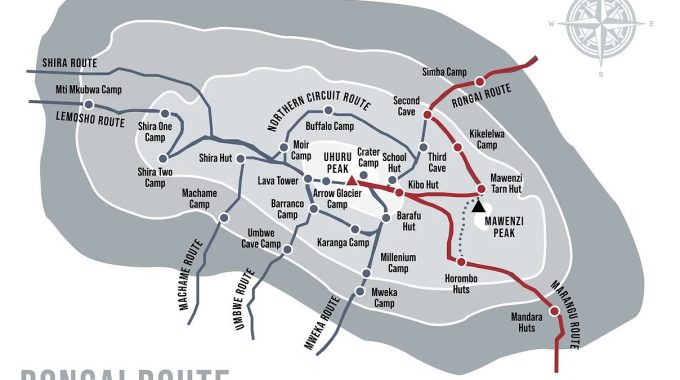
As the Rongai Route approaches the summit zone, it merges with the Marangu Route near Kibo Hut. From this point onward, climbers share the final ascent path toward Uhuru Peak.
Although the route eventually joins a busier section of the mountain, climbers still benefit from the quieter experience they enjoyed throughout most of the trek. By the time they reach Kibo Hut, many trekkers feel well acclimatized and prepared for summit night.
The merging of routes also means that climbers experience both the remote northern side and the classic summit approach used by generations of Kilimanjaro adventurers.
Summit Night and the Final Push
Summit night begins shortly before midnight. Trekkers leave camp in darkness and begin the challenging climb toward Gilman’s Point on the crater rim.
The ascent requires patience, determination, and mental focus. Oxygen levels decrease significantly at this altitude, and every step can feel demanding. Climbers move slowly across volcanic scree while following their guides toward the summit.
As dawn approaches, sunlight begins to illuminate the glaciers and volcanic landscape. This transformation often provides renewed energy during the most difficult stage of the climb.
Reaching Uhuru Peak at sunrise delivers a remarkable reward. The views extend across vast stretches of East Africa, and the sense of accomplishment reflects days of effort and perseverance.
Descending Through a Different Landscape
Unlike the ascent, the descent typically follows the Marangu Route. This allows climbers to experience a different side of the mountain on their way down.
The changing scenery adds variety to the journey and provides an opportunity to observe landscapes that were not visible during the ascent. The descent also allows the body to recover gradually as altitude decreases.
By using separate ascent and descent routes, trekkers gain a broader perspective of Kilimanjaro’s diverse environments.
Who Should Choose the Rongai Route?
The Rongai Route appeals to climbers who value solitude, gradual acclimatization, and a less crowded trekking experience. Its moderate difficulty level makes it suitable for first-time climbers, while its unique northern approach attracts experienced trekkers looking for a different Kilimanjaro experience.
Travelers climbing during wetter months often favor Rongai because the northern slopes generally receive less rainfall. The route’s steady gradient also makes it attractive for those concerned about steep ascents.
Although it may not offer the same dramatic variety as Lemosho or Machame, it compensates with tranquility, comfort, and a strong acclimatization profile.
Best Time to Climb |the Rongai Route
The Rongai Route remains accessible throughout the year, but the dry seasons generally provide the best climbing conditions. January to March offers clear skies, cooler temperatures, and relatively quiet trails. June through October also attracts many climbers because of stable weather and excellent visibility.
Because the northern slopes receive less rainfall, Rongai often performs well even during periods when other routes experience wetter conditions. This advantage makes it one of the most reliable routes on Kilimanjaro.
Regardless of the season, climbers should prepare for a wide range of temperatures. Conditions can vary from warm sunshine during the day to freezing temperatures near the summit.
Why the Rongai Route Continues to Grow in Popularity
The Rongai Route offers a climbing experience that balances comfort, scenery, and acclimatization. Its quieter trails, gradual ascent, and unique perspective of Kilimanjaro make it an appealing alternative to the mountain’s busier routes.
For climbers who want to avoid large crowds while maintaining a realistic chance of reaching the summit, Rongai presents an excellent option. The route showcases a side of Kilimanjaro that many visitors never see, providing a journey that feels both personal and rewarding.
Its combination of accessibility, peaceful surroundings, and high-altitude adventure ensures that the Rongai Route remains one of Kilimanjaro’s most respected climbing paths.