Rwanda Moto-Taxi Tips: How to Use Motorcycle Taxis Safely in Rwanda
Motorcycle taxis, universally known in Rwanda as motos, are the most pervasive and most affordable short-distance transport across the country. In Kigali, regulated moto taxis fill the gap between fixed bus routes and more expensive private taxis. In provincial towns and rural areas, motos are often the only available transport for distances of one to fifteen kilometres. Understanding how to use motos safely and effectively is a practical skill for any independent visitor in Rwanda.
Rwanda has invested significantly in moto taxi regulation compared to most African countries. Kigali introduced mandatory moto taxi registration, helmet requirements for both riders and passengers, and designated moto taxi waiting zones that have brought more order to the urban moto market than exists in most regional cities. The regulatory environment means Kigali motos are generally safer than informal motorcycle taxi services in comparable African cities.
Safety First: Helmets and Speed
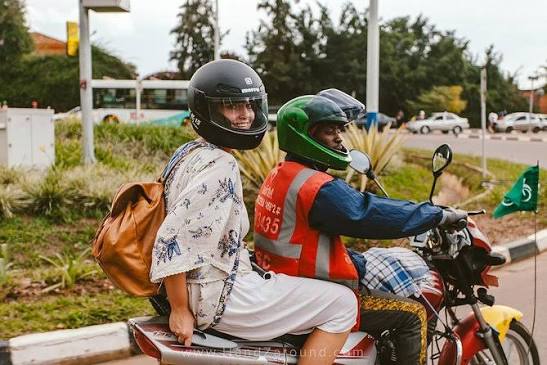
Always insist on a helmet before boarding a moto taxi anywhere in Rwanda. The law requires helmets for both rider and passenger. Any moto operator who does not have a passenger helmet available is breaking the law and demonstrating disregard for your safety. Never board a moto without a helmet. The short-distance and low-fare nature of moto rides creates a temptation to skip the helmet. Resist it. Head injuries from moto accidents are life-changing events. A helmet is the single most important moto safety decision you make.
Helmets in Rwanda are typically provided by the moto operator. They are carried on the passenger seat or stored in a small bag under the seat. Before putting the helmet on, check the chin strap is functional and the helmet sits securely on your head. A loose or non-functional strap does not provide adequate protection in an accident. If the helmet does not fit, ask for a different one or find a different moto.
Rwanda motos can travel quickly. Many riders accelerate to speeds that feel uncomfortable for passengers unfamiliar with moto travel. You are entitled to ask the driver to slow down. A polite “biruhutse” meaning slowly or take it easy is understood by most Rwanda moto riders. Your comfort level is the relevant speed limit on any moto journey. Riders who persistently drive faster than you are comfortable with should be asked to stop so you can disembark.
Finding and Pricing Motos
Registered moto taxis in Kigali wait at designated moto taxi stands marked with yellow paint or signage. These stands are located throughout the city at major junctions, markets, bus stops, and commercial centres. Using the designated stands reduces the chance of encountering unregistered riders who operate without the insurance and registration that formal motos require.
App-based moto taxi services are available in Kigali through the SafeMotos and Yego Moto platforms. These apps connect riders and passengers through a registered, tracked system. The app calculates the fare in advance, tracks the journey GPS, and enables cashless payment. App-based motos represent the highest safety standard available in the moto market because the registration requirements screen out the least professional operators.
Negotiating prices before boarding is standard practice for motos that operate outside the app system. Ask the price for your destination before confirming you want to go. In Kigali, typical short urban moto journeys cost 500 to 1,500 Rwandan Francs. Longer cross-city journeys run 2,000 to 5,000 Rwandan Francs. Provincial town motos generally cost less than Kigali motos for comparable distances. The opening price offered to a visitor often exceeds the local rate. Knowing the approximate range and negotiating politely usually results in a fair price.
Moto Taxi in Provincial Towns
In Musanze, Huye, Gisenyi, and other provincial centres, motos are the primary short-distance transport within the town and to nearby locations. They are used for journeys to lodges outside the town centre, to market areas not served by buses, and for any point-to-point movement that walking would take more than 15 minutes. Provincial motos are generally less formally regulated than Kigali motos. The helmet rule applies equally but enforcement varies. Insisting on a helmet remains essential outside Kigali.
Moto Taxis in Your Rwanda Safari
Using a moto taxi even once during a Rwanda safari gives a genuine experience of the country’s most ubiquitous daily transport mode. The sensation of moving through Kigali traffic on the back of a moto in the early morning, seeing the city from street level at traffic speed, is a perspective no safari vehicle provides. Use them safely and they add an authentic dimension to the Rwanda experience.
African Wild Trekkers advises Rwanda safari clients on all local transport options including safe moto taxi use. Contact us to plan a Rwanda safari that includes the local transport experiences that bring you into authentic contact with how Rwanda moves through its daily life.