info@africanwildtrekkers.com

info@africanwildtrekkers.com

blog

Kenya Birding Guide: Over 1,000 Species and the Top Birding Destinations

Kenya Birding Guide: East Africa’s Premier Birding Destination

The Kenya birding guide for any serious birdwatcher begins with the most important number in East African ornithology — 1,144 bird species recorded in Kenya, representing approximately 11 percent of the world’s total bird species in a country covering less than 0.4 percent of the earth’s land surface. Kenya’s extraordinary avian diversity reflects the country’s ecological range: from the Indian Ocean coast’s mangrove and reef systems through the semi-arid northern thornbush, the Rift Valley soda lakes, the highland rainforests of Mount Kenya and the Aberdares, and the open savanna of the Maasai Mara and Tsavo. No single Kenya birding safari visits all these ecosystems, but a strategically planned circuit targeting two or three distinct habitat zones produces species lists that exceed 400 birds in a single week for active observers with experienced specialist guides — figures that dwarf the totals achievable in any equivalent week of birding in Europe, North America, or most of Asia. African Wild Trekkers designs Kenya birding safaris as specialist itineraries alongside the standard wildlife programs, matching specialist bird guides to clients whose primary safari priority is maximizing species count across Kenya’s most productive birding habitats.

Kenya’s Top Birding Destinations

Lake Baringo and Lake Bogoria: Rift Valley Birding

Lake Baringo in Kenya’s central Rift Valley hosts over 450 bird species within the immediate lake basin — the highest single-site bird diversity of any freshwater lake in Kenya, combining waterbirds on the lake surface (African fish eagle, goliath heron, yellow-billed stork, saddle-billed stork, and African openbill) with the surrounding acacia woodland’s dry-country species (Jackson’s hornbill, bristle-crowned starling, northern red bishop, and Hemprich’s hornbill) and the rocky Tugen Hills behind the lake’s eastern shore adding highland and cliff-face specialists. The lake’s freshwater chemistry contrasts with the alkaline soda lakes of Nakuru and Bogoria to the south, and the different chemistry creates a fish-rich environment that supports piscivore diversity unavailable at the algae-feeding flamingo lakes. Baringo’s island accommodation at Lake Baringo Island Camp and Roberts Camp provides 24-hour waterside birding access — species that appear at the lake edge after dark include the pel’s fishing owl, a large and spectacular nocturnal hunter that the Baringo shoreline’s fig trees consistently shelter. The bird boat trips on Baringo — guided by the lake’s specialist boat guides who combine knowledge of waterbird location with basic ornithological identification support — produce species lists of 80 to 120 waterbirds per two-hour trip that exceed the totals achievable by shoreline walking alone.

Combining Baringo and Bogoria in a single two-night Rift Valley birding extension covers both the freshwater and alkaline lake habitats that together account for the majority of Kenya’s waterbird diversity in a single geographic unit. The road between Baringo and Bogoria passes through Acacia commiphora thornbush that holds dry-country endemics — Somali bee-eater, vulturine guineafowl, pale prinia, and African pygmy kingfisher — that the lakes’ shoreline habitat does not produce, and the 90-minute drive between the two lakes generates a productive roadside birding session if the vehicle stops at appropriate habitat patches. African Wild Trekkers builds the Baringo-Bogoria combination into northern Kenya circuits for birding-priority clients and connects it to Samburu via the B4 road through Marigat and Loruk — a route that passes productive escarpment habitats generating further highland and lowland transition zone species that neither lake alone accesses. The total species list from a two-night Baringo plus one-night Bogoria visit typically reaches 180 to 220 species for an active observer with a specialist guide — a strongly productive two days of Rift Valley birding before the Samburu endemic species and riverfront birds add further to the trip total.

Samburu and the Kakamega Forest

Samburu National Reserve’s semi-arid thornbush and riverine habitat produces Kenya’s most distinctive bird assemblage for non-birding safari travelers — the Samburu specials include Somali ostrich (distinct from common ostrich), Vulturine guineafowl (the world’s most spectacular guineafowl species), Golden-breasted starling (Africa’s most brilliantly colored starling), Buff-crested bustard, and Martial eagle, all within a single morning game drive that also produces the Samburu Five mammals alongside the birds. Specialist Kenya birding guides who focus on Samburu can accumulate 200 to 250 species in three days — the combination of riverfront species along the Ewaso Ng’iro, the open bush birds in the semi-arid acacia, and the raptors that hunt both habitats creates a species density that justifies a dedicated Samburu birding visit even for observers who have already visited the reserve for mammal-focused safaris. The Martial eagle — Africa’s largest eagle with a wingspan reaching 190 centimeters — hunts the Samburu plains regularly enough that dedicated raptor observers can expect multiple sightings per day rather than the one-per-week average that Maasai Mara observers report from the less arid ecosystem.

Kakamega Forest in western Kenya near the Uganda border represents Africa’s easternmost remnant of the West African equatorial rainforest — a 240-square-kilometer island of closed canopy forest that hosts species found nowhere else in East Africa, including the Great Blue Turaco (Kenya’s most spectacular canopy bird), the Dusky Tit, the Yellow-billed Barbet, Cassin’s Grey Flycatcher, and the Black-and-White Casqued Hornbill. A two-night Kakamega Forest visit as part of a western Kenya circuit produces the forest bird species list that no eastern or northern Kenya destination can replicate, and the combination of Kakamega with Lake Victoria’s waterbird species and the Nandi Escarpment’s highland birds creates a western Kenya birding circuit of genuinely outstanding diversity. Reaching Kakamega from Nairobi requires a four-hour drive or a domestic flight to Kisumu — African Wild Trekkers coordinates the western Kenya birding circuit as a separate itinerary add-on for specialist clients whose bird list priorities specifically include the Kakamega forest specials that are absent from the standard eastern Kenya safari route.

Maasai Mara Birding Highlights

Savanna Birds of the Maasai Mara

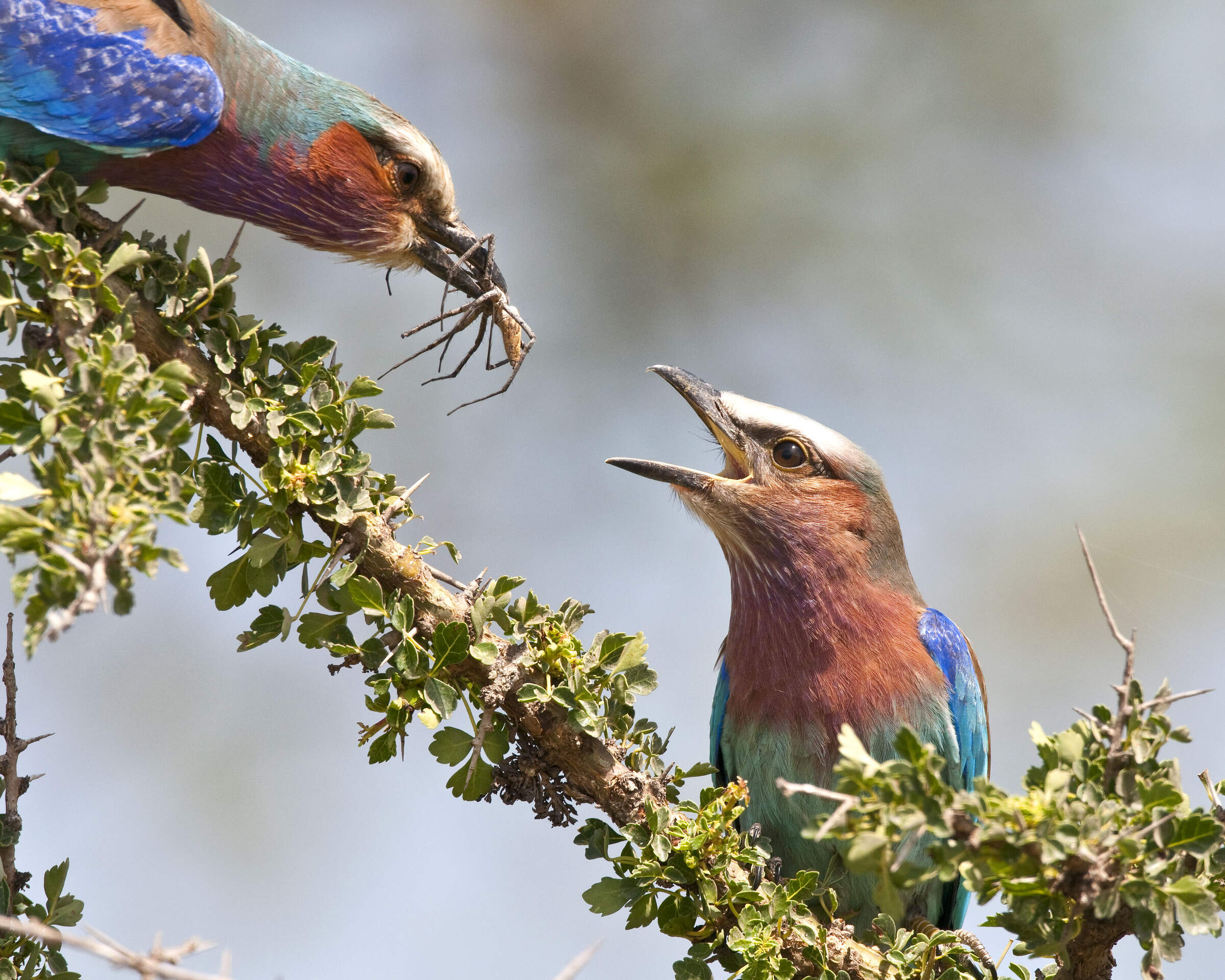
The Maasai Mara is not typically marketed as a birding destination but its species list exceeds 500 recorded birds, and a morning game drive specifically combining mammal observation with active birding can produce 80 to 100 species before breakfast in the right season. The Mara’s open savanna hosts Secretary bird hunting on foot, Kori bustard (Africa’s heaviest flying bird) displaying in the short grass, Lilac-breasted roller on every third acacia branch providing the most vibrant color photography of any Kenya bird species, and the spectacular Crowned crane pair walking through the long grass with breeding plumage erected in a display that safari photographers specifically seek. The Mara River’s fig trees concentrate forest bird species alongside the riverine woodland’s raptors — African fish eagle, Augur buzzard, and Bateleur eagle all hunt the river corridor in a single 500-meter stretch that provides aerial wildlife viewing above the hippo pools and crocodile sandbanks below. The superb starling — perhaps the most common and the most brilliantly colored of the Mara’s bird species — appears at every camp table and on every game drive tree branch in such numbers that non-birders who would never specifically look for birds photograph them repeatedly as an unavoidable visual element of the Mara experience.

Migrant birds transform the Maasai Mara’s species list dramatically between October and April when the Palaearctic migration brings European roller, Montagu’s harrier, yellow wagtail, swallows, and warblers from Europe and Asia to the Kenya savanna in numbers that temporarily double the overall bird activity across the ecosystem. October and November produce the highest migrant diversity as the southward migration flows through Kenya — a single morning’s Mara game drive in early November can record 12 or more migrant raptor species alongside the resident raptors, and the migration concentration at the Mara Triangle’s grassland creates raptor spectacles comparable to the great European hawkwatch sites during their own peak seasons. African Wild Trekkers assigns Mara camp guides with the strongest bird knowledge to clients who request birding-integrated game drives — guides who can name the Mara’s 500 recorded species by sight and call significantly enhance the morning drive’s intellectual depth alongside the mammal observation that the standard Mara itinerary prioritizes.

Kenya Birding Checklist Approach

Kenya birding safaris benefit from a systematic checklist approach that identifies target species for each habitat zone visited and tracks the accumulating species list across the itinerary’s geographic progression. The Kenya Bird Map (Kenya Birds & Birding) and the eBird database’s Kenya species list provide the most current and comprehensive pre-trip planning resources, and downloading the Merlin Bird ID app with the Africa sound pack before departure allows field identification from vocalization — critical in dense forest and riverine woodland habitats where birds are heard but not seen. Most Kenya birds are active for the two to three hour windows after sunrise and before sunset when feeding and singing activity peaks, and the midday rest period that most safari travelers use for lunch and rest in camp allows productive scanning of waterhole and tree species that morning-active species do not always generate during the early drive. Carrying binoculars — minimum 8×42 magnification for clear image at usable field distances — is non-negotiable for Kenya birding regardless of whether the trip is primarily mammal-focused, since bird identification at Safari binocular distances is impossible with the naked eye and the field guide in the vehicle cannot be used effectively without knowing roughly what you are looking at first.

African Wild Trekkers can arrange specialist Kenya birding guides — professional ornithologists or guides certified by the Kenya Professional Safari Guides Association at the highest bird-knowledge level — for clients whose primary Kenya safari objective is maximizing species count rather than mammal-focused game drives. These specialist guides carry spotting scopes for field identification of distant or difficult species, know the specific habitat patches within each park where Kenya’s rarest and most sought-after species consistently occur, and maintain eBird species lists from recent personal observations that provide a realistic and current expectation of what the specific circuit will produce. The specialist guide model adds cost to the standard safari structure but converts a casual 60-species bird encounter that most mammal-focused safari travelers accumulate incidentally into a 300 to 400 species week that dedicated birders from Europe and North America specifically travel to Kenya to achieve.

Plan Your Safari

Kenya birding guide itineraries require specific habitat targeting to maximize species diversity — a single Maasai Mara visit covers savanna species, while the full Kenya birding circuit needs at least three distinct habitat zones to approach the 300+ species tallies that specialist clients achieve in a week. African Wild Trekkers designs birding-specific Kenya itineraries with specialist guide assignment and habitat-specific routing for any budget tier.

Your Kenya birding package includes specialist bird guide or mammal guide with strong bird knowledge depending on budget, private 4×4 vehicle, all park entrance fees, full-board accommodation, domestic flights between birding zones, and pre-trip species list planning specific to your target species and travel dates.

Contact African Wild Trekkers at africanwildtrekkers.com/contact with your target species and travel dates and we will design a complete Kenya birding safari itinerary and confirm availability within 24 hours.