Mabamba Swamp Birding: Uganda’s Most Accessible Shoebill Stork Site
Mabamba Swamp birding near Entebbe gives Uganda safari visitors reliable access to the shoebill stork within 45 minutes of Kampala. The Mabamba wetland on the northern shore of Lake Victoria is Uganda’s most famous and most visited shoebill site. Mabamba swamp birding produces shoebill encounters on nearly every morning visit during the year. The shoebill, Africa’s most sought-after wetland bird, hunts lungfish in the dense papyrus channels of Mabamba Bay. Early morning boat trips through these channels put visitors at close range to resident shoebill individuals within the first hour on the water. No other site in East Africa combines this shoebill reliability with such convenient access from a major city.
The Mabamba wetland covers approximately 2,400 hectares of Lake Victoria papyrus swamp. BirdLife International designates it an Important Bird Area and a Ramsar Wetland Site of international significance. Mabamba Swamp birding attracts birding visitors from across the world who come specifically for the shoebill. The local community manages the Mabamba canoe trip program under a conservation and community tourism model. Canoe trip fees go directly to the local guide cooperative and wetland protection fund. Mabamba Swamp birding supports both exceptional conservation outcomes and direct community income in a single visitor experience.
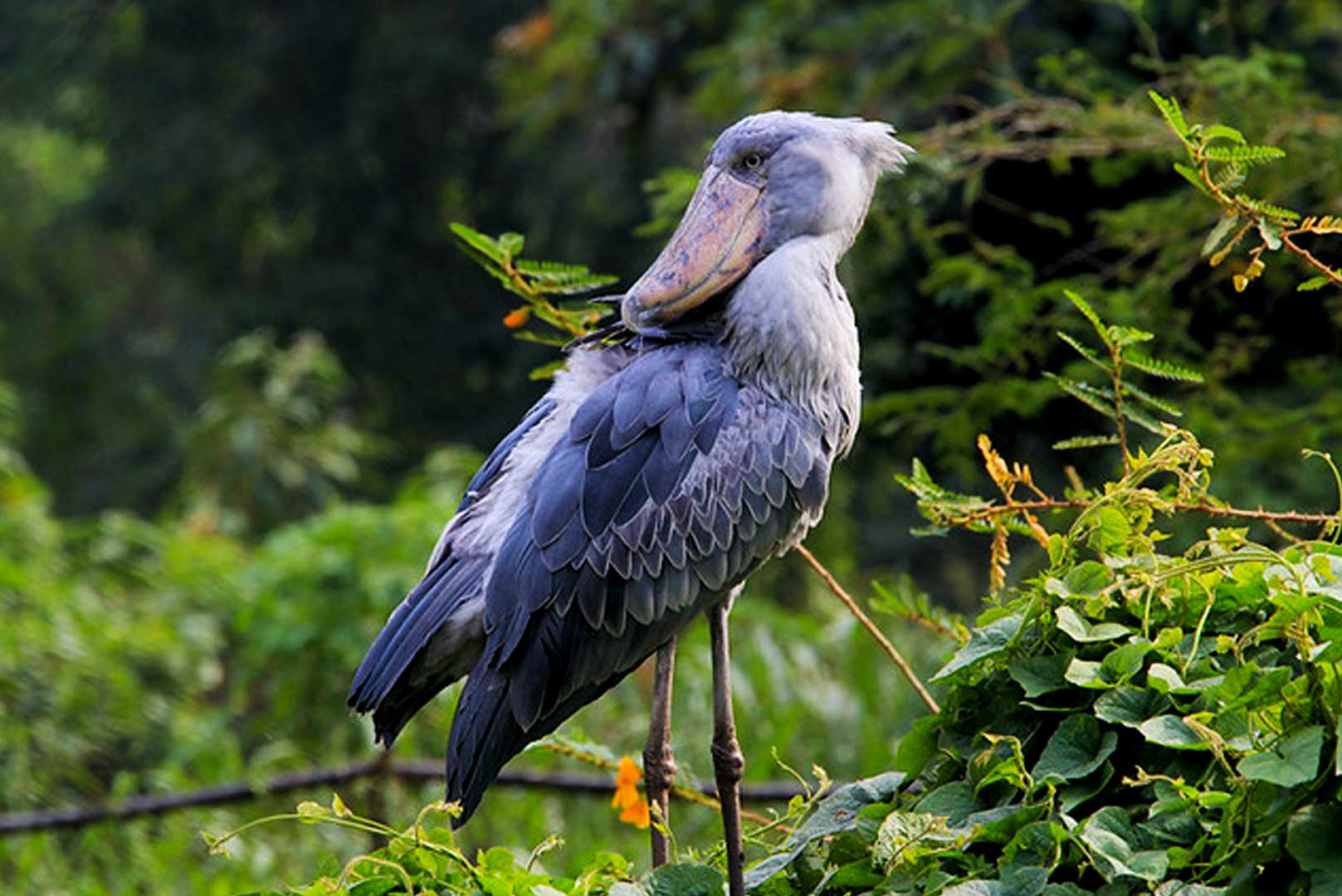
The Shoebill at Mabamba Swamp Birding
Finding the Shoebill at Mabamba Swamp
Mabamba Swamp birding guides know the current territory of each resident shoebill bird in the wetland. The Mabamba swamp typically supports two to five resident shoebill individuals across different papyrus sections. Guides update their shoebill location knowledge before each morning’s canoe trip departure. Early morning from 06:30 provides the most productive Mabamba Swamp birding conditions for shoebill encounters. Shoebills hunt actively in the early morning when lungfish surface in the shallow papyrus water. They return to deep papyrus shade by midday and become significantly harder to find and approach.
The canoe approach to a Mabamba shoebill requires quiet paddling and patient positioning. A skilled guide brings the canoe within 10 to 20 meters of a hunting shoebill without flushing the bird. At this distance the extraordinary scale of the shoebill becomes immediately apparent. The bill alone measures 23 centimeters in length and 10 centimeters in width at its base. Mabamba swamp birding visitors consistently describe the close encounter with a shoebill as one of Africa’s most impressive wildlife experiences. The combination of immense size, prehistoric appearance, and stillness during hunting makes the shoebill uniquely compelling at close range.
Other Birds at Mabamba Swamp Birding Sites
Mabamba swamp birding produces an outstanding wetland bird list beyond the shoebill headline encounter. The African jacana walks across floating vegetation throughout the open water sections between papyrus stands. Malachite kingfisher and pied kingfisher both perch along every papyrus channel edge throughout the morning. The lesser swamp warbler and papyrus gonolek call constantly from within the papyrus stems. The grey crowned crane, Uganda’s national bird, feeds in the shoreline grassland visible from the canoe approach channel. The African fish eagle calls from tall trees on the wetland edge and is heard before it is seen on every morning visit.
Herons are particularly diverse during Mabamba swamp birding visits throughout the year. The Goliath heron, the world’s largest heron, inhabits the open water margins and stands up to 1.5 meters tall. Black-headed heron, grey heron, and purple heron all occur along the shoreline and papyrus edge. Long-toed lapwing walks on the floating vegetation in the open water sections between the canoe channels. Mabamba Swamp birding in the November to April period adds visiting Palearctic marsh harriers and waders to the resident species list. A morning Mabamba swamp birding trip regularly produces 60 to 80 species in two to three hours on the water.
Planning Your Mabamba Swamp Birding Visit
Getting to Mabamba Swamp from Kampala
Mabamba Swamp sits on the Lake Victoria shoreline near Mpigi, approximately 45 kilometers west of Kampala. The drive from Kampala takes 45 minutes to one hour on the tarmac road via Mpigi town. From Entebbe International Airport, the drive takes 60 to 75 minutes via the Kampala road and Mpigi turnoff. Mabamba Swamp birding trips work well as an early morning activity for visitors arriving on overnight international flights. A guide and canoe await at the Mabamba community landing site for pre-booked visitors. Pre-booking through a Kampala or Entebbe operator confirms the canoe and guide availability on your specific date.
The Mabamba Swamp birding trip uses simple wooden dugout canoes poled by local guides through the papyrus channels. Two to three visitors fit comfortably in each canoe with one guide. Larger groups use multiple canoes that navigate the channels together. The canoe trip lasts two to three hours for a standard Mabamba swamp birding visit. Extending to four hours allows the outer papyrus sections to be explored for additional shoebill territories. Binoculars and a camera with a 400mm or longer telephoto lens maximize the value of every Mabamba swamp birding encounter.
Combining Mabamba Swamp Birding with Other Sites
Mabamba Swamp birding combines efficiently with the Uganda Wildlife Education Centre in Entebbe in a single full day. A 06:30 Mabamba canoe trip is completed by 10:00, and the drive to Entebbe takes 60 minutes. The Uganda Wildlife Education Centre opens at 09:00, and a two-hour visit covers all exhibits. Lunch at a lakeside restaurant in Entebbe follows naturally before an afternoon safari departure. This morning’s Mabamba and afternoon Entebbe combination uses a safari arrival day productively. Visitors on tight schedules regularly complete both activities before a midday Entebbe upcountry transfer.
Mabamba Swamp birding pairs with a Murchison Falls road safari departure for a northern Uganda itinerary. The road from Kampala to Murchison passes through Mpigi, making Mabamba a natural first stop before continuing north. Birders beginning a complete Uganda birding safari at Mabamba start their trip list with shoebills, grey crowned cranes, and numerous wetland species before the main national park circuit begins. This strong opening day motivates the rest of the trip and establishes a high standard for the birding encounters that follow. Most Uganda birding itineraries that begin with Mabamba Swamp birding rate it among the trip highlights at the final debrief.
Plan Your Safari
Book your Mabamba Swamp birding canoe trip at least three days in advance through a Kampala or Entebbe operator. Request a 06:30 start for the best shoebill encounter conditions. Bring binoculars, a long telephoto lens, insect repellent, and a light rain jacket for the early morning water conditions on Lake Victoria.
African Wild Trekkers includes Mabamba Swamp birding in Uganda safari itineraries as a first-day activity for clients arriving at Entebbe on morning international flights. We pre-book canoes, guides, and transport so the Mabamba visit begins seamlessly at the start of every Uganda birding safari itinerary.
Contact African Wild Trekkers to add Mabamba swamp birding to your Uganda safari. We respond within 24 hours and design birding itineraries that build on the Mabamba shoebill encounter with the best birding sites across Uganda’s national parks and wetlands.