Shoebill Stork Facts: Uganda’s Prehistoric Riverbank Resident
Africa’s Most Remarkable Bird
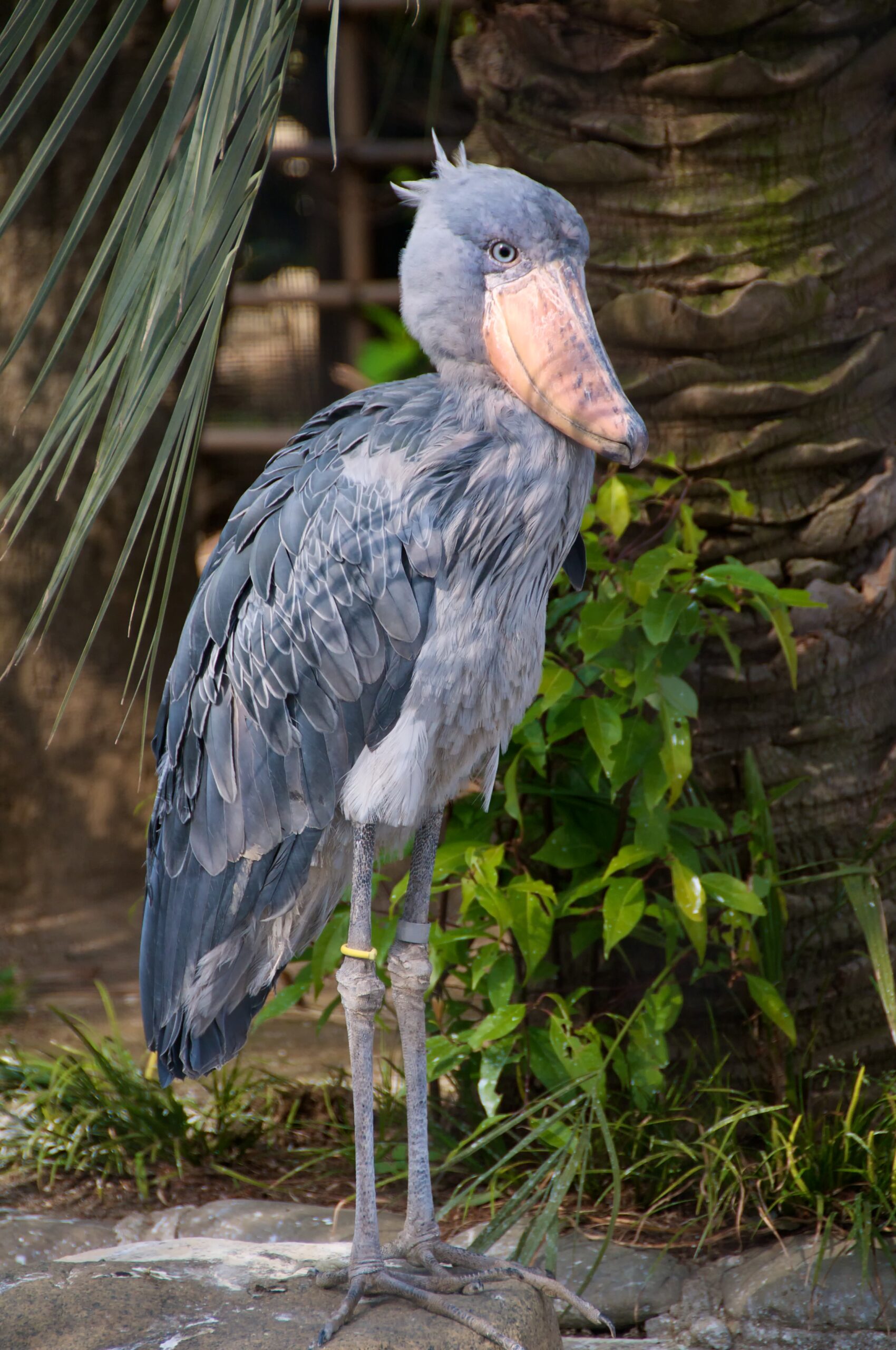
The shoebill is unlike any other bird on the planet. Standing up to 1.5 meters tall, grey, and motionless at the edge of a papyrus swamp, it resembles an animatronic creation from a science fiction film more than a living animal. The prehistoric quality of its appearance is not entirely misleading. The shoebill’s evolutionary lineage is ancient. Its closest living relatives are pelicans and herons. The skull-shaped, hooked shoebill that gives it its name is one of the most distinctive anatomical features in the avian world. The bill—20 centimeters long, 10 centimeters wide, with a sharp hook at the tip—is a specialized tool for capturing large prey. It targets the shallow, oxygen-poor waters of Central Africa’s papyrus swamps: lungfish, catfish, Nile monitor lizards, water snakes, and occasionally young crocodiles and small mammals.
For birders visiting Africa, the shoebill is one of the most sought-after species on the continent. It consistently appears among the top five most desirable African bird sightings in birding tour operator surveys worldwide. Uganda is the primary destination for reliable shoebill encounters. The Mabamba Swamp on the northwestern shores of Lake Victoria offers the most accessible and productive shoebill viewing available anywhere. Murchison Falls National Park’s Nile delta, the Ziwa Rhino Sanctuary’s papyrus channels. And the swamps of the Albert Nile near the DRC border also provide good shoebill habitat. The experience of encountering a shoebill at close range is consistently one of the most extraordinary wildlife encounters in Africa. Its unblinking yellow eye regards you with an expression somewhere between prehistoric indifference and active assessment.
Shoebill Biology and Hunting
Anatomy and Prey Capture
The Bill: Africa’s Most Specialized Hunting Tool
The shoebill’s bill is an engineering solution to a specific problem. It must capture large, powerful fish in oxygen-poor, murky water. Visual confirmation of prey position is limited in these conditions. The prey itself — particularly the lungfish — surfaces regularly to breathe atmospheric air and must be seized at the instant of surface appearance. The bill’s width and the sharp hook at its tip allow the shoebill to secure fish weighing up to five kilograms with a single strike. It maintains grip on prey that struggles powerfully. The curved hook prevents prey from slipping backward out of the bill. The edges of the bill have a serrated quality that assists with grip on slippery fish. The entire strike sequence—from still, motionless wait to bill strike to securing prey—completes in approximately 230 milliseconds. That is one of the fastest strike sequences of any large bird.
The shoebill’s hunting strategy is almost entirely patience-based. The bird stands, or moves with extraordinary deliberateness, at the edge of a papyrus swamp or in shallow water. It waits for prey to surface within striking range. It can remain motionless for minutes at a time. An endurance of stillness that makes it easy to mistake for a large grey statue from a distance. When a lungfish surfaces to breathe or a catfish moves in the shallow water near the shoebill’s feet, the strike is instantaneous and violent. The bird collapses forward onto its prey in what researchers call a “collapse attack,” using the full weight of its body to pin the prey item while the bill secures it. The collapse attack disturbs the water surface so thoroughly that the shoebill then shakes its head to remove vegetation and debris from the bill before swallowing its catch.
Breeding, Nesting, and Parental Behavior
Shoebills nest on floating or grounded vegetation platforms in papyrus and reed swamps. They typically choose areas remote from human disturbance. Pairs are monogamous and cooperative in nest building, incubation, and chick care. Clutches consist of one to three eggs, but shoebill pairs rarely raise more than one chick to fledging. Sibling rivalry between chicks, combined with the parents’ difficulty in provisioning more than one demanding large chick, means that a single dominant chick usually outcompetes the others. This siblicide behavior is also seen in eagles, herons, and several other large birds facing similar provisioning constraints. It allows parents to concentrate their resources on the single chick most likely to survive to independence.
Chick thermoregulation presents a significant parental challenge in the hot papyrus swamp environment. Parent shoebills carry water in their bills and pour it over the nest and chick to cool the nest’s microclimate during peak heat hours. This active nest-cooling behavior is documented in only a handful of bird species. It requires the parent to make repeated trips from the nest to open water, carrying water in the bill’s large gular pouch. These trips occur during the hours when the chick faces the greatest risk of heat stress. The investment required represents a significant time and energy commitment on top of the provisioning demands of a rapidly growing chick. It demonstrates the complexity of shoebill parental care in an environment that tests their behavioral flexibility continuously.
Conservation Status and Viewing
Population, Threats, and Best Sightings
Shoebill Conservation
The IUCN classifies the shoebill as Vulnerable, with an estimated global population of 5,000 to 8,000 individuals. The species lives in a relatively small range of papyrus swamp and flooded grassland habitats in Central and East Africa. South Sudan, Uganda, the DRC, Tanzania, Zambia, and Rwanda. It is highly sensitive to habitat degradation. Drainage of wetlands for agriculture, burning of papyrus for charcoal and building material, and disturbance at nest sites. And capture for the illegal pet trade all contribute to population pressure. The shoebill’s slow reproductive rate. A maximum of one chick per pair per year. Means that population recovery from any significant decline is inherently slow. The species cannot afford high annual mortality rates from any cause.
Uganda has become the primary ecotourism hub for shoebill viewing. The Mabamba Swamp wetland, designated as a Ramsar site, receives enough visitor revenue to support community ranger programs. These programs reduce habitat disturbance and nest site interference. The boat-based birding experience at Mabamba is one of the most accessible and productive wildlife experiences in Uganda. Local boatmen familiar with individual bird territories guide visitors through the papyrus channels. Shoebill sightings are not guaranteed on every trip. But success rates at Mabamba during the dry season. June to August and December to February. Are high enough that specialist birding tour operators build the Mabamba visit into Uganda itineraries with confidence? Combining Mabamba with mountain gorilla trekking and chimpanzee tracking produces an itinerary that delivers an extraordinary range of wildlife experiences in a single country.
Other Uganda Shoebill Locations
Murchison Falls National Park’s Victoria Nile delta offers shoebill sightings within a full Nile Delta boat safari. That safari also delivers hippos, Nile crocodiles, elephants drinking at the river’s edge, and an extraordinary diversity of waterbirds. The delta’s extensive papyrus beds and reed margins provide ideal shoebill habitat. Boat safaris operated from lodges around the park’s southern boundary include the shoebill as one of the priority species. Unlike Mabamba, where the shoebill is essentially the primary target, Murchison’s shoebill sightings come within a broader game-watching context. The experience is less focused but more holistic. Travelers combining Murchison Falls with a chimpanzee trek in Kibale and gorillas in Bwindi can add a shoebill boat safari to the Nile Delta as a seamless complement to Uganda’s other iconic wildlife encounters.
Lake Kyoga in central Uganda and the Bangweulu Wetlands of northern Zambia provide additional shoebill habitat. Access is more challenging than the established Uganda birding circuit. The Bangweulu Wetlands—a vast, seasonally flooded grassland and papyrus ecosystem—host one of the continent’s most important shoebill breeding populations. They attract serious birding expedition travelers willing to accept rough travel conditions in exchange for the possibility of observing shoebills in a genuinely remote and undisturbed environment. For travelers on standard East Africa safari itineraries, Uganda’s Mabamba and Murchison Falls remain the most practical and rewarding shoebill destinations by a considerable margin.
Plan Your Safari
Shoebill viewing at Mabamba Swamp works best as a half-day morning excursion from Entebbe or Kampala. It is easily incorporated into any Uganda itinerary as an early morning activity before or after a flight connection. Murchison Falls shoebill sightings work best when the Nile Delta boat safari is scheduled separately from the standard Murchison boat cruise upstream to the falls.
African Wild Trekkers builds shoebill encounters into Uganda itineraries alongside gorilla trekking in Bwindi and chimpanzee tracking in Kibale. And game drives in Queen Elizabeth and Murchison Falls. This creates birding-inclusive circuits that deliver the full range of Uganda’s wildlife without wasted travel time.
Contact African Wild Trekkers at africanwildtrekkers.com/contact with your Uganda travel dates, and we will design an itinerary that includes shoebill viewing alongside Uganda’s most iconic wildlife encounters within 24 hours.