Lake Elementaita Birds: Kenya’s Finest Soda Lake Birding
Lake Elementaita birds represent one of Kenya’s most rewarding birding concentrations on the Rift Valley soda lake circuit. This shallow alkaline lake in Nakuru County holds over 450 bird species. Lake Elementaita birds include massive flamingo concentrations, great white pelican breeding colonies, and the full suite of Rift Valley waterbird species. UNESCO recognised Lake Elementaita birds and the lake ecosystem as part of the Kenya Lake System World Heritage Site inscribed in 2011. Lake Elementaita birds are accessible from several excellent lodge properties on the lake shore. The lake sits between Nakuru and Naivasha on the A104 highway making Lake Elementaita birds accessible as a stop on any Kenya Rift Valley circuit.
Lake Elementaita birds are most spectacular during the November to April rainy season influx. Flamingo numbers at Lake Elementaita birds peak when lake levels and spirulina algae growth are highest. Great white pelican breeding at Lake Elementaita birds creates one of the largest nesting colonies in East Africa. The combination of flamingo spectacle, pelican colony, and extraordinary Rift Valley scenery makes Lake Elementaita birds one of the most photogenic birding sites in Kenya.
Lake Elementaita Birds Species Guide
Flamingos at Lake Elementaita
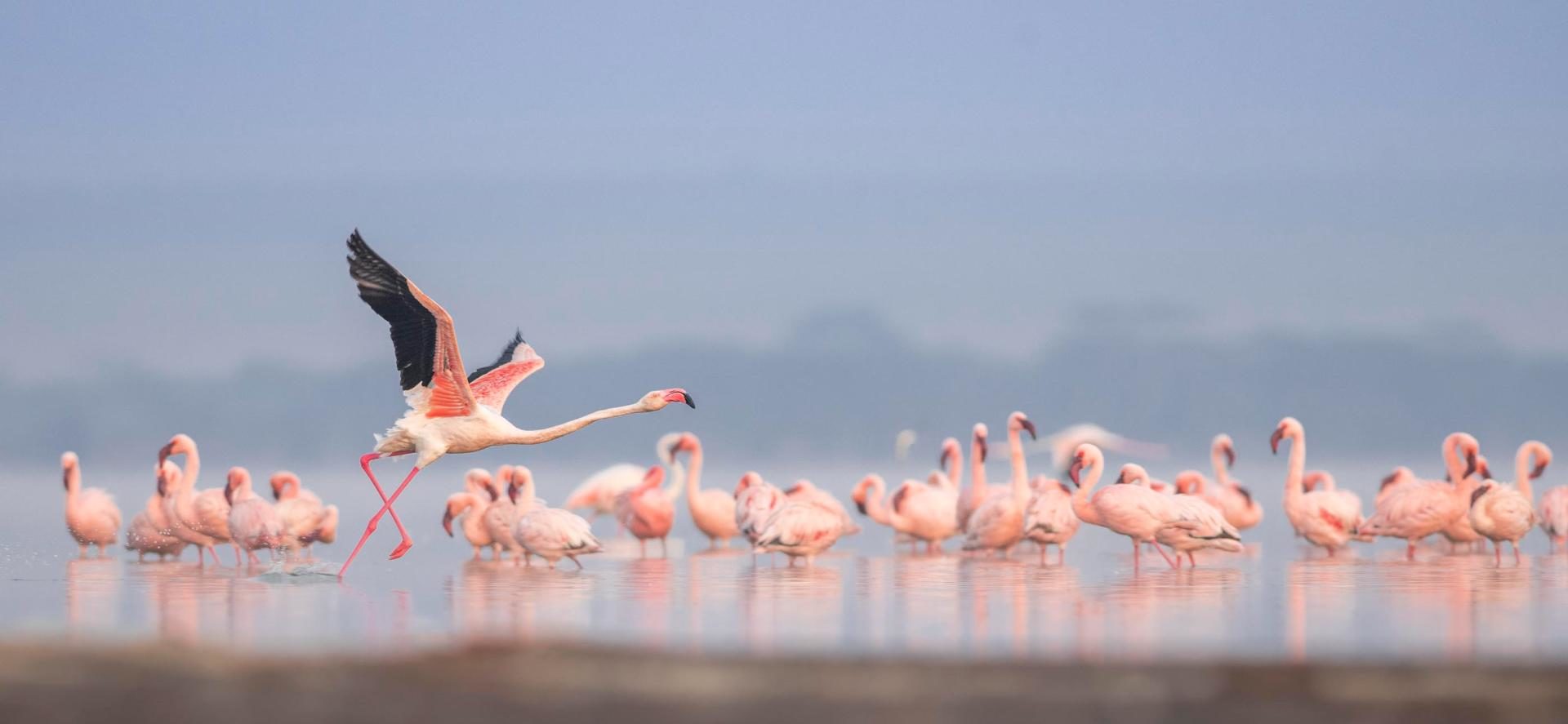
Lesser flamingo is the most numerous of the Lake Elementaita birds species in most seasons. Concentrations of 50,000 to 500,000 lesser flamingo gather at the lake during peak spirulina growth periods. Greater flamingo also inhabits Lake Elementaita birds feeding areas but in smaller numbers than the lesser species. The filtering bills of the lesser flamingo are adapted specifically to harvest spirulina from the alkaline water surface. Greater flamingo at Lake Elementaita birds uses a different bill structure to pick invertebrates from the lake mud. This dietary difference allows both flamingo species to co-exist at Lake Elementaita birds without direct competition.
The pink colouring of the Lake Elementaita birds flamingo mass against the white alkaline lake surface creates extraordinary photography opportunities. Dawn light on the Lake Elementaita birds flamingo concentrations near the western shore produces the most dramatic images. Flamingo calling creates a continuous murmuring background sound at all active Lake Elementaita birds concentrations. The flamingo social behaviour at Lake Elementaita birds includes synchronised marching displays in the breeding season. These Lake Elementaita birds marching displays are performed by hundreds of birds moving in the same direction simultaneously. The spectacle is one of the strangest and most captivating of all Lake Elementaita birds behaviours.
Pelicans at Lake Elementaita Birds Sites
Great white pelican breeds on a small island in Lake Elementaita birds territory. This breeding colony is one of only two confirmed great white pelican breeding sites in Kenya. Lake Elementaita birds pelican colony numbers vary between 200 and 2,000 breeding pairs in different years. The pelican chicks at Lake Elementaita birds are visible from the lake shore with a good telescope during the breeding period. Adult Lake Elementaita birds pelicans commute between the breeding island and open lake fishing areas throughout the day. The sight of 500 Lake Elementaita birds pelicans flying in formation across the lake is one of the most impressive aerial wildlife displays in the Rift Valley.
Pink-backed pelican also occurs at Lake Elementaita birds in smaller numbers than the great white species. This smaller pelican species uses different fishing tactics from the great white at Lake Elementaita birds sites. Great white pelican at Lake Elementaita birds uses cooperative fishing in large synchronised groups. Pink-backed pelican at Lake Elementaita birds is a solitary hunter that plunge-dives for fish in the slightly fresher water sections. Both Lake Elementaita birds pelican species are most active in the early morning fishing period between 06:00 and 10:00.
Lake Elementaita Birds Beyond Flamingos
Waders and Waterbirds at Lake Elementaita
Lake Elementaita birds wader species peak during the northern hemisphere winter from September to March. Little stint is the most numerous Lake Elementaita birds wader during the northern winter period. Ruff arrives at Lake Elementaita birds in large groups and feeds along the exposed mudflats in active foraging parties. Marsh sandpiper, wood sandpiper, and common sandpiper are regular Lake Elementaita birds waders during the migration period. Kittlitz’s plover breeds along the alkaline lake margin at Lake Elementaita birds. This small plover nests directly on the exposed lake shore ground and is vulnerable to human disturbance.
Goliath heron stands at the fresher southern Lake Elementaita birds inflow section where fish can survive. This massive heron is the world’s largest and creates a commanding presence in the Lake Elementaita birds landscape. Black-winged stilt, avocet, and black-necked grebe are all regular Lake Elementaita birds inflow waders. Yellow-billed stork feeds in the same section as the goliath heron at Lake Elementaita birds. African spoonbill uses its spatulate bill in sweeping feeding movements at the Lake Elementaita birds mudflat margins. These Lake Elementaita birds waterbird species concentrate at the southern end of the lake where the water chemistry and depth are most suitable for feeding.
Raptors at Lake Elementaita Birds
African fish eagle is the most conspicuous Lake Elementaita birds raptor. Fish eagle calls echo from the fever tree woodland on the lake shore throughout the day. Augur buzzard soars on thermals above the Soysambu Conservancy hills that border the Lake Elementaita birds area. African marsh harrier quarters the reed bed sections at the Lake Elementaita birds south end. Osprey occasionally visits Lake Elementaita birds during the northern migration period between September and March. Long-crested eagle perches on exposed branches at the Lake Elementaita birds woodland edge. These Lake Elementaita birds raptor species complement the waterbird concentrations with predator-prey drama visible from the lake shore road.
Soysambu Conservancy surrounds the northern section of Lake Elementaita birds in a private wildlife reserve. The Soysambu conservancy land adds zebra, giraffe, eland, and other savanna wildlife to the Lake Elementaita birds experience. A Soysambu Conservancy morning game drive produces both the Lake Elementaita birds soda lake spectacle and savanna mammal encounters in the same half-day programme. The Soysambu Conservancy flamingo research programme has contributed significantly to understanding of flamingo population dynamics across the Kenya Rift Valley lakes.
Plan Your Safari
Visit Lake Elementaita birds on the Nakuru to Naivasha drive for a productive two-hour lakeside stop at the main flamingo and pelican viewing area. Stay at a Soysambu Conservancy lodge for a full Lake Elementaita birds morning programme combining the soda lake, the game drive, and the great white pelican colony. Combine Lake Elementaita birds with Nakuru and Bogoria on a three-day Rift Valley lakes circuit.
African Wild Trekkers includes Lake Elementaita birds in Kenya Rift Valley lake circuit itineraries. We arrange Soysambu Conservancy game drives and design Rift Valley programmes that combine the flamingo and pelican spectacle at Lake Elementaita birds with Nakuru rhinos and Bogoria geysers.
Contact African Wild Trekkers to visit Lake Elementaita birds. We respond within 24 hours and design Rift Valley birding itineraries that access the finest flamingo, pelican, and waterbird concentrations at this UNESCO World Heritage lake.