Rhino Trekking Africa: Every Country Where You Can Track Rhinos on Foot
Tracking Rhinos on Foot in Africa: A Complete Guide to the Best Destinations
Rhino trekking on foot is one of Africa’s rarest and most thrilling wildlife experiences. It involves following the tracks of one of Africa’s most endangered mammals through bush terrain on foot. Armed trackers with the knowledge to locate, approach safely, and observe these remarkable animals guide the experience. Vehicle-based game drives cannot provide the same conditions. Rhino populations have been devastated by poaching across sub-Saharan Africa. Finding countries where rhinos exist in numbers that make foot tracking a realistic experience requires specific knowledge of where populations have been rebuilt and protected. This guide covers every significant rhino trekking destination in Africa and what each uniquely offers.
Black Rhino Trekking Destinations
Black rhinos—the more endangered of Africa’s two rhino species, with approximately 6,500 individuals remaining—are found in trackable populations at specific destinations across East Africa, Southern Africa, and Namibia.
Namibia: Desert Black Rhino Trekking
Namibia’s Damaraland region in the country’s northwest holds the world’s largest free-roaming population of black rhinos. This includes the genetically and behaviorally distinct desert-adapted subpopulation that has evolved to survive in conditions that savannah rhinos cannot. These desert black rhinos range across a vast rocky landscape of ancient volcanic outcrops and dry riverbeds in terrain that looks unlike any other rhino habitat in Africa. The tracking experience — on foot with Save the Rhino Trust trackers who know individual rhinos by name — takes place in this extraordinary desert landscape. It involves following tracks through sand and rock for hours before the rhino is located and observed at a careful distance. Desert rhino tracking is physically demanding and takes a full day. It delivers one of Africa’s most raw and authentic wildlife encounters because the landscape itself is as remarkable as the animal.
The Save the Rhino Trust runs community-based rhino tracking experiences from camps in the Damaraland area. Local Himba community members serve as trackers. People with ancestral knowledge of this landscape and its wildlife built over generations. The economic benefit of these tracking experiences flows directly to communities. These communities now have financial reasons to protect rather than poach the rhinos that live among them. This community conservation model is one of the most successful examples of wildlife-adjacent livelihoods in Africa. The tracking experience it produces is unique on the continent.
Zimbabwe: Matobo Hills Rhino Tracking
The Matobo Hills in southern Zimbabwe hold one of the continent’s finest black rhino populations. The landscape is a remarkable setting of ancient granite kopjes and cave paintings that date back thousands of years. Matobo National Park and the adjacent private Malilangwe Wildlife Reserve operate foot-tracking experiences. Experienced rangers who carry rifles and have spent careers in this landscape with its specific rhino population lead them. The granite rock formations that define the Matobo Hills create a visually extraordinary setting for rhino tracking. Following a black rhino through boulders and ancient rock faces produces a combination of wildlife encounter and landscape experience unavailable elsewhere. Matobo is also one of the few places in Africa where it is possible to see both black and white rhinos in the same day, as white rhinos also inhabit the reserve.
Zimbabwe’s overall rhino conservation has suffered from years of political and economic instability. This reduced protection capacity across the country’s parks. But Malilangwe and the adjacent Gonarezhou ecosystem have maintained viable rhino populations through consistent anti-poaching investment, whereas many neighboring areas have lost theirs. The Gonarezhou-Limpopo Transfrontier Park extends into Mozambique and South Africa. It is an expanding conservation landscape that represents one of Southern Africa’s more optimistic rhino futures. Collaborative management is replacing historically fragmented national approaches.
White Rhino Trekking Destinations
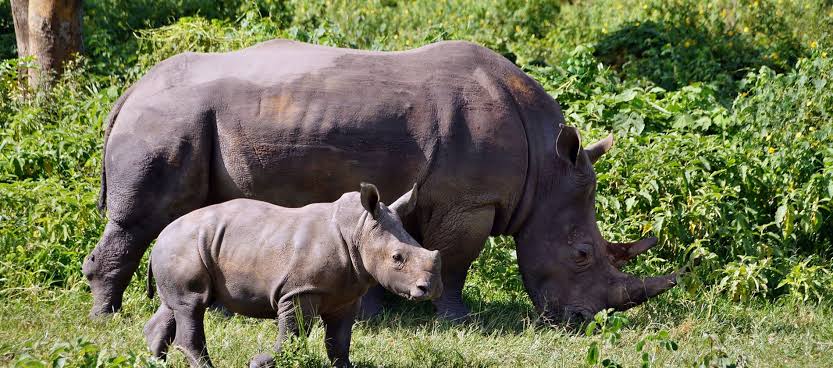
White rhino populations are larger than black rhino globally. South Africa holds approximately 16,000 of the world’s 20,000 remaining individuals. Foot tracking of white rhino is available at several destinations across East and Southern Africa.
Uganda: Ziwa Rhino Sanctuary
The Ziwa Rhino Sanctuary in central Uganda is Africa’s only rhino tracking experience where the rhinos are free-roaming in a large enclosed sanctuary rather than fully wild in a national park. The distinction matters for understanding what the experience involves. Ziwa’s rhinos are in a protected area working toward eventual reintroduction into Uganda’s national parks. The tracking experience on foot with armed rangers is genuine and physically demanding. But the rhinos are accustomed to human presence in a way that makes their response to trackers less variable than truly wild animals. Despite this distinction, the encounter quality is high. The significance of the experience. Tracking white rhinos in Uganda, where the species was hunted to local extinction by the 1980s. Carries conservation weight that makes the Ziwa visit meaningful beyond the encounter itself.
Ziwa works naturally as a day visit or overnight stop on the drive between Kampala and Murchison Falls National Park. It is an easy addition to Western Uganda safari itineraries without requiring a dedicated rhino-specific journey. The sanctuary’s rhino population has grown from four animals reintroduced from Kenya and US breeding programs to over 30 individuals as of 2024. The project is on track to contribute animals to wild reintroduction in Ugandan national parks within the next decade. Supporting the Ziwa experience through permit fees and accommodation contributes directly to this conservation trajectory.
Kenya: Ol Pejeta Conservancy
Ol Pejeta Conservancy in Kenya’s Laikipia Plateau holds the largest black rhino population in East Africa and a growing white rhino population. Foot tracking experiences are available through the conservancy’s guided rhino walks. Ol Pejeta is also the location of the world’s last two northern white rhinos. Najin and Fatu, both female. Under 24-hour armed guard in a dedicated enclosure. The northern white rhino subspecies is functionally extinct. A scientific effort underway at Ol Pejeta aims to create northern white rhino embryos through IVF using harvested eggs and stored genetic material. This represents one of conservation biology’s most ambitious and poignant experiments. Visiting the northern white rhino enclosure on an Ol Pejeta rhino walk provides a confrontation with extinction that is both devastating and motivated by genuine scientific hope.
The black rhino tracking experience at Ol Pejeta is excellent and is enhanced by the conservancy’s research context. Many individual rhinos are monitored and known by name and history in the same way that Amboseli’s elephants are. This allows guides to provide contextual narrative that transforms the encounter from visual observation into genuine natural history engagement. Ol Pejeta’s proximity to Nairobi. Approximately three hours by road. Makes it an efficient addition to a Kenya safari itinerary. Its combination of rhino tracking with other wildlife viewing, including chimpanzee sanctuary visits, does not require a separate trip to access.
Plan Your Safari
Rhino trekking in Uganda at Ziwa Sanctuary can be incorporated into western Uganda safari itineraries as a day stop between Kampala and Murchison Falls. Rhino tracking at Ol Pejeta Conservancy in Kenya fits naturally into Laikipia Plateau wildlife itineraries that also include the conservancy’s other wildlife and chimpanzee sanctuary. African Wild Trekkers includes both destinations in itineraries for travelers with specific interest in rhino encounters alongside the broader East Africa wildlife experience.
Uganda safari packages that include Ziwa Rhino Sanctuary, Murchison Falls, and Queen Elizabeth National Park. And Bwindi gorilla trekking creates a comprehensive wildlife itinerary covering the full range of Uganda’s conservation highlights. Kenya packages that include Ol Pejeta alongside the Masai Mara and Amboseli cover East Africa’s most diverse wildlife circuit within a single country.
Contact African Wild Trekkers at africanwildtrekkers.com/contact with your travel dates and rhino tracking interest, and we will design the right East Africa itinerary within 24 hours.