Wild Dogs Africa: The Best Countries to See African Wild Dogs on Safari
African Wild Dogs: Where to Find Africa’s Most Endangered Large Predator
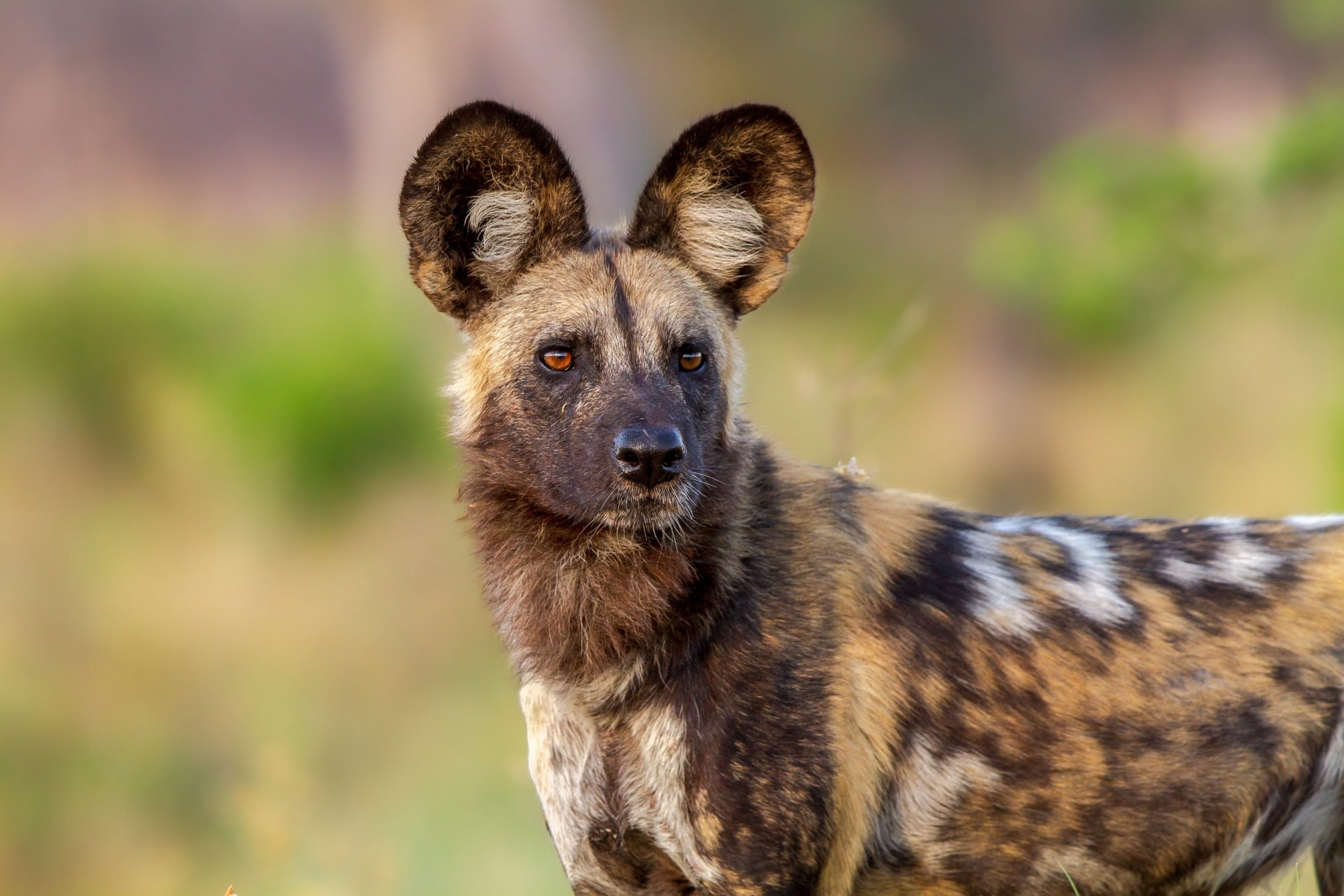
The African wild dog is one of the continent’s most sought-after and rarest safari sightings. Fewer than 6,600 individuals remain in the wild across all of Africa. This population has collapsed from historical estimates of over 500,000 animals. The causes include habitat fragmentation, snaring, and disease transmission from domestic dogs. And persecution by farmers who viewed them as livestock predators. Despite this decline, the African wild dog remains one of Africa’s most efficient and socially sophisticated predators. Pack hunting success rates reach 60 to 80 percent, compared to the lion’s 30 percent. Their social structure is built on cooperative care, democratic decision-making, and the most elaborate greeting ceremonies of any African carnivore. Knowing where the best populations remain and which parks offer realistic sighting chances is the most practical preparation for any traveler who prioritizes wild dog encounters.
Best Countries for African Wild Dog Sightings
Wild dogs occur in fragmented populations across sub-Saharan Africa. But certain countries hold consistently larger and better-studied populations that produce more reliable sighting chances for visitors.
Botswana: The Okavango Wild Dog Capital
Botswana holds one of Africa’s most significant and best-protected wild dog populations. It is found primarily in and around the Okavango Delta and the adjacent Khwai community area. The Moremi Game Reserve within the delta, and the private concessions surrounding it, produce wild dog sightings with above-average frequency. The dogs have large home ranges that overlap consistently with the concession areas. The water barriers created by the delta’s channel system naturally concentrate wild dog pack movements in predictable corridors. Experienced guides learn to anticipate these corridors in ways that increase sighting probability for specific clients. Botswana’s low visitor volume also means that wild dog sightings are not immediately swamped by multiple vehicles. An important quality consideration when dogs are hunting or denning.
The Linyanti and Kwando areas in northern Botswana, bordering Namibia’s Bwabwata National Park, are another consistent wild dog zone. These community concession areas form part of the Greater Selinda ecosystem. They support dog packs that move between Botswana and Namibia seasonally. Camp managers in these areas radio-track dog pack movements and can update guides in real time about pack location. This level of monitoring significantly improves client encounter probability compared to untracked populations in larger, less-managed areas.
Zimbabwe and Zambia: The Painted Wolf Strongholds
Zimbabwe’s Hwange National Park holds one of the continent’s largest and most studied wild dog populations. The Painted Dog Conservation organization operates from the park’s boundary. It monitors, protects, and researches packs that range across Hwange and the adjacent wildlife management areas. Hwange’s wild dog sightings are among the most consistently achievable in Africa. The Painted Dog Conservation visitor experience includes guided educational sessions and den site visits where monitoring allows. It also provides context for understanding specific pack members by name and history. This creates the most contextually rich wild dog encounter available in Africa. Wild dog viewing in Hwange is enhanced by the park’s waterhole system, which the dogs visit predictably. Guides can position vehicles in advance to observe pack arrival.
South Luangwa National Park in Zambia is frequently cited alongside Hwange as one of Africa’s best wild dog destinations. The park’s packs have been studied extensively by the Zambian Carnivore Programme. This provides context for encounter quality that unmonitored populations cannot deliver. South Luangwa’s night drives—unique in the region—allow wild dog nocturnal hunting sequences to be observed in ways that no daytime-only safari reserve can provide. The sight of a wild dog pack hunting in spotlight illumination, with the choreographed cooperation of the hunt visible across open floodplain terrain, is one of Africa’s most dramatic and rarely witnessed wildlife sequences.
East Africa: Wild Dogs in Kenya and Tanzania
Wild dog populations in East Africa are smaller and more fragmented than those in southern Africa. But sightings are not impossible and are sometimes spectacular when they occur. The Laikipia Plateau in central Kenya holds a viable wild dog population. It moves through private conservancies and community areas in a landscape that supports what may be the most northerly significant wild dog population in Africa. Conservancies, including Ol Pejeta, Lewa, and the surrounding community areas, provide habitat where wild dog sightings occur with reasonable frequency among the research monitoring teams and guests of the resident conservancies. A wild dog sighting on Laikipia is a genuinely exceptional experience because it occurs in a landscape few international visitors associate with this species.
Tanzania’s wild dog population concentrates in the southern circuit parks. Ruaha National Park and Nyerere National Park (formerly Selous Game Reserve). Together they support one of the most significant wild dog populations in East Africa. Ruaha’s enormous size and remote character suit wild dog ecology. The packs that range across the park cover territories that bring them into contact with safari camps in ways that produce sightings for attentive guides and lucky groups. Nyerere’s wild dog population is monitored by the Selous-Niassa corridor project and is growing as anti-poaching efforts reduce historical pressure on this population. Wild dogs in Tanzania’s south are not guaranteed on any short visit. But they are genuinely possible and add remarkable species diversity to a southern circuit itinerary.
What Makes Wild Dog Encounters Special
Beyond the rarity that makes wild dog sightings prized, the species’ behavior creates encounters of distinctive character. Experienced safari travelers consistently rate wild dog encounters among their most memorable African wildlife experiences.
Social Behaviour and Pack Dynamics
The African wild dog’s social structure is extraordinarily complex and cooperative. This is visible during encounters even for observers without prior knowledge of the species. The greeting ceremony—where pack members greet each other with vocalization and physical contact. And food-sharing behavior on the guide’s return from a hunt is one of the most animated social performances of any African wildlife species. It is completely unlike the more reserved social behavior of the big cats. Wild dogs raise pups communally, with all pack members contributing to feeding and defending the den. The physical interactions between adults and pups during feeding are visually compelling in their tenderness and complexity.
Hunting sequences are the most dramatic behavioral aspect of wild dog encounters for visitors fortunate enough to observe them. The pack coordinates through visual cues and vocalizations, distributing roles across the hunt without a single dominant individual directing others. Wild dogs can sustain 60 kilometers per hour for several kilometers. A strategic relay system allows fresh pack members to take over from tiring ones. This makes a wild dog hunt one of the most athletically impressive predator sequences in Africa. Unlike the ambush hunting of lions and leopards. Which can be observed at close range from stationary vehicles. A wild dog hunt often requires the guide to follow rapidly through bushes to maintain visual contact. This adds a quality of immediacy and unpredictability that makes the encounter genuinely exciting in real time.
Plan Your Safari
Wild dog sightings in East Africa are most likely in the Laikipia Plateau conservancies of Kenya and the southern Tanzania parks of Ruaha and Nyerere. African Wild Trekkers can build Kenya itineraries that include Laikipia Plateau conservancy stays alongside the Masai Mara and Amboseli for travelers specifically interested in wild dog encounters combined with the wider Kenya wildlife experience.
Kenya and Tanzania safari packages are available at all budget levels with experienced guides who are familiar with the specific areas where wild dog packs range and how to maximize encounter probability. Every East Africa package includes quality accommodation, all park fees, and knowledgeable naturalist guides.
Contact African Wild Trekkers at africanwildtrekkers.com/contact with your travel dates and wild dog interest, and we will design the right East Africa itinerary within 24 hours.