South Luangwa, Zambia, vs Maasai Mara Kenya: Walking Safari vs Driving Safari
South Luangwa vs Masai Mara: Two Different Safari Philosophies
These represent two fundamentally different philosophies of how an African safari should work. A park built on the tradition of exploring the bush on foot with armed professional guides. The experience is at ground level with a sensory intimacy that no vehicle safari can replicate. The Maasai Mara is the world’s finest vehicle safari destination. A reserve where open-sided 4x4s driven by experienced Maasai naturalists provide access to the highest density of charismatic African wildlife visible per hour of game drive anywhere on the continent. Comparing them is not a matter of which is better in absolute terms. It is about which approach to Africa’s wildlife delivers what a specific traveler is actually seeking.
South Luangwa: Walking Safari Excellence
Norman Carr invented the walking safari in South Luangwa in the 1950s. The park remains the most celebrated walking safari destination in Africa for good reason. Being on foot in wild Africa. Surrounded by the sounds and smells of the bush, moving at the pace of the wildlife rather than a vehicle, aware of every twig underfoot and every shift in the wind. Creates a quality of presence and engagement with the natural environment. Vehicle-based safari, for all its excellent wildlife viewing, never fully replicates this.
The Walking Safari Experience
A South Luangwa walking safari typically runs in the early morning, from first light for two to four hours before the heat makes extended walking uncomfortable. The professionalguide—whoo carries a high-caliber rifle for emergency protection—leads a small group of usually two to four walkers through the bush. The guide interprets signs, tracks, and behavior that a vehicle passenger would miss entirely. The experience of encountering an elephant herd on foot is qualitatively different from any vehicle encounter. The guide maintains safe distance while the animals move through the vegetation at close range. Following the fresh tracks of a leopard through riverine woodland in the morning cool adds the same sense of presence. The ground-level perspective, the awareness of personal vulnerability, and the sensory richness of walking in wild Africa produce a kind of attentiveness that sits at the heart of what the original safari concept meant.
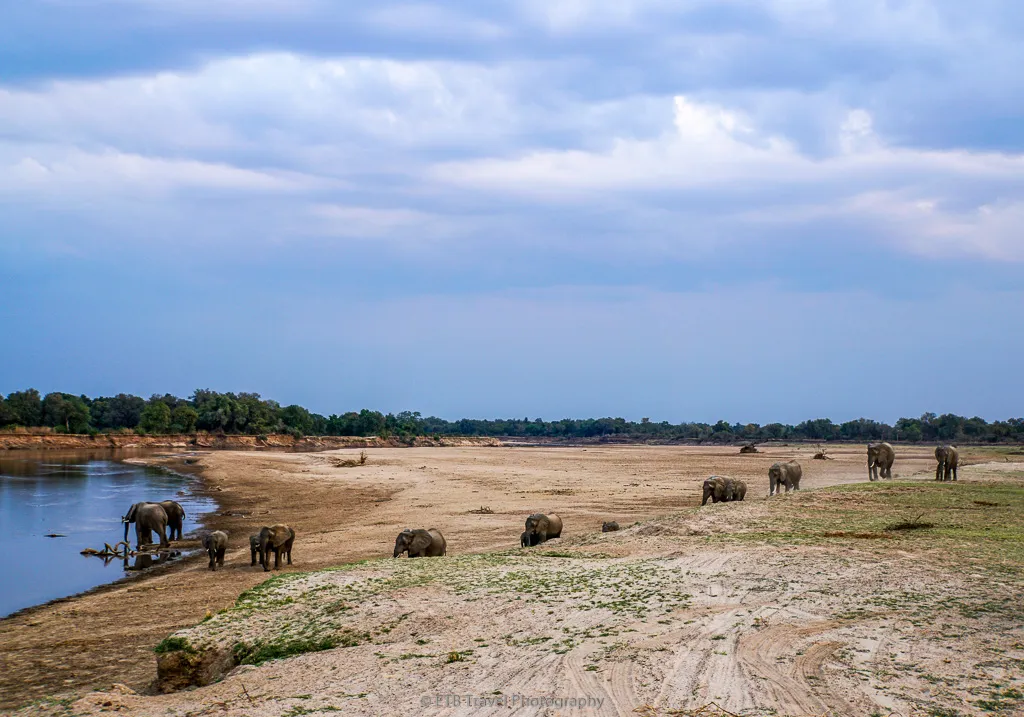
South Luangwa’s wildlife is excellent across all major categories. The park holds the continent’s highest density of leopards. Its riverine woodland habitat is ideal for these largely arboreal ambush hunters. Night drives produce leopard sightings with remarkable frequency. Buffalo herds, elephant populations, lion prides, wild dogs, and hippos in the Luangwa River. And excellent birdlife including carmine bee-eaters nesting in riverbanks all contribute to a wildlife experience that competes with East Africa’s best parks. What South Luangwa lacks relative to the Masai Mara is open-visibility terrain. The park’s vegetation limits the long-distance wildlife spotting that Kenya’s grasslands provide so effectively. South Luangwa is one of the best places in Africa to see African wild dogs.
The Night Drive Advantage
South Luangwa’s private camps operate night drives—a facility entirely prohibited within Kenya’s national parks and most conservancies. Night drives deliver a completely different safari experience from the daytime game drives and morning walks. The beam of a spotlight in the bush at night reveals nocturnal species invisible in daylight: African wild cats, civets, genets, porcupines, bushbabies, and nightjars along the road edges. It also reveals dramatically lit encounters with lions hunting and leopards moving through the tree line. Night drives in South Luangwa’s dry season, when the Luangwa River recedes and thousands of animals concentrate on its banks, deliver scenes of wildlife density and predator activity that no other safari experience provides in the same way. The Masai Mara’s public national reserve prohibits night drives entirely. Even the private Mara conservancies allow only restricted after-dark activity.
Masai Mara: Vehicle Safari at Its Peak
The Masai Mara represents the vehicle safari experience at its absolute best. The Mara’s open grassland terrain and its habituated and individually known wildlife populations. And the guiding culture built by generations of Maasai naturalists creates vehicle game drive conditions that no other African reserve consistently matches.
Why the Mara Wins on Wildlife Density and Visibility
The Masai Mara’s open grassland habitat provides visibility conditions that allow spotting wildlife at distances of several kilometers. Guides can track animal movement across the landscape in a way that South Luangwa’s woodland cannot. Cheetahs visible from 500 meters, a lion pride silhouetted against an orange sunset on a distant hill, and herds of wildebeest stretching to the horizon. These panoramic wildlife experiences are specific to open savannah safaris. They are available in the Mara in a way that South Luangwa’s more enclosed vegetation does not consistently deliver. For photographers who want the long-lens savannah compositions that define the classic African wildlife image, the Mara’s terrain is uniquely suited to this style of work.
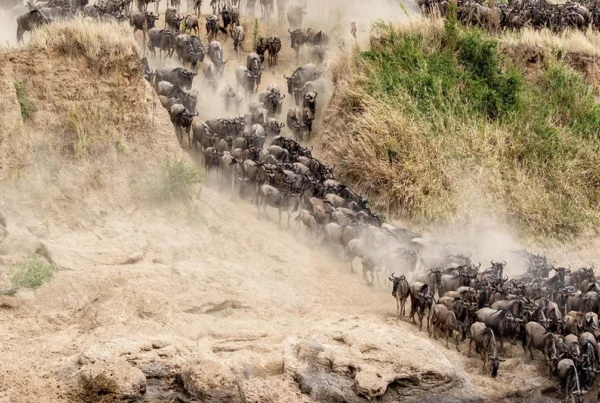
The wildebeest migration’s presence in the Mara from July through October adds a spectacle dimension that South Luangwa has no equivalent for. Over 1.5 million wildebeest move through the Mara ecosystem. They cross the Mara River in sequences that draw predators from across the reserve. This creates moments of wildlife drama and density that compress extraordinary activity into small areas. The most intense game drive encounters available in Africa result. For travelers who time their visit around the river crossings, no vehicle safari experience elsewhere on the continent produces comparable intensity.
Which to Choose
Make the choice between South Luangwa and the Masai Mara based on the safari mode. Walking or vehicle. Better matches what you want from the Africa experience. South Luangwa is the correct choice for travelers who want the bush at ground level, the sensory immersion of walking in wild Africa, and night drive access. And a less crowded and more adventurous safari character than Kenya’s famous reserve provides. The Masai Mara is the correct choice for travelers who want Africa’s best vehicle-based wildlife encounters, open grassland panoramas, and the wildebeest migration experience. And the convenience of a destination with the world’s most developed safari tourism infrastructure.
For travelers with enough time to do both, the combination is extraordinary. A walking safari in South Luangwa followed by a vehicle safari in the Masai Mara covers Africa’s two most celebrated approaches to wildlife encounters within a single trip. The routing via Johannesburg or Nairobi between Zambia and Kenya is straightforward. Plan Your Safari
African Wild Trekkers designs and operates Kenya Masai Mara safari itineraries with experienced Maasai naturalist guides and quality tented camp accommodation in both the national reserve and private conservancies. And full logistics covering all park fees, transfers, and game drives. Kenya Masai Mara packages can include Amboseli, Samburu, and other Kenya destinations and extend into Tanzania, Uganda, or Rwanda for multi-country East Africa itineraries.
Every Masai Mara package is a complete, fully inclusive booking from Nairobi arrival to Nairobi departure. Walk-in safari components in Uganda’s forest parks complement the vehicle safari experience in Kenya for travelers who want the best of both safari modes within East Africa.
Contact African Wild Trekkers at africanwildtrekkers.com/contact with your travel dates and safari mode preferences, and we will design the right Kenya or East Africa itinerary within 24 hours.