Uganda Sunbird Species: 40 Iridescent Nectarivores Across the Pearl of Africa
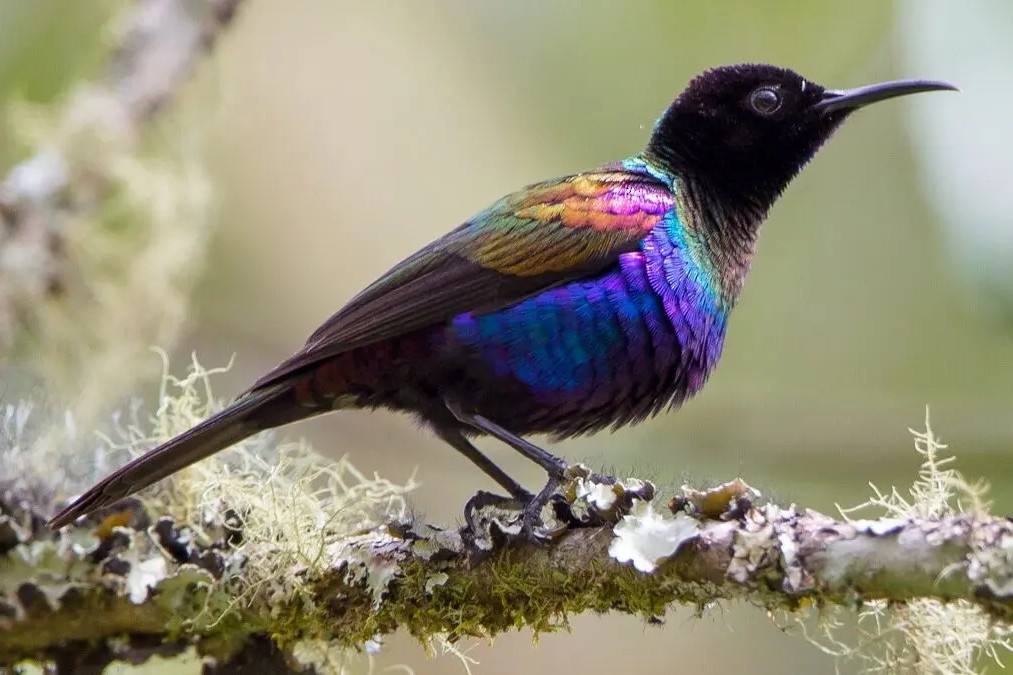
Uganda sunbird species diversity stands at 40 recorded species, making Uganda one of Africa’s richest single-country sunbird destinations. The sunbird species range from the widespread scarlet-chested sunbird in savanna gardens to the Ruwenzori double-collared sunbird on giant lobelias at 3,500 metres altitude. Uganda sunbird species produce some of the most brilliant iridescent plumage colours in the entire African avifauna. Male sunbirds display structural iridescence that shifts colour in changing light angles from green to purple to copper. Uganda sunbird species are active throughout the day at flowering plants and are among the most reliably encountered birds on any Uganda safari. Most safari camps and lodges maintain flowering gardens that attract multiple Uganda sunbird species to within three metres of seated visitors.
Uganda sunbird species identification challenges beginners because many share similar plumage patterns. Males in breeding plumage are brilliant and distinctive. Non-breeding males and females adopt duller, streaked plumage that overlaps between species. The bill shape, length, and curvature provides the most reliable identification feature across Uganda sunbird species plumages. Sunbird bills are adapted to specific flower types, so studying the flower shape also helps identify the Uganda sunbird species feeding on it. Long, deeply curved bills suit tubular flowers. Short, straight bills suit flat, open flowers.
Uganda Sunbird Species by Habitat
Forest Uganda Sunbird Species
Bwindi Impenetrable Forest holds the highest Uganda sunbird species diversity of any single site. Regal sunbird inhabits the forest canopy at 1,500 to 2,500 metres and is one of Uganda’s most spectacular species. Its golden-yellow underparts and metallic green upperparts create an extraordinary colour combination. Blue-headed sunbird is a common Bwindi Uganda sunbird species at flowering canopy trees throughout the day. Stuhlmann’s double-collared sunbird inhabits the montane forest edge and garden habitats near Bwindi. Olive-bellied sunbird is the most common Uganda sunbird species in the Bwindi lower forest zone. These forest Uganda sunbird species feed at the flowers of epiphytic plants in the canopy and at ground level flowering herbs.
Kibale National Park holds a rich Uganda sunbird species community at the forest-farmland interface. Variable sunbird is the most common Kibale Uganda sunbird species in the surrounding farmland and garden habitats. Little green sunbird inhabits the forest interior and appears in mixed feeding flocks at flowering understorey plants. Collared sunbird is a small Uganda sunbird species at the Kibale forest edge that feeds on very small flowers near water. Eastern violet-backed sunbird inhabits the savanna and forest edge throughout the Kibale area. This metallic violet Uganda sunbird species is one of the most immediately striking species in any Uganda garden setting.
Highland Uganda Sunbird Species
The Rwenzori Mountains hold several altitude-specialist Uganda sunbird species. Rwenzori double-collared sunbird is the most celebrated highland Uganda sunbird species. This bird feeds at giant lobelia flowers in the moorland zone above 2,500 metres. The Rwenzori double-collared sunbird is found only in this mountain range. Scarlet-tufted sunbird is another giant lobelia specialist in the same highland zone. Both Uganda sunbird species create spectacular colour combinations against the extraordinary Afro-alpine lobelia plants. Finding these highland Uganda sunbird species requires the physical investment of a Rwenzori Mountain hike or at minimum the Mahoma Lake trail approach.
The Albertine Rift highland area around Fort Portal provides access to several Uganda sunbird species in garden and farmland habitats. Northern double-collared sunbird inhabits cultivated areas and gardens throughout this region. Olive sunbird is the most commonly encountered Uganda sunbird species in the Fort Portal hotel gardens. Shining sunbird occurs in the dry northern Uganda zone and is a Kidepo-area Uganda sunbird species record. Copper sunbird is widespread across the Uganda savanna zone and visits garden flowers throughout the country. These widely distributed Uganda sunbird species appear at most Uganda safari camp gardens without any specific searching required.
Observing Uganda Sunbird Species
Finding Uganda Sunbird Species in Camp Gardens
Uganda safari camp gardens provide the most accessible Uganda sunbird species observation available to any visitor. Most Uganda lodge gardens maintain flowering plants that attract two to six Uganda sunbird species to within photographing range. Variable sunbird, scarlet-chested sunbird, and bronzy sunbird visit most highland garden sites within moments of sunrise. Eastern violet-backed sunbird visits red flowering plants in lowland lodge gardens throughout the day. Little green sunbird and collared sunbird visit smaller flowers at medium height in garden shrubs. A 30-minute seated session in any Uganda safari lodge garden before breakfast produces three to five Uganda sunbird species without walking anywhere.
Flowering plants in Uganda attract Uganda sunbird species most intensively during the late morning. The initial feeding rush at sunrise in Uganda gardens gives way to a quieter midday period. Late afternoon from 15:30 to 17:30 produces a second Uganda sunbird species activity peak at flowering plants. Sunbirds are territorial at favourite flower clusters and defend their patch actively against competing individuals. This territorial behaviour at defended flowers produces extended observation of single Uganda sunbird species individuals for two to five minutes at a time. This duration is ideal for photography and detailed behavioural observation.
Uganda Sunbird Species Photography
Uganda sunbird species photography in garden settings suits a medium telephoto of 200 to 300mm. The close approach distances in lodge gardens allow this modest focal length to fill the frame. Iridescent Uganda sunbird species plumage is most brilliantly captured in full sun with the light source behind the photographer. Overcast conditions flatten the iridescence and produce duller colours on Uganda sunbird species images. Setting the camera to evaluative metering with minus 0.7 stop exposure compensation prevents overexposure on bright male Uganda sunbird species plumage. Burst shooting at a flowering cluster captures the brief moments when the bird holds still between rapid position changes.
Uganda sunbird species in flight are extremely challenging photography subjects. The fast, direct flight between flowers leaves little time for tracking and focus acquisition. Anticipating the bird’s landing position at a favourite flower and pre-focusing on that point increases in-flight success rates. Uganda sunbird species hovering at flowers hold still for one to two seconds while feeding. Triggering the camera during this hovering moment produces sharp results with a 1/1000 second shutter speed minimum. The hovering Uganda sunbird species shot at a giant lobelia on the Rwenzori moorland is one of Uganda’s finest wildlife photography subjects.
Plan Your Safari
Plan Uganda sunbird species observation as a daily garden activity at every lodge on your Uganda safari. Include a Bwindi or Kibale visit for the forest Uganda sunbird species and a Rwenzori Mahoma trail hike for the moorland highland sunbird community. Request a specialist birding guide for the forest and highland Uganda sunbird species identification challenges.
African Wild Trekkers includes Uganda sunbird species briefings and specialist guide bookings in all birding safari itineraries. We identify the most productive garden and forest sites at each destination and time visits to the morning and afternoon activity peaks.
Contact African Wild Trekkers to target Uganda sunbird species on your safari. We respond within 24 hours and design Uganda birding programmes that cover the full range of sunbird habitats from lowland gardens to Rwenzori moorland giant lobelias.