Lake Bogoria Geysers: Hot Springs and Flamingos in the Rift Valley
Lake Bogoria geysers are one of Kenya’s most dramatic geological and wildlife spectacles combined in a single location. This alkaline soda lake in Kenya’s Great Rift Valley contains the most active geothermal field on the lake-shore accessible to visitors. Lake Bogoria geysers erupt regularly from cracks and vents along the western lake shore. Steam columns rise from the Lake Bogoria geysers field throughout the day and night. The geothermal activity colours the ground orange, yellow, and white with mineral deposits. Lake Bogoria geysers are also surrounded by one of Africa’s largest flamingo concentrations that gather on the caustic soda water of the lake.
Lake Bogoria is a UNESCO Ramsar Wetland of International Importance. The lake sits in the Rift Valley floor at 1,000 metres altitude between the Siracho Escarpment and the Laikipia Plateau edge. Lake Bogoria geysers access is through the Lake Bogoria National Reserve gate near Loboi town. The reserve road runs along the western shore past the main geothermal field. Lake Bogoria geysers and flamingos are visible from the same shoreline positions making the photography opportunities extraordinary.
Lake Bogoria Geysers Geology
How the Lake Bogoria Geysers Form
Lake Bogoria geysers form where groundwater contacts the hot volcanic rocks beneath the Rift Valley floor. The water heats to above 100 degrees Celsius underground and erupts as steam and boiling water through surface fissures. Lake Bogoria geysers reach one to four metres in height during active eruption phases. The most active Lake Bogoria geysers erupt every four to eight minutes in a predictable cycle. Standing near an active Lake Bogoria geyser vent produces dramatic steam spray and a powerful hydrogen sulphide smell. The Lake Bogoria geysers mineral deposits build up cone-like structures around the most active vents over time.
The Lake Bogoria geysers field extends for approximately two kilometres along the western lake shore. Hot springs feed directly into the lake from dozens of seeps and small vents along the lake edge. These Lake Bogoria geysers hot springs keep the shallow southern lake sections at temperatures between 70 and 90 degrees Celsius. No fish or animals can survive in the Lake Bogoria geysers hot spring inflow zones. The alkaline soda water is lethal to most forms of animal life except the microscopic spirulina algae that blankets the lake surface. This spirulina algae is the primary food source for the Lake Bogoria flamingo population that gathers in such extraordinary concentrations.
Flamingos at Lake Bogoria Geysers
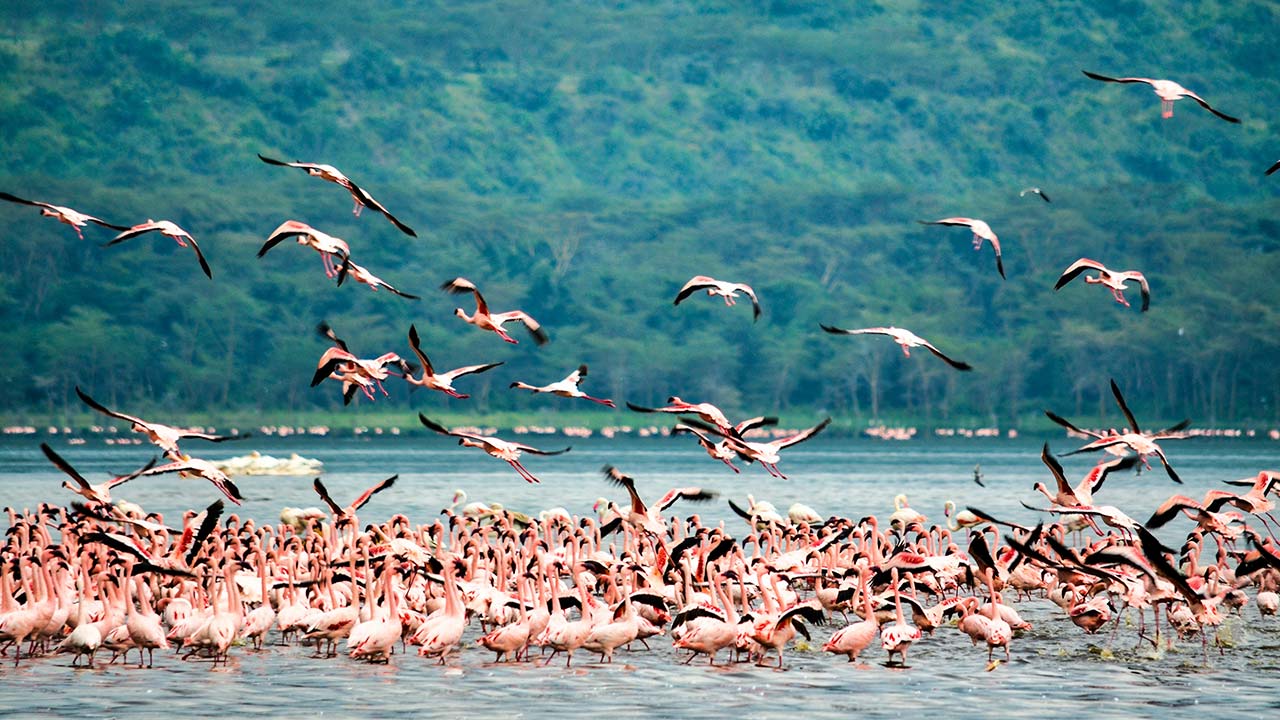
Lake Bogoria holds the second largest flamingo concentration in Kenya after Lake Nakuru. Flamingo numbers at the Lake Bogoria geysers area shift significantly between seasons and years. At peak concentrations, the Lake Bogoria geysers flamingo gathering reaches one to two million birds. The pink colouring of the flamingo masses against the turquoise lake water and white Lake Bogoria geysers mineral deposits is visually extraordinary. Both lesser and greater flamingo are present at Lake Bogoria geysers at the same time. The lesser flamingo filters spirulina from the lake surface while the greater flamingo picks invertebrates from the lake bed mud.
Lake Bogoria geysers flamingo photography is most productive in the early morning before the wind creates distortion. The flamingo reflections in the flat morning water of Lake Bogoria geysers create mirror-image photography compositions. A telephoto lens of 400mm captures flamingo feeding behaviour in detail from the lake shore at Lake Bogoria geysers. The pink mass of flamingos against the steam rising from the Lake Bogoria geysers creates one of Kenya’s most surreal and spectacular wildlife photography scenes. Early arrival at Lake Bogoria geysers before 07:00 captures this combination of early light, steam, and flamingos at its most atmospheric.
Lake Bogoria Geysers Visit
Wildlife Beyond Flamingos at Lake Bogoria Geysers
Greater kudu inhabits the Siracho Escarpment woodland above the Lake Bogoria geysers shore road. This large, spiral-horned antelope is extremely shy and more reliably seen at Lake Bogoria than at most other Kenya sites. Reticulated giraffe browses the acacia trees along the Lake Bogoria geysers access road. Waterbuck and impala graze the grass sections between the lake shore and the escarpment tree line. Beisa oryx inhabits the drier terrain above the lake on the Siracho side. These arid-country species create an interesting wildlife context alongside the Lake Bogoria geysers geological and flamingo spectacle.
Hippo inhabits the cooler northern section of Lake Bogoria where the inflow rivers reduce the lake temperature and alkalinity. A separate group of hippo lives entirely beyond the Lake Bogoria geysers zone in this northern lake section. Early morning game drives north of the Lake Bogoria geysers field encounter hippo groups at the lake edge. African fish eagle is conspicuous throughout the Lake Bogoria reserve calling from the escarpment trees. Goliath heron stands at the hippo section of the lake where the water temperature and chemistry allow fish to survive. These northern lake hippo and bird encounters complement the Lake Bogoria geysers flamingo experience in the south.
Practical Information for Lake Bogoria Geysers
Lake Bogoria geysers are accessed through the Lake Bogoria National Reserve. The reserve entrance gate is at Loboi on the Nakuru to Marigat road. The drive from Nakuru to Lake Bogoria geysers takes approximately 90 minutes. Lake Bogoria geysers are most productively visited as a day trip from Nakuru on the Kenya Rift Valley lakes circuit. The Lake Bogoria geysers area is also accessible from Baringo and Bogoria accommodation on the Rift Valley safari route. Walking at the Lake Bogoria geysers field requires extreme care near active vents. The thin ground crust can crack and cause serious burns from the superheated water below.
KWS rangers at the Lake Bogoria geysers field provide guidance on safe walking distances from active vents. Their advice must be followed strictly. The Lake Bogoria geysers hot spring pools adjacent to the lake are sometimes used by visitors for cooking food. Eggs lowered into the Lake Bogoria geysers hot pools cook to hard-boiled in approximately 10 minutes. This Lake Bogoria geysers cooking demonstration is offered by local guides and provides a memorable practical demonstration of the geothermal temperature. The same Lake Bogoria geysers pools that cook eggs would cause severe scalding to any person who fell into them.
Plan Your Safari
Visit Lake Bogoria geysers as part of a Kenya Rift Valley lakes circuit combining Lake Nakuru, Lake Bogoria, and Lake Baringo in two to three days. Arrive at Lake Bogoria geysers by 07:00 for the dawn flamingo and steam photography session. Combine the Lake Bogoria geysers morning with an afternoon Lake Baringo boat trip for the most complete Rift Valley lakes wildlife day.
African Wild Trekkers designs Kenya Rift Valley lakes circuits that include Lake Bogoria geysers alongside Nakuru, Elementaita, Baringo, and Naivasha. We design game drive programmes that cover the geysers, flamingos, greater kudu, and hippo in the most productive sequence for each site.
Contact African Wild Trekkers to visit Lake Bogoria geysers. We respond within 24 hours and design Rift Valley safari programmes that access the geothermal landscape, the flamingo concentrations, and the wider wildlife of this extraordinary alkaline lake.