Village Market Tour Africa: Experiencing East Africa’s Rural Market Culture
East Africa’s rural markets are the economic and social centres of their communities. They operate on fixed days at permanent sites. The surrounding villages empty on market day as farmers, traders, artisans, and buyers converge on a single location.
A guided market visit on a safari itinerary provides access to an East African community operating entirely outside the tourist economy. The market is not for visitors. It exists for the community’s daily commercial and social life.
Visitors who move through it respectfully and with a knowledgeable guide gain access to a version of East African daily life that game reserves and national parks cannot offer. The sights, sounds, and smells of a busy East Africa rural market carry more cultural information per square metre than any museum exhibit.
What You Find at East Africa’s Rural Markets
East Africa’s rural markets follow a common basic layout regardless of country or region. Fresh produce occupies the most space. Farmers arrive before dawn with vegetables, fruit, and grain. They arrange their goods on mats or low wooden tables and wait for buyers who arrive from surrounding villages through the morning.
The livestock section trades goats, sheep, and cattle at the market’s perimeter. The livestock section is particularly active and noisy in the early morning before the heat reduces the animals’ comfort.
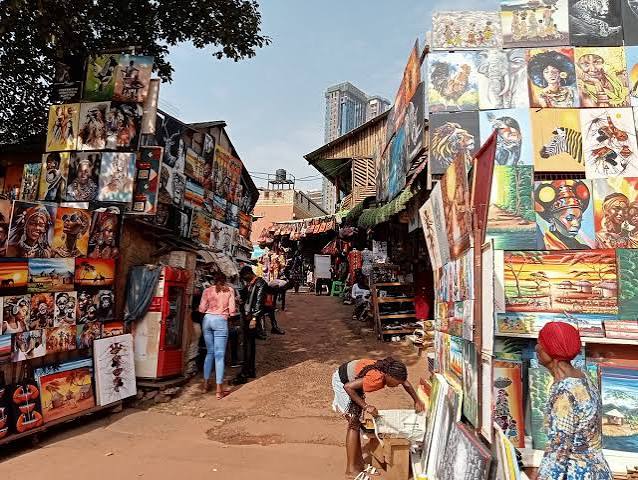
Secondhand clothing traders, mobile phone repair services, herbal medicine sellers, and cooked food vendors fill the market’s interior lanes. Furthermore, craft and household goods sections carry the locally produced items that tell the most about the specific community’s material culture and economic activity.
Kenya’s Maasai Markets
The Maasai market culture in Kenya operates at fixed locations on rotating weekly schedules. The Nairobi Maasai Market rotates through several city locations across the week. The Kajiado and Namanga markets in southern Kenya serve the pastoral Maasai community’s livestock and supply economy.
These markets carry Maasai beadwork, cattle, goats, dried herbs, and metal jewellery alongside the standard agricultural produce. The beadwork quality at the Kajiado and Namanga markets is higher and less commercialised than at the tourist-focused Nairobi Maasai Market.
Purchasing directly from the maker at a rural Maasai market provides authenticity and fair pricing that curated souvenir shops near game parks cannot match. Additionally, the visual experience of a fully assembled Maasai market in its natural community context is one of Kenya’s most memorable cultural encounters.
Tanzania’s Arusha and Northern Circuit Markets
Arusha town carries a central market that operates daily and provides one of Tanzania’s best urban market experiences within easy reach of the northern circuit safari hub. The Arusha market’s fresh produce section supplies the city’s restaurants and hotels. Its craft and textile sections carry Maasai and Arusha community goods.
Outside Arusha, the Monduli market operates on a weekly schedule in the Monduli Mountains above the Maasai steppe. The Monduli market serves a Maasai pastoral community and carries an authentic trading atmosphere that the Arusha urban market cannot replicate.
Furthermore, markets at Mto wa Mbu near Lake Manyara serve an unusually diverse community of over 120 ethnic groups. This produces one of Tanzania’s most culturally varied market experiences in a compact setting.
Plan Your Safari
Market visits work best when incorporated into travel days between wildlife destinations rather than replacing wildlife activity time. The drive between Nairobi and the Maasai Mara passes within range of Kajiado market on Wednesdays. The drive between Arusha and Tarangire passes Mto wa Mbu market on any morning.
Confirming market days in advance with the guide ensures the visit falls on a trading day rather than an off-day at the same site. Market days in East Africa’s rural areas vary by season and local tradition. Allowing the guide to confirm the specific day and timing at booking stage avoids disappointing arrivals at empty market grounds.
African Wild Trekkers incorporates village market visits into Kenya and Tanzania safari itineraries where routing allows. Contact us to plan a safari that includes East Africa’s most authentic community cultural experiences alongside the wildlife circuit.