Pygmy Kingfisher Africa: The Tiny Jewel of East Africa’s Forest Floor
The African pygmy kingfisher is one of the smallest birds in the kingfisher family. It measures only 12 centimeters from bill tip to tail. Despite its name and family membership, the pygmy kingfisher spends most of its time well away from open water. It is primarily a forest and woodland species that hunts insects, lizards, and other small terrestrial prey in the undergrowth and leaf litter rather than fish in open water.
This distinction between the pygmy kingfisher and its water-associated relatives is important for finding the species in the field. Birders who scan waterways for pygmy kingfishers will miss them entirely. The species perches in the forest understory and along thicket edges, hunting from low perches to the ground below.
Identification
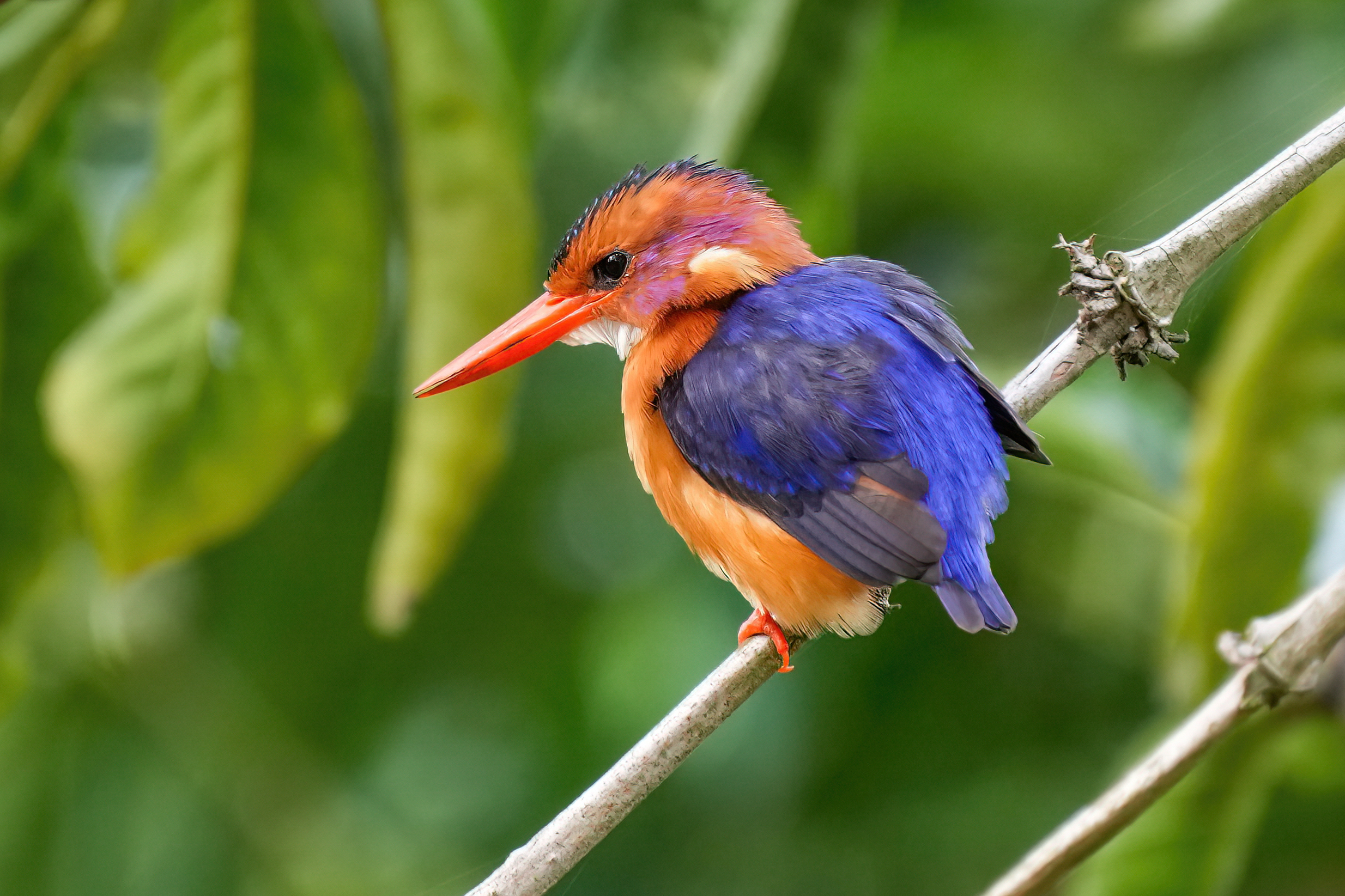
The pygmy kingfisher shows a deep violet-blue back and wings, a rufous-orange breast and belly, and a rufous wash on the ear coverts. The rufous ear coverts immediately distinguish it from the malachite kingfisher, which shows blue ear coverts. The bill is orange-red in adults.
The tiny size is the most immediately apparent feature when the bird is seen perched. At 12 centimeters, the pygmy kingfisher sits on its low perch at approximately half the volume of a malachite kingfisher. The combination of small size, vivid color, and tendency to sit motionless makes it simultaneously one of the most beautiful and most easily missed birds in East Africa’s forest understory.
The call is a thin, high-pitched whistle similar to the malachite kingfisher’s call. However, the pygmy kingfisher calls primarily in flight and gives the call as it moves between perches through dense vegetation. The call often accompanies the brief, fast flight that reveals the bird’s vivid blue and orange plumage for a second before it disappears into the next thicket.
Habitat and Hunting Behaviour
African pygmy kingfishers favor dense undergrowth in forest, thicket, and woodland edge habitats. They are most common in areas where the understory is well-developed and provides both hunting perches close to the ground and shelter from disturbance. Riverine forests and coastal thickets are particularly productive habitats.
The hunting method involves watching the ground from a low perch 0.5 to 1.5 meters above the surface. When prey is detected moving in the leaf litter or on bare ground, the bird drops to the ground, captures the prey, and returns to the perch. Prey items include grasshoppers, beetles, small lizards, and small frogs.
The species uses open water occasionally. It takes small fish from very shallow water at the edges of streams and pools in the forest. However, this aquatic hunting is a minor component of the diet compared to the terrestrial insectivory that occupies most of its foraging time.
Distribution and Where to Find Pygmy Kingfishers
The African pygmy kingfisher is an intra-African migrant across part of its range. It moves from the wetter forest areas during the breeding season to drier woodland and thicket during the non-breeding period. This seasonal movement makes its presence at specific sites variable depending on the time of year.
In East Africa, the species is present in Uganda’s forest and woodland zones year-round. Kenya’s coastal forests and Kakamega Forest hold resident populations. Tanzania’s Eastern Arc forests and coastal thickets carry the species in predictable numbers during most of the year.
Furthermore, the pygmy kingfisher is one of the species that rewards slow, quiet walking through dense undergrowth more effectively than any other observation method. A birder who walks slowly along a forest track, pauses frequently, and watches the understory carefully will encounter this species far more often than one who moves quickly through the same area.
Plan Your Birding Safari
Pygmy kingfisher sightings require slow-paced forest or thicket birding rather than the open-water scanning that other kingfisher species demand. The species rewards dedicated birding walks in forest environments more than vehicle game drives through open savanna.
Kenya’s Arabuko Sokoke Forest, Uganda’s Entebbe Botanical Garden, and Tanzania’s Amani Nature Reserve all provide excellent pygmy kingfisher habitat within accessible safari circuit locations.
African Wild Trekkers includes forest birding walks in East Africa safari itineraries for guests targeting the full range of the region’s kingfisher diversity. Contact us to plan a birding safari that explores East Africa’s forest, wetland, and savanna bird communities in equal depth.