Malachite Kingfisher Facts: East Africa’s Most Brilliantly Coloured Small Kingfisher
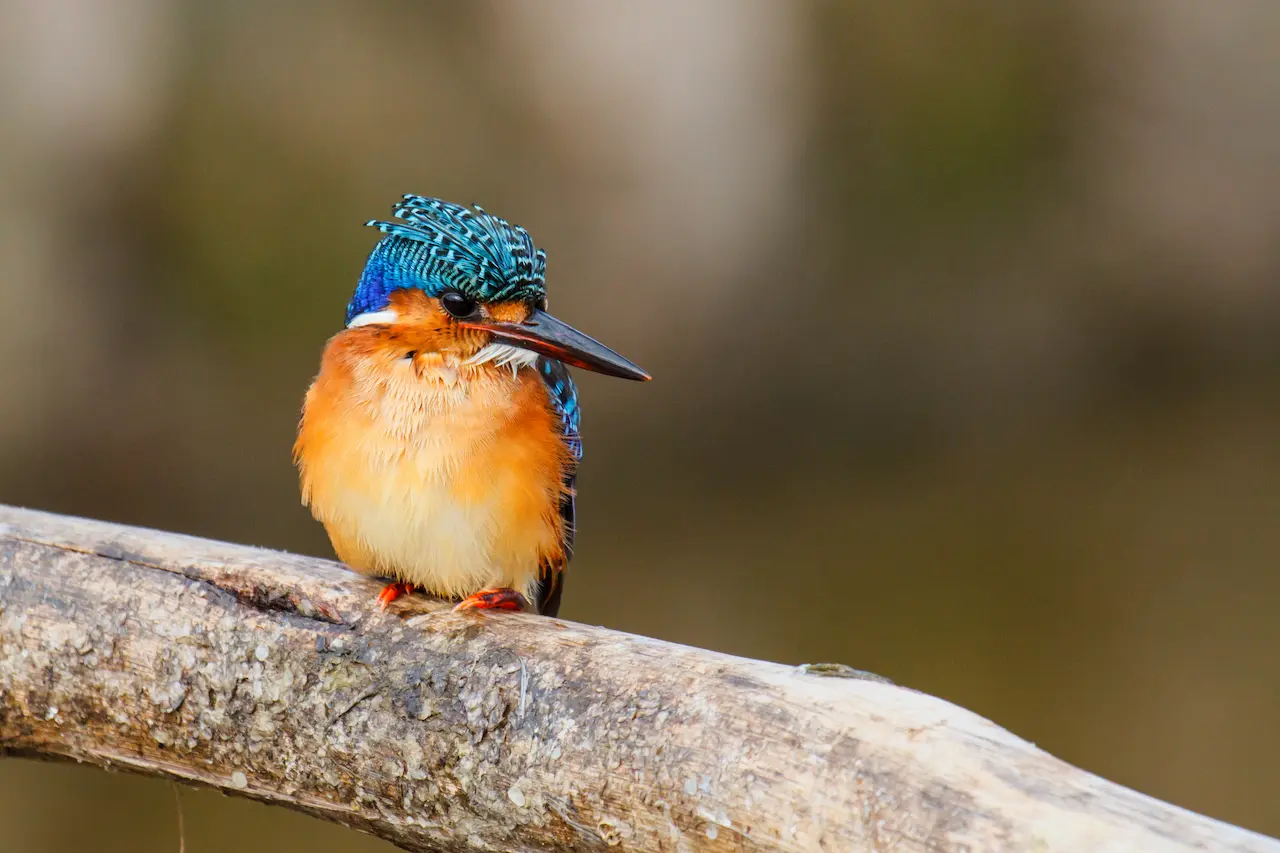
The malachite kingfisher is one of the most colourful birds in East Africa. Although it measures only about 13 centimetres from bill to tail, its dazzling plumage makes it impossible to forget. The bird combines brilliant blue upperparts with rich orange underparts and a beautifully barred blue-and-black crown.
This small kingfisher lives across sub-Saharan Africa and ranks among the most common kingfishers in East Africa’s wetlands. However, many visitors overlook it because it prefers dense vegetation along rivers, lakes, and marshes. Birdwatchers often locate it first by its sharp, high-pitched call or its fast flight just above the water.
Physical Features and Identification
The malachite kingfisher displays iridescent blue upperparts with a greenish sheen that gives the species its name. Its underparts shine with a rich rufous-orange colour, while the crown features striking blue and black bars.
Adult birds have a bright red-orange bill. Young birds have a darker bill until they mature.
Birdwatchers sometimes confuse the malachite kingfisher with the African pygmy kingfisher. Fortunately, one feature makes identification easier. The malachite kingfisher has blue ear coverts, while the African pygmy kingfisher shows rufous-orange ear coverts.
The bird also gives a thin, high-pitched whistle during flight. This call carries well across wetlands and often reveals its location before it becomes visible. Listening carefully allows birders to scan nearby reeds and branches until they spot the bird.
Hunting Behaviour
The malachite kingfisher hunts from low perches close to the water. It often chooses papyrus stems, reed stalks, or branches hanging only a short distance above the surface.
From these perches, the bird watches patiently for small fish, tadpoles, aquatic insects, and other tiny prey. Once it detects movement, it dives quickly into the water.
The entire hunting sequence lasts only a few seconds. The bird usually returns to the same perch with its catch before swallowing it.
Unlike larger kingfisher species, the malachite kingfisher catches very small prey, usually measuring no more than a few centimetres in length.
The species also defends its hunting territory. Each bird protects a section of shoreline and regularly returns to favourite perches throughout the day. This predictable behaviour helps birdwatchers observe it more easily.
Breeding and Distribution
Malachite kingfishers nest in burrows dug into riverbanks or lakeside banks. Both the male and female excavate the tunnel, which usually extends 30 to 50 centimetres into the soil.
At the end of the tunnel, they create a nesting chamber where the female lays three to six white eggs. Both parents share incubation duties, and the eggs hatch after about 15 days.
The species remains throughout the year across much of East Africa. It occupies almost any freshwater habitat with suitable food and nesting sites. It adapts well to natural wetlands, irrigation canals, garden ponds, and even urban waterways.
The malachite kingfisher occurs from sea level to elevations above 2,000 metres. In Uganda, it thrives in wetlands, rivers, and lakes. Kenya supports healthy populations around the Rift Valley lakes and river systems, while Tanzania offers excellent habitats in coastal lagoons and inland waterways.
Best Places to See the Malachite Kingfisher
The malachite kingfisher appears at many birding destinations across East Africa. Wetlands, rivers, lakes, and marshes all provide excellent opportunities for sightings.
Uganda’s Kazinga Channel is one of the best places to observe this colourful bird during a boat safari. Visitors often see individuals perched on reeds and branches close to the water.
Kenya’s Lake Naivasha also offers reliable sightings. Boat trips provide close views as the birds hunt along the shoreline.
In Tanzania, the Rufiji River within Nyerere National Park supports healthy populations. The quiet waterways and rich wetland habitats create ideal conditions for kingfishers.
Early morning provides the best viewing opportunities because birds perch in open locations before activity increases around the water.
Plan Your Birding Safari
The malachite kingfisher is one of East Africa’s most rewarding wetland birds. Its brilliant colours, fascinating hunting behaviour, and widespread distribution make it a favourite among photographers and birdwatchers.
African Wild Trekkers includes East Africa’s finest rivers, lakes, and wetlands in birding safari itineraries. Contact us to plan a safari that explores the region’s incredible kingfisher diversity and unforgettable birdlife.