Marsabit Mountain Forest: An Island of Green in the Northern Kenya Desert
Marsabit Mountain forest is the most remote and extraordinary montane forest in Kenya. This cloud forest rises from the surrounding semi-arid desert floor to 1,707 metres on the extinct volcanic cone of Marsabit Mountain. Marsabit Mountain forest creates a microclimate island of rain and mist in a desert that receives barely 200 millimetres of annual rainfall at the surrounding lowland level. The forest receives 800 to 1,000 millimetres of mist precipitation annually from northeast monsoon clouds that condense on the mountain. Marsabit Mountain forest supports elephants, greater kudu, colobus monkeys, leopards, lions, and a remarkably diverse bird community. At its heart, Lake Paradise crater lake creates an unforgettable wilderness setting.
Marsabit Mountain forest lies within Marsabit National Park and the surrounding Marsabit National Reserve. Together, they cover 1,554 square kilometres of montane forest and semi-arid scrub. Kenya Wildlife Service manages the protected area with support from the nearby Marsabit town community. Visitors reach the forest by driving approximately 30 kilometres from the desert floor through changing vegetation zones. Along the route, dry acacia scrub gradually gives way to cedar and Podocarpus forest.
Marsabit Mountain Forest Wildlife
Elephant at Marsabit Mountain Forest
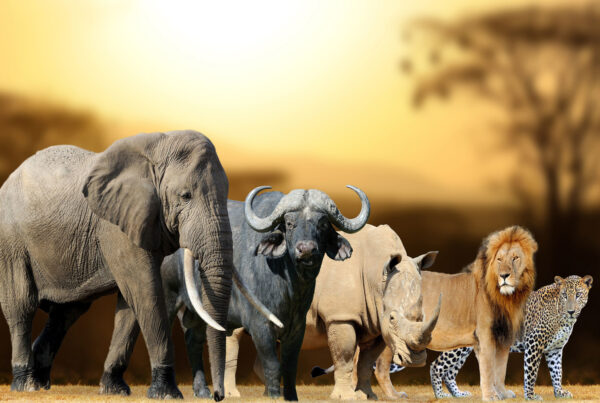
Marsabit Mountain forest is famous for its population of impressive large-tusked elephants. Among them, Ahmed of Marsabit became the park’s greatest wildlife icon. President Jomo Kenyatta declared Ahmed a national monument in 1970 and assigned KWS rangers to protect him throughout his life. Ahmed died naturally in 1974, and his preserved body now stands in the Nairobi National Museum. Today, his legacy continues to define Marsabit Mountain forest, while the elephant population still produces exceptional tusks.
During the dry season, elephants seek refuge in the cool mountain forest. However, they descend into the surrounding scrub at night to feed on richer vegetation. Morning game drives often reveal family groups returning to the forest after overnight feeding. Meanwhile, KWS rangers recognise many elephants individually and share fascinating stories about their behaviour. As a result, visitors enjoy informative and memorable elephant encounters.
Greater Kudu at Marsabit Mountain Forest
Marsabit Mountain forest also supports one of northern Kenya’s finest greater kudu populations. Rocky hillsides and forest-edge scrub provide ideal habitat for these elegant antelope. Visitors usually encounter greater kudu during dawn and dusk, when activity peaks. Mature bulls display magnificent spiral horns against the cedar forest backdrop, creating exceptional wildlife photography opportunities. Meanwhile, females move quietly through denser forest in small family groups. Guided tracking with KWS rangers also allows visitors to approach kudu closely in areas beyond vehicle access.
Colobus monkeys thrive in the forest canopy and move energetically through cedar and fig trees throughout the day. In addition, Syke’s monkeys and olive baboons occupy the forest understorey, adding constant movement and lively calls. Bird enthusiasts also appreciate Marsabit Mountain forest for its unique highland species. Highlights include Hartlaub’s turaco, African emerald cuckoo, and several rare forest birds seldom seen elsewhere in Kenya.
Section 2
Marsabit Mountain Forest Lakes
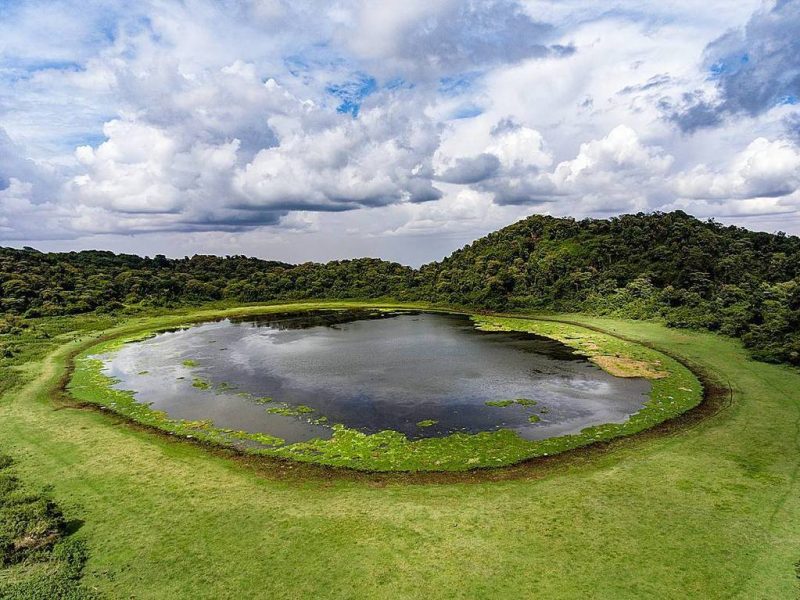
Lake Paradise at Marsabit Mountain Forest
Lake Paradise forms a spectacular volcanic crater lake at the centre of Marsabit Mountain forest. The permanent lake fills a perfectly circular crater at approximately 1,100 metres above sea level. Dense cedar forest and doum palms surround the crater walls, creating remarkable scenery. Furthermore, Martin and Osa Johnson made the lake internationally famous during their 1921 wildlife expedition. Their pioneering photographs introduced East African wildlife to global audiences. Remarkably, the landscape remains almost unchanged, preserving the same forest and elephant-filled shoreline.
Visitors reach Lake Paradise by following a steep forest track from the main park road. First, the crater rim reveals breathtaking views before the descent to the lakeshore. During late afternoons, elephant herds gather at the shallow water to drink. Meanwhile, calm reflections of the forest-covered crater create outstanding photography opportunities. Birdlife also flourishes around the lake, including African fish eagles, malachite kingfishers, and grey herons. Together, the lake, forest, and wildlife create one of northern Kenya’s most beautiful landscapes.
Marsabit Mountain Forest Visit
Visitors can reach Marsabit by charter flight from Nairobi Wilson Airport in about 90 minutes. Alternatively, the journey by road from Isiolo along the A2 Highway usually takes one to two days. Marsabit Lodge, managed by Kenya Wildlife Service, offers comfortable accommodation beside Lake Paradise. The lodge also overlooks a waterhole where elephants, greater kudu, and forest birds gather throughout the day. Therefore, a two- or three-night stay provides enough time to experience the forest, wildlife, and surrounding scrublands.
For an even richer adventure, combine Marsabit Mountain forest with a Chalbi Desert excursion. The dramatic contrast between mist-covered forest and brilliant white salt flats creates one of Kenya’s most striking landscapes. Consequently, a three- or four-night itinerary delivers an unforgettable northern Kenya wilderness experience that blends mountains, desert, wildlife, and spectacular scenery.
Plan Your Safari
Fly by charter from Nairobi to Marsabit and spend two or three nights at Marsabit Lodge. Include Lake Paradise, elephant game drives, and a guided greater kudu walk in your itinerary. For the ultimate northern Kenya adventure, combine your visit with a Chalbi Desert expedition.
African Wild Trekkers designs customised Marsabit Mountain forest safaris that include Lake Paradise, elephant encounters, and Chalbi Desert adventures. We arrange charter flights, reserve accommodation, and create seamless itineraries across northern Kenya’s mountain, desert, and lake landscapes. Contact African Wild Trekkers today, and we will design a personalised safari to this extraordinary island of mist forest within Kenya’s remote northern wilderness.