Africa’s Wildlife Crisis in 2026
Africa most endangered animals in 2026 represent a crisis that is simultaneously ancient in its causes and urgent in its timeline. The continent that contains more large mammal diversity than anywhere else on earth is losing species at a rate that conservation scientists describe as the beginning of a sixth mass extinction driven entirely by human activity. While Africa’s iconic safari animals — lions, elephants, leopards, cheetahs — receive substantial conservation attention and public sympathy, dozens of lesser-known species are slipping toward extinction with minimal global awareness, inadequate funding, and conservation programmes that remain chronically underfunded relative to the scale of the challenge. Understanding which animals are most critically at risk in 2026, what specific threats drive each species’ decline, and what conservation interventions are currently being attempted provides both the urgency and the hope that Africa’s wildlife conservation story requires.
The IUCN Red List, which provides the global scientific standard for species threat assessment, currently lists 47 mammal species in Africa as Critically Endangered — the category immediately before Extinct in the Wild — and over 200 as Endangered or Vulnerable. These numbers represent a snapshot of populations under active pressure, and the trajectory for many species is downward despite conservation effort. The interaction of habitat loss, illegal wildlife trade, human-wildlife conflict, invasive species, and a changing climate creates compound pressures that individual conservation interventions cannot always address simultaneously. The species described in this post represent the most severe current situations, where time is genuinely short and the outcomes of current decisions will determine whether these animals exist in the wild by 2040.
The Critically Endangered: Animals on the Edge
Mammals Facing Imminent Extinction
Black Rhino and Northern White Rhino
The black rhinoceros remains Critically Endangered despite decades of intensive conservation effort, with a global population of approximately 6,500 individuals in 2024 — up from a catastrophic low of around 2,400 in 1995, but still a fraction of the estimated 65,000 animals that existed in the 1970s before the poaching epidemic of the following decade. Black rhinos are found primarily in Kenya, Namibia, Zimbabwe, and South Africa, with Kenya’s Ol Pejeta, Lewa, and Borana conservancies collectively managing one of the most important metapopulations outside of southern Africa. The threats to black rhinos in 2026 remain identical to those of previous decades: demand for rhino horn in Vietnam and China for use in traditional medicine and as a luxury status symbol drives poaching networks that operate with near-military sophistication, employing corrupt officials, professional hunters, and international trafficking networks to extract horn and move it through multiple transit countries before it reaches end markets.
The northern white rhinoceros is for practical purposes extinct in the wild, with only two individuals remaining — both female, both living under 24-hour armed guard at Ol Pejeta Conservancy in Kenya. Najin and Fatu, mother and daughter, are the last survivors of what was once a population of over 2,000 animals in Central African savanna habitats before militarised poaching campaigns in the 1970s and 1980s eliminated the wild population. A consortium of scientists from the Leibniz Institute for Zoo and Wildlife Research, BioRescue, and Ol Pejeta are actively pursuing in-vitro fertilisation using harvested eggs from Najin and Fatu combined with frozen sperm from deceased males to create northern white rhino embryos, which would then be implanted into southern white rhino surrogate mothers. As of 2025, viable embryos had been created and initial implantation attempts were underway, making this the most technologically advanced conservation intervention ever attempted for an African species and the closest thing to a genuine last chance for a subspecies whose wild extinction was caused entirely by human greed.
African Wild Dog
The African wild dog, also known as the painted dog or lycaon pictus, is Africa’s most endangered large carnivore, with a global population estimated at fewer than 6,600 adults distributed across fragmented populations in eastern and southern Africa. Wild dogs require enormous home ranges — packs in Selous Game Reserve in Tanzania have been tracked using areas of over 800 square kilometres — which brings them inevitably into contact with human settlements, farms, and roads where they are killed as livestock predators, hit by vehicles, or snared accidentally in traps set for other species. Disease transmission from domestic dogs — including canine distemper virus and rabies — has devastated multiple wild dog populations in the past two decades, with a rabies outbreak in the Serengeti in the 1990s driving the local population to extinction. Botswana currently holds the largest wild dog population of any single country, with the Okavango Delta ecosystem supporting several hundred individuals across multiple interconnected packs, but even this stronghold faces pressure from human settlement expansion along its southern and eastern edges.
Wild dog conservation presents challenges that differ fundamentally from rhino or elephant conservation because the primary threats are not poaching but conflict, disease, and habitat fragmentation — problems requiring community engagement, livestock compensation schemes, vaccination programmes for domestic dogs in buffer zones, and political will to maintain wildlife corridor land that generates no immediate revenue for local communities. The Endangered Wildlife Trust’s Carnivore Conservation Programme in South Africa manages wild dog reintroduction into fenced reserves where they can be protected from the road kills and disease exposure that drive mortality in unfenced systems, but this approach creates isolated, genetically narrow populations that require active management to prevent inbreeding depression. Connecting these fenced populations through the wildlife corridors that once allowed natural gene flow between southern and eastern African wild dog populations remains the most important long-term conservation challenge for the species.
Birds, Reptiles, and Smaller Mammals Under Threat
African Penguin and Vulture Species
The African penguin is the only penguin species to breed on the African continent, nesting exclusively on islands and coastal rocky outcrops in South Africa and Namibia. Its population has declined by approximately 97 percent over the past century — from an estimated 1.5 million breeding pairs in 1910 to fewer than 10,000 pairs by 2023, a collapse driven by the commercial harvesting of guano that destroyed nesting burrows, collection of eggs for food, oil spills, climate-driven shifts in fish distribution that separate penguins from their prey during the critical breeding season, and competition with commercial fishing fleets for sardines and anchovies. The IUCN reclassified African penguins from Endangered to Critically Endangered in 2024, reflecting modelling that projected the species could be functionally extinct in the wild by 2035 without dramatic intervention in fishing management around breeding colonies.
African vultures face an extinction crisis that receives even less attention than most threatened species, despite vultures performing irreplaceable ecological services — consuming carcasses that would otherwise spread disease, locating dead animals that reveal poaching activity to rangers, and serving as early warning systems for disease outbreaks in wildlife populations. Six of the eleven vulture species found in Africa are currently threatened with extinction, driven primarily by deliberate poisoning: poachers poison carcasses to kill vultures, because circling vultures alert rangers to poaching locations, and traditional medicine traders in West and Central Africa pay significant sums for vulture body parts used in traditional rituals, creating a dedicated market for poisoned vultures independent of the anti-poaching motivation. The Vulture Conservation Foundation estimates that over 60,000 vultures may have been killed by poisoning in a single major poisoning event at a poached elephant carcass in Botswana in 2019 — a number representing a significant percentage of the entire southern African vulture population.
Pangolins and the Saiga-Like Decline Trajectory
All four African pangolin species are under commercial extinction pressure from illegal wildlife trafficking, with the ground pangolin (Smutsia temminckii) most heavily targeted across eastern and southern Africa due to its relatively high population density in accessible wildlife areas. Pangolin trafficking from Africa to Southeast Asia accelerated dramatically after 2010 as Asian pangolin species became too depleted to meet market demand, and the volume of African pangolin scales seized at airports and ports increased by over 300 percent between 2015 and 2020, representing seizures estimated to be between 10 and 20 percent of actual trafficking volume. The fundamental conservation challenge for pangolins is that their secretive nocturnal behaviour makes population estimation extremely difficult — there is no reliable global pangolin population count — which means conservationists cannot accurately determine how close any population is to commercial extinction until seizure data and local observations suggest the animals have largely disappeared from an area.
The conservation response to pangolin trafficking has necessarily focused on trafficking networks and demand reduction rather than habitat protection, because pangolins exist across a wide range of habitats that are not themselves under severe pressure. TRAFFIC, the wildlife trade monitoring network, works with customs authorities across African transit countries to improve pangolin detection at ports. The Pangolin Crisis Fund supports ranger training in identification and response to pangolin trafficking in range countries. And demand reduction campaigns targeting consumers in Vietnam and China — where pangolin scales are used in traditional medicine despite no clinical evidence of efficacy — have begun to show measurable effects in survey data tracking awareness and attitude change, though translating awareness into purchase behaviour change in markets where pangolin products carry strong social status associations is a longer-term challenge.
Conservation Responses Giving Cause for Hope
Interventions That Are Working
Translocation, Rewilding, and Population Management
Despite the scale of the crisis, several conservation interventions are demonstrating measurable population recovery for previously declining species. The Peace Parks Foundation’s transfrontier conservation areas in southern Africa have enabled the translocation of black rhinos, wild dogs, and cheetahs across international boundaries to establish new populations in areas from which they had been locally extirpated, expanding the effective range of these species beyond any single country’s capacity to protect them. Rewilding projects in Mozambique’s Gorongosa National Park have brought back wildebeest, zebra, hippo, lion, and elephant to an ecosystem that was nearly emptied of wildlife during the country’s civil war, demonstrating that African ecosystems can recover with astonishing speed when wildlife is returned and human pressure is reduced. Gorongosa’s elephant population has grown from approximately 200 traumatised survivors in 2004 to over 700 individuals by 2022, a recovery that is being carefully studied by researchers from Princeton University and the Gorongosa Restoration Project to understand the psychological and social dimensions of elephant population recovery after extreme trauma.
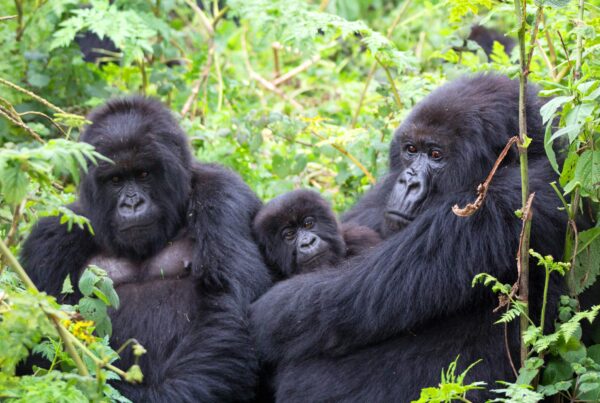
The mountain gorilla’s recovery from approximately 620 individuals in 2003 to over 1,000 by 2021 demonstrates what is possible when conservation receives adequate funding, political support, and genuine community integration. The interventions that drove this recovery — tourism revenue funding ranger wages and community development, veterinary care preventing disease mortality, law enforcement reducing poaching, and habitat protection maintaining forest connectivity between Rwanda, Uganda, and the DRC — are replicable for other species if equivalent investment is committed. The mountain gorilla is the only great ape whose population trend is currently positive, and the model of integrated conservation that achieved this is being explicitly studied by conservationists working on other critically endangered species to identify which elements can be transferred to different conservation contexts.
How Safari Tourism Connects to Species Recovery
The connection between safari tourism and species recovery is most direct in East Africa, where tourism revenue funds the majority of protected area management budgets and community conservancy operations. Kenya’s conservancy model — where community land around national parks is maintained as wildlife habitat in exchange for conservancy dividends paid from tourism revenue — has expanded the effective protected area for species like elephants, lions, cheetahs, and wild dogs far beyond the boundaries of parks that could never be politically expanded through traditional gazetting processes. The Laikipia Plateau in Kenya now contains one of the most important populations of endangered species on the continent precisely because private and community conservancies covering over one million acres provide connected wildlife habitat outside formal national parks, and that conservancy system is sustained economically by tourism.
Safari travellers who choose destinations based partly on the conservation status of the wildlife they will observe — selecting rhino conservancies in Kenya, wild dog reserves in Botswana, or cheetah monitoring projects in Tanzania — create market incentives for operators and lodge owners to invest in the species that generate premium tourism interest. This market mechanism is not a sufficient conservation strategy on its own, but it is a real one, and its effects on land use decisions in areas surrounding Africa’s most important wildlife habitats are measurable. The survival of Africa’s most endangered animals in 2026 depends on many interventions simultaneously — political will, international funding, law enforcement, community development, scientific research — and safari tourism that is consciously directed toward conservation priority species and landscapes is one lever that every traveller can activate through their booking decisions.
Plan Your Safari
Seeing Africa’s most endangered animals in the wild — black rhino at Ol Pejeta, wild dogs in the Okavango or Selous, African penguins at Boulders Beach — requires specific itinerary planning that prioritises the right reserves and seasons. These are not animals you will encounter by accident on a general safari; finding them takes knowledge of where populations are stable, what time of year concentrations are highest, and which operators have the tracking expertise to locate them reliably.
African Wild Trekkers builds conservation-focused itineraries for travellers who want to see these species in genuinely wild settings and understand the conservation stories behind their survival. We work with operators who contribute directly to the ranger programmes and research initiatives protecting these animals, so your safari spend has a traceable conservation impact beyond the wildlife experience itself.
Contact African Wild Trekkers at africanwildtrekkers.com/contact with the endangered species you most want to see and we will design an itinerary built specifically around finding them, understanding their conservation status, and supporting the programmes keeping them alive.