East Africa by Train and Bus: Overland Safari Between Uganda, Kenya, and Tanzania
Overland East Africa: The Road and Rail Alternative
International visitors underuse East Africa’s overland travel network. Connecting Uganda and Kenya. And Tanzania by combinations of bus, shared taxi, and train. And instead default to flying between major cities and parks. Overland travel in East Africa is slower, more physically demanding, and requires more planning than the organized fly-in safari circuit. But it delivers a completely different kind of engagement with the countries you pass through: market towns seen from bus windows, local commuters sharing your journey, and landscapes unfolding at road level rather than from 3,000 meters.
And the spontaneous human interactions that organized tour bubbles prevent. For travelers who value the overland experience as part of the journey rather than an obstacle between destinations, East Africa’s road and rail connections are viable for building an adventure travel itinerary that combines wildlife with authentic ground-level engagement.
This guide provides practical information on the main overland routes between East Africa’s major cities and safari areas, what the journey experience is actually like, and what safety and comfort standards to expect. And how to combine overland sections with organized safari components. The result is an itinerary that is neither entirely packaged nor entirely self-managed but draws on the strengths of both approaches.
The Main Overland Routes
Uganda to Kenya to Tanzania by Road
Kampala to Nairobi: The Most Used Overland Connection
The Kampala to Nairobi bus route is one of East Africa’s most frequently used overland connections. Several established cross-border bus companies operate it, including Easy Coach, Mash, and Modern Coast. The journey covers approximately 650 kilometers and takes ten to twelve hours depending on border crossing time at Busia or Malaba on the Uganda-Kenya border. Departures are typically early morning (4:00 to 6:00 a.m.) from Kampala’s main bus park, with arrival in Nairobi typically early to mid-evening. The buses are generally modern air-conditioned coaches rather than local minibuses, reasonably comfortable for the duration. And they operate on consistent schedules that allow advance booking through the operating company websites or Nairobi or Kampala agents.
The border crossing experience adds 30 minutes to two hours to the journey depending on queue length and processing speed. Carrying all required documentation in advance. Your passport, onward journey evidence, and any required visas. Significantly reduces crossing time and eliminates the need for last-minute visa arrangements at border posts. Which charge significantly more than the embassy or e-visa equivalent. The Busia border crossing is generally more efficient than Malaba for the Uganda-Kenya journey. On the main cross-border buses, luggage stored in the hold is adequately secure. Keep small valuables on your person during the journey and maintain the same awareness of documents and belongings as in any crowded transit environment.
Nairobi to Dar es Salaam: Road and Rail Options
The Nairobi to Dar es Salaam overland connection is the longest of the three main East Africa overland routes, at approximately 1,000 kilometers. The bus and the SGR (Standard Gauge Railway) running from Nairobi to Mombasa in Kenya both serve it, with separate rail systems in Tanzania covering the central and TAZARA lines. The most practical overland option for most travelers is the bus from Nairobi to Arusha (five to six hours on the Nairobi-Arusha Express, a comfortable scheduled service) and then onward from Arusha to Dar es Salaam by separate bus if needed. The Nairobi-Arusha section crosses the Namanga border between Kenya and Tanzania. One of East Africa’s most efficient border crossings for tourist traffic. And this section suits safari travelers combining a Kenya Masai Mara visit with a Tanzania northern circuit without a connecting flight.
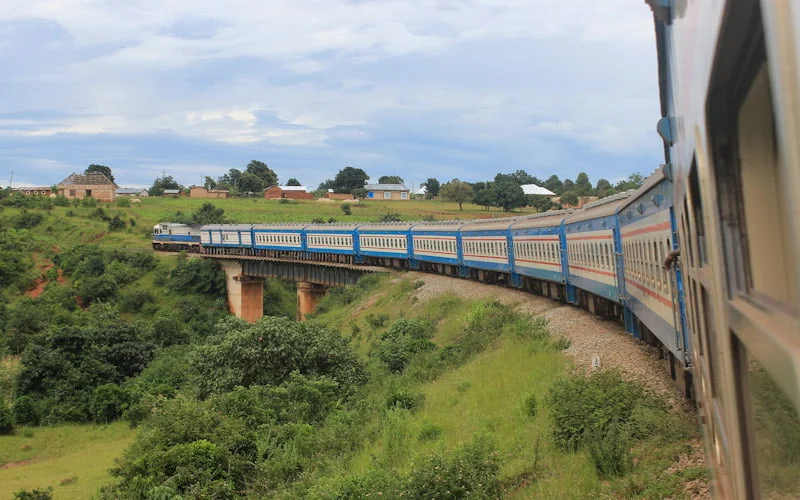
Tanzania’s TAZARA Railway (Tanzania-Zambia Railway) connects Dar es Salaam with Kapiri Mposhi in Zambia and passes through the Selous ecosystem and the southern Tanzania highlands. A journey of considerable scenic interest and one of Africa’s remaining classic railway adventures. The TAZARA Express runs twice weekly and takes 40 to 45 hours for the full Dar es Salaam to Kapiri Mposhi journey. But shorter sections. Dar es Salaam to Mbeya or Dar to Ifakara. Suit travelers incorporating a southern Tanzania overland element into their itinerary. First and second class sleeping berths provide a comfortable overnight journey option, though delays are common. Never use the TAZARA schedule as a fixed connection point for other bookings.
Combining Overland with Safari: Practical Approaches
How to Use Public Transport Around an Organized Safari
Arusha as the Overland-to-Safari Connection Point
Arusha in northern Tanzania is the most natural transition point between overland travel and organized safari, functioning well as the junction city where independent travelers switch modes. The main Nairobi-Arusha Express bus delivers passengers to Arusha’s central bus station within five to six hours of departing Nairobi. From Arusha, the full northern circuit safari infrastructure. Vehicles, guides, accommodation bookings. Is immediately available through the dozens of operators based in the city. Arriving in Arusha by bus from Nairobi the afternoon before a planned safari departure allows an Arusha hotel night and equipment organization. And a briefing with the safari operator before the early morning departure to Tarangire or the Serengeti.
The return journey works equally well in reverse. Completing a Tanzania northern circuit safari, transferring back to Arusha by road, and then taking the Nairobi-Arusha Express back to Nairobi for onward overland travel or international flight departure. This structure allows the overland component to bookend the organized safari without additional flights for the Kenya-Tanzania transition. For travelers who enjoy both modes, the combination provides variety that a flight-only itinerary doesn’t offer. The time cost of the road transit (5 to 6 hours Nairobi to Arusha) is more than repaid by the saving on domestic airfare for the same connection.
Safety and Practical Considerations
What Overland Travel in East Africa Actually Requires
Road Safety, Night Travel, and Precautions
Road safety is the most significant practical concern for overland travel in East Africa. Fatal road accidents involving buses and shared taxis occur at higher rates than in most Western countries. The risk is highest on night journeys, on narrow two-lane highways where overtaking slow trucks creates head-on collision risks. And on routes where buses exceed safe speeds to meet schedules.
The mitigations available to travelers are specific: travel in daylight hours whenever possible (particularly on Kenya’s highway network, where night travel risk is highest) and use established reputable bus companies rather than cheaper independent minibus options. And build schedule buffer into your plans because road travel consistently takes longer than estimated. The Nairobi-Arusha and Kampala-Nairobi routes on established company buses are the best-managed overland connections in the region and carry far lower risk than local matatu or dala-dala minibus travel on rural routes.
Night bus travel—common for the longer Nairobi-Kampala route to maximize daylight hours at each end—carries higher risk than daytime equivalent journeys. Travelers who specifically value safety above convenience should request daytime departures or accept an intermediate overnight stop rather than the full-night bus option, particularly on routes where road conditions or driver fatigue are harder to assess from outside the vehicle. The established cross-border bus companies (Easy Coach, Mash) have better safety records than informal operators and are the recommended choice for the main overland routes between Uganda, Kenya, and Tanzania.
Plan Your Safari
Overland East Africa travel works best as part of a hybrid itinerary that uses overland sections for interesting and scenic connections between cities. Particularly the Nairobi-Arusha section through the Rift Valley landscape. Where the journey has value in itself. And reserves flights for connections where time savings justify the cost, particularly access to remote safari parks. This hybrid approach captures the best of both travel modes without the inefficiencies of either extreme.
African Wild Trekkers advises overland travellers arriving in Arusha from Nairobi on safari options that connect seamlessly from the Arusha bus arrival point, with same-day vehicle pickup from the bus station and overnight Arusha hotel arrangements for travellers who arrive the evening before their safari start date. Our northern circuit packages work equally well for fly-in and overland arrivals.
Contact African Wild Trekkers at africanwildtrekkers.com/contact with your Tanzania arrival point and travel dates, and we will arrange your northern circuit safari pickup from Arusha and confirm all safari availability within 24 hours.