Burns, Blisters, and Eye Irritation
Wound Cleaning, Closure, and Dressing
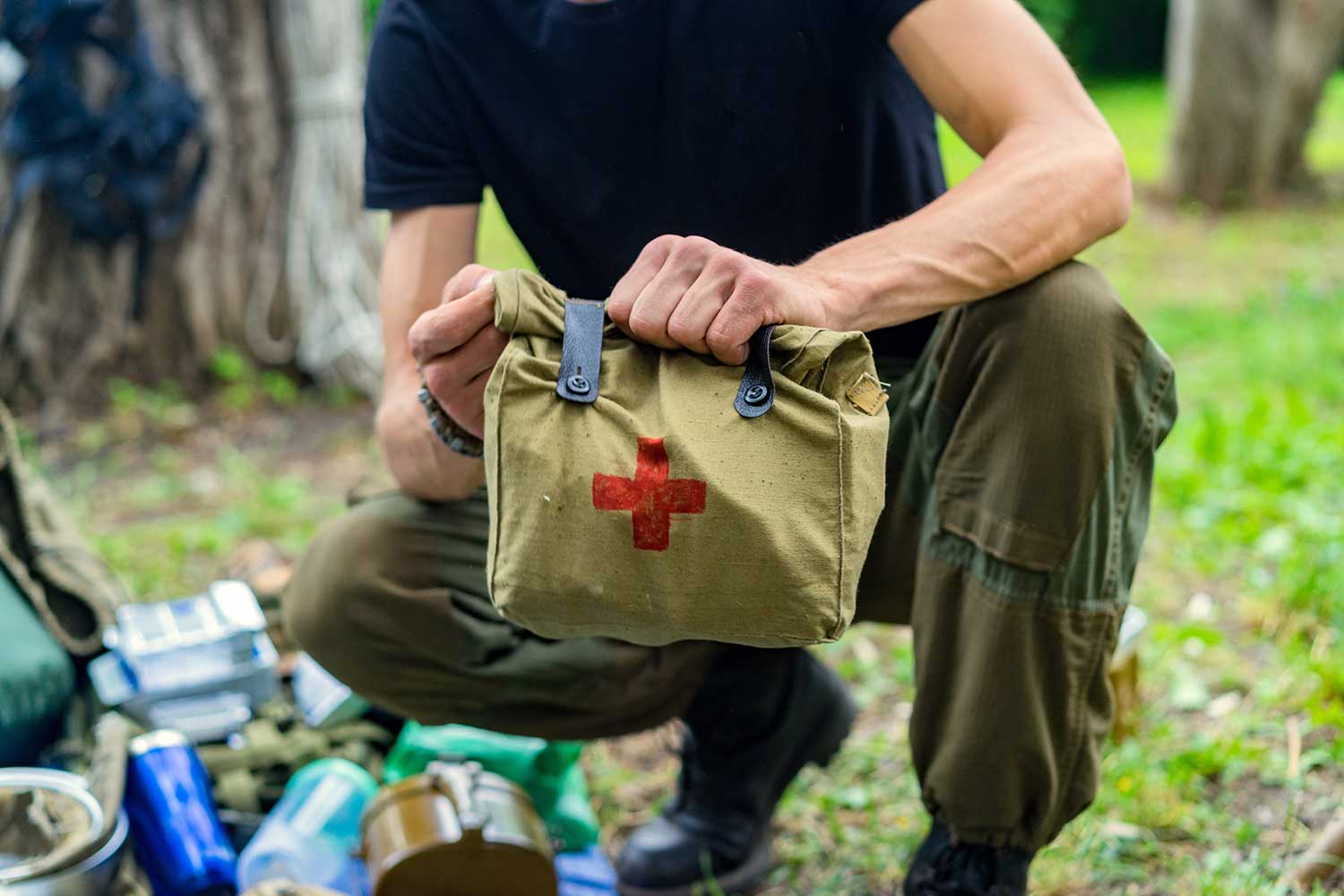
Wound care supplies are the highest-priority physical items in any safari medical kit because cuts, lacerations, and thorn punctures occur frequently in the African bush from vegetation, thorns, rough terrain, and the occasional unfortunate encounter with sharp camp equipment, and the risk of infection from these wounds is substantially higher in the dusty, microbe-rich environment of an African game reserve than in a sterile urban environment. The wound care component of your safari medical kit should include a wound irrigation syringe of at least 20ml capacity for flushing debris from lacerations under pressure — water-jet irrigation is the most effective method of wound decontamination available without surgical facilities and dramatically reduces infection rates in field-treated wounds compared to simple surface swabbing. Sterile saline sachets for wound irrigation, or at minimum clean bottled water without carbonation, provide the irrigation fluid, and antiseptic wipes or chlorhexidine solution provide the surface disinfection step that follows physical debris removal.
Wound closure options in a safari medical kit should include both adhesive wound closure strips (Steri-Strips or their equivalent) for linear lacerations that are clean and under minimal tension, and cyanoacrylate tissue adhesive for small puncture wounds and facial lacerations where suturing would normally be the standard treatment but is unavailable in the field. Sterile non-adhesive dressings in several sizes, medical-grade adhesive tape, and a crepe bandage for securing dressings and providing compression on swollen soft tissue injuries complete the wound coverage component. A pair of non-sterile examination gloves — preferably nitrile rather than latex to avoid latex allergy reactions — should be included for the person treating the wound as much as for the patient, both for hygiene protection and for the practical reason that blood-covered hands cannot manage dressing packaging, tape, and closure strips as effectively as gloved ones. The entire wound care component should be organized in a single sealable compartment of the kit so that the treating person can locate everything needed for a wound management sequence quickly without rummaging through unrelated medications during an already stressful situation.
Burns, Blisters, and Eye Irritation
Burns represent the most common serious injury at safari camps and lodges, arising most frequently from contact with camp fire coals, hot water boilers, vehicle exhaust components, and the unexpectedly hot surfaces of vehicles parked in full African sun for hours during a midday break. Hydrogel burn dressing sachets — the water-based gel dressings that cool the burn surface and provide significant pain relief while covering the wound — are the most effective immediate treatment for thermal burns in a field setting and should be carried in at least two or three sachet sizes to accommodate burns of different areas. Cooling a burn with clean water for a minimum of twenty minutes is the first response to any thermal burn regardless of what dressings are available, and ensuring that clean water is accessible before dressing application is part of the first aid response sequence that the medical kit should not need to provide — it is the most abundant first aid material in any field setting with a working lodge water supply. After-sun lotion or aloe vera gel serves double duty as both sun exposure management and minor burn cooling, and a tube in the medical kit covers both purposes economically.
Blister management is a high-frequency issue on walking safari activities where guests may walk four to ten kilometers daily across varied terrain in footwear that is new or not adequately broken in before the trip. Moleskin or gel blister pads in several sizes provide cushioning over forming blisters that prevents the fluid accumulation from enlarging, and the secondary infection prevention that comes from covering a broken blister with a sterile non-adhesive dressing eliminates the dust contamination that produces the painful, swollen, red blistered heels that can curtail a walking safari participant’s ability to continue activity mid-trip. Sterile eye irrigation solutions — available in single-use 20ml squeezy containers specifically designed for eye irrigation — address the frequent problem of windblown dust, grass seeds, and fine debris entering the eye on vehicle game drives across dusty tracks, where the combination of vehicle speed and the absence of windscreens on open safari vehicles creates continuous airborne particle exposure for the eyes of all passengers regardless of sunglasses use.
Medications and Health Management Supplies
Pain Management, Digestive Health, and Allergy Response
The medication component of the safari medical kit should be built around the specific health challenges of the African bush environment rather than simply replicating a home medicine cabinet. Paracetamol and ibuprofen — both in adequate quantity for the full trip duration plus a meaningful reserve — address the most common pain and fever management needs across all safari health scenarios including headache, musculoskeletal pain from vehicle travel on rough tracks, fever associated with a range of infectious presentations including early malaria, and the inflammatory component of insect bite reactions and blister formation. Ibuprofen’s anti-inflammatory properties make it preferable to paracetamol for soft tissue injuries and bites, while paracetamol’s hepatic safety profile makes it preferable for sustained fever management where repeated ibuprofen dosing over several days creates gastrointestinal risk. Carrying both and using them appropriately covers the medication needs of the majority of minor to moderate health events encountered on safari without overloading the kit with multiple redundant analgesics.
Oral rehydration salts (ORS) in pre-packaged sachet form are among the highest-value-per-gram items in any safari medical kit because they address the most common significant health impact on safari — dehydration from a combination of high ambient temperature, low humidity, physical activity, sweat loss in open vehicles, and the reduced attention to water intake that exciting wildlife encounters predictably produce. A single ORS sachet dissolved in 500ml of clean water and consumed over thirty minutes replaces the electrolyte losses that water alone does not address, prevents the fatigue, headache, and reduced cognitive function that mild dehydration produces, and treats the more significant dehydration associated with gastroenteritis effectively enough to prevent most diarrheal illness from requiring anything more than rest and rehydration. An anti-diarrheal medication — loperamide at standard adult dose — should be included specifically for situations where gastroenteritis symptoms would create management problems during a long game drive or an aircraft transfer, with the important understanding that loperamide is a symptom suppressant rather than a treatment and should not be used in situations where the causative organism needs to be eliminated rather than contained.
Plan Your Safari
African Wild Trekkers provides every guest with a comprehensive pre-departure health preparation guide that includes a specific medical kit checklist tailored to each destination’s risk profile, the health conditions most likely to be encountered, and the specific items that the lodges on their itinerary stock in their own first aid provisions — so that guests can avoid duplicating items readily available on-site and focus their personal kit on the items that supplement rather than replicate lodge resources.
For guests with pre-existing medical conditions requiring specific equipment or medications, we provide destination-specific guidance on traveling with medical devices through African airports, on medication storage at each lodge, and on the nearest medical facilities to each destination on the itinerary capable of treating specific conditions. We also provide the emergency evacuation contacts for each destination — both the specific service used by the lodges on your itinerary and the independent AMREF Flying Doctors and AirRescue contacts that provide independent evacuation capability if the lodge-contracted service is unavailable.
Contact African Wild Trekkers at africanwildtrekkers.com/contact with your destination and any specific health considerations and we will send your personalized safari medical kit checklist as part of your pre-departure preparation documents within 24 hours.
Why a Well-Prepared Safari Medical Kit Is Non-Negotiable
The remoteness that makes African safari destinations so extraordinarily compelling — the absence of roads, the distance from towns, the bush silence that no human infrastructure interrupts — is also the characteristic that makes personal medical preparedness more important here than in virtually any other travel environment in the world. A twisted ankle in a London park produces inconvenience; the same injury on a guided walk in Zambia’s Luangwa Valley, forty kilometers from the nearest road and three hours from the nearest clinic, produces a medical management situation whose outcome depends entirely on what the guide and guests are carrying and how competently it is applied. This is not a reason to avoid remote African safari travel — the statistical frequency of medical emergencies on safari is not high by the standards of adventure travel globally — but it is the reason that building a genuinely comprehensive personal medical kit and understanding how to use its contents is a pre-departure preparation step of genuine importance rather than a box-ticking exercise that produces a travel kit purchased at an airport pharmacy and never opened.
The personal safari medical kit has two distinct purposes that are worth separating clearly before deciding what to include. The first purpose is to manage the common minor medical events that occur routinely on safari — sunburn, insect bites, blister formation, digestive upset, headache, eye irritation, and mild respiratory symptoms — all of which are more likely to occur in the African bush environment than in ordinary daily life at home and all of which can be managed entirely with appropriate over-the-counter medications and supplies if they are available. The second purpose is to provide a first-response bridge between a more serious medical event — a severe allergic reaction, a significant wound, a suspected fracture, heat exhaustion, or a malaria symptom onset — and the professional medical care that requires evacuation to access. The personal kit cannot substitute for professional care in serious situations, but it can stabilize, manage pain, prevent infection, and sustain a patient’s condition for the hours that evacuation from a remote location typically requires. The difference between arriving at a medical facility with a properly stabilized wound versus an untreated wound that has been contaminated for six hours illustrates why the second function of the medical kit matters as much as the first.
Essential Medical Kit Contents
Wound Care and Injury Management
Wound Cleaning, Closure, and Dressing
Wound care supplies are the highest-priority physical items in any safari medical kit because cuts, lacerations, and thorn punctures occur frequently in the African bush from vegetation, thorns, rough terrain, and the occasional unfortunate encounter with sharp camp equipment, and the risk of infection from these wounds is substantially higher in the dusty, microbe-rich environment of an African game reserve than in a sterile urban environment. The wound care component of your safari medical kit should include a wound irrigation syringe of at least 20ml capacity for flushing debris from lacerations under pressure — water-jet irrigation is the most effective method of wound decontamination available without surgical facilities and dramatically reduces infection rates in field-treated wounds compared to simple surface swabbing. Sterile saline sachets for wound irrigation, or at minimum clean bottled water without carbonation, provide the irrigation fluid, and antiseptic wipes or chlorhexidine solution provide the surface disinfection step that follows physical debris removal.
Wound closure options in a safari medical kit should include both adhesive wound closure strips (Steri-Strips or their equivalent) for linear lacerations that are clean and under minimal tension, and cyanoacrylate tissue adhesive for small puncture wounds and facial lacerations where suturing would normally be the standard treatment but is unavailable in the field. Sterile non-adhesive dressings in several sizes, medical-grade adhesive tape, and a crepe bandage for securing dressings and providing compression on swollen soft tissue injuries complete the wound coverage component. A pair of non-sterile examination gloves — preferably nitrile rather than latex to avoid latex allergy reactions — should be included for the person treating the wound as much as for the patient, both for hygiene protection and for the practical reason that blood-covered hands cannot manage dressing packaging, tape, and closure strips as effectively as gloved ones. The entire wound care component should be organized in a single sealable compartment of the kit so that the treating person can locate everything needed for a wound management sequence quickly without rummaging through unrelated medications during an already stressful situation.
Burns, Blisters, and Eye Irritation
Burns represent the most common serious injury at safari camps and lodges, arising most frequently from contact with camp fire coals, hot water boilers, vehicle exhaust components, and the unexpectedly hot surfaces of vehicles parked in full African sun for hours during a midday break. Hydrogel burn dressing sachets — the water-based gel dressings that cool the burn surface and provide significant pain relief while covering the wound — are the most effective immediate treatment for thermal burns in a field setting and should be carried in at least two or three sachet sizes to accommodate burns of different areas. Cooling a burn with clean water for a minimum of twenty minutes is the first response to any thermal burn regardless of what dressings are available, and ensuring that clean water is accessible before dressing application is part of the first aid response sequence that the medical kit should not need to provide — it is the most abundant first aid material in any field setting with a working lodge water supply. After-sun lotion or aloe vera gel serves double duty as both sun exposure management and minor burn cooling, and a tube in the medical kit covers both purposes economically.
Blister management is a high-frequency issue on walking safari activities where guests may walk four to ten kilometers daily across varied terrain in footwear that is new or not adequately broken in before the trip. Moleskin or gel blister pads in several sizes provide cushioning over forming blisters that prevents the fluid accumulation from enlarging, and the secondary infection prevention that comes from covering a broken blister with a sterile non-adhesive dressing eliminates the dust contamination that produces the painful, swollen, red blistered heels that can curtail a walking safari participant’s ability to continue activity mid-trip. Sterile eye irrigation solutions — available in single-use 20ml squeezy containers specifically designed for eye irrigation — address the frequent problem of windblown dust, grass seeds, and fine debris entering the eye on vehicle game drives across dusty tracks, where the combination of vehicle speed and the absence of windscreens on open safari vehicles creates continuous airborne particle exposure for the eyes of all passengers regardless of sunglasses use.
Medications and Health Management Supplies
Pain Management, Digestive Health, and Allergy Response
The medication component of the safari medical kit should be built around the specific health challenges of the African bush environment rather than simply replicating a home medicine cabinet. Paracetamol and ibuprofen — both in adequate quantity for the full trip duration plus a meaningful reserve — address the most common pain and fever management needs across all safari health scenarios including headache, musculoskeletal pain from vehicle travel on rough tracks, fever associated with a range of infectious presentations including early malaria, and the inflammatory component of insect bite reactions and blister formation. Ibuprofen’s anti-inflammatory properties make it preferable to paracetamol for soft tissue injuries and bites, while paracetamol’s hepatic safety profile makes it preferable for sustained fever management where repeated ibuprofen dosing over several days creates gastrointestinal risk. Carrying both and using them appropriately covers the medication needs of the majority of minor to moderate health events encountered on safari without overloading the kit with multiple redundant analgesics.
Oral rehydration salts (ORS) in pre-packaged sachet form are among the highest-value-per-gram items in any safari medical kit because they address the most common significant health impact on safari — dehydration from a combination of high ambient temperature, low humidity, physical activity, sweat loss in open vehicles, and the reduced attention to water intake that exciting wildlife encounters predictably produce. A single ORS sachet dissolved in 500ml of clean water and consumed over thirty minutes replaces the electrolyte losses that water alone does not address, prevents the fatigue, headache, and reduced cognitive function that mild dehydration produces, and treats the more significant dehydration associated with gastroenteritis effectively enough to prevent most diarrheal illness from requiring anything more than rest and rehydration. An anti-diarrheal medication — loperamide at standard adult dose — should be included specifically for situations where gastroenteritis symptoms would create management problems during a long game drive or an aircraft transfer, with the important understanding that loperamide is a symptom suppressant rather than a treatment and should not be used in situations where the causative organism needs to be eliminated rather than contained.
Plan Your Safari
African Wild Trekkers provides every guest with a comprehensive pre-departure health preparation guide that includes a specific medical kit checklist tailored to each destination’s risk profile, the health conditions most likely to be encountered, and the specific items that the lodges on their itinerary stock in their own first aid provisions — so that guests can avoid duplicating items readily available on-site and focus their personal kit on the items that supplement rather than replicate lodge resources.
For guests with pre-existing medical conditions requiring specific equipment or medications, we provide destination-specific guidance on traveling with medical devices through African airports, on medication storage at each lodge, and on the nearest medical facilities to each destination on the itinerary capable of treating specific conditions. We also provide the emergency evacuation contacts for each destination — both the specific service used by the lodges on your itinerary and the independent AMREF Flying Doctors and AirRescue contacts that provide independent evacuation capability if the lodge-contracted service is unavailable.
Contact African Wild Trekkers at africanwildtrekkers.com/contact with your destination and any specific health considerations and we will send your personalized safari medical kit checklist as part of your pre-departure preparation documents within 24 hours.