Animal Tracking Skills Africa: Learn to Follow Wildlife Signs Across the Savanna
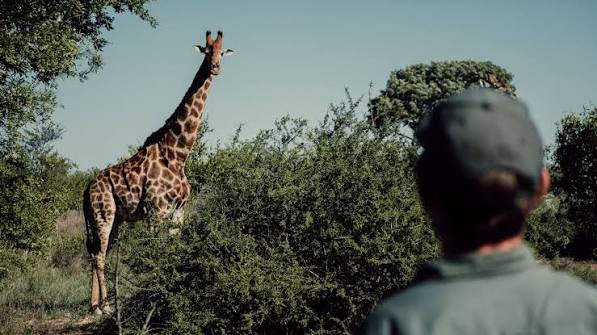
Tracking transforms passive observation into active investigation. A guest who reads tracks no longer depends entirely on the guide to locate and explain what surrounds them. They participate in the finding process. They ask meaningful questions and build a mental model of animal behaviour that makes each sign more comprehensible than the last. Learning to track does not require years of dedicated study. Moreover, a focused two to three day introduction provides enough foundation to read the most common East Africa tracks reliably.
Starting with the Big Five Tracks
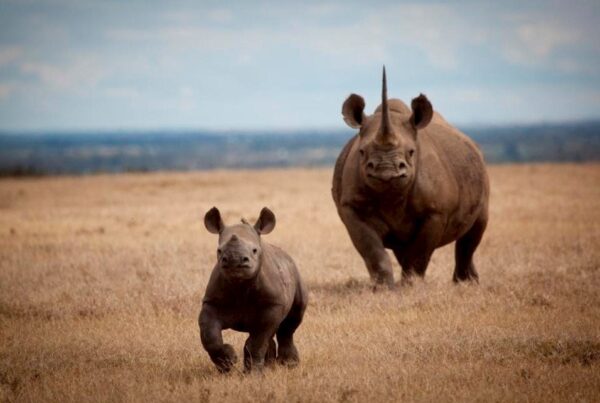
Beginning trackers learn the most frequently encountered prints first. Elephant tracks are unmistakable — round, flat depressions 40 to 60 centimetres across, with a faint toenail line at the front edge. Buffalo prints show two rounded toes with a clear crease between them and dew claw impressions in soft ground. Lion prints are round with no claw marks, since the retracted claw leaves a clean toe pad impression. Leopard prints are smaller than lion and also claw-free. Rhino prints are three-toed and large, measuring 25 to 35 centimetres across the front foot.
Each print looks different in different substrates. Dry, compacted clay reveals only the heaviest impressions. Moist river sand, however, captures the full detail of pad surface texture and claw profile. Dust carries only the silhouette without internal detail. Therefore, learning how substrate affects print appearance is as important as memorising the shapes themselves.
Understanding Gait Patterns
Gait patterns reveal travel speed and behaviour. A walking lion places its hind foot directly into the front foot’s impression. This direct register minimises sound by eliminating a second set of noise. A trotting lion’s hind foot falls slightly ahead of the front print, creating a staggered pair. A running lion stretches fully between bounds, producing four widely spaced prints with long gaps between each cycle.
Baboon trails show a distinctive quadrupedal walk pattern. Hand and foot prints are clearly differentiated the hand lacks a heel pad and shows splayed fingers. Similarly, warthog trails show a forward-lean posture. The front knee callous-pads sometimes leave marks beside the hoof prints where the warthog knelt to graze. These gaits become recognisable after only a few field examples.
Reading Non-track Signs
Skilled trackers rely as much on non-track signs as on footprints. Bark stripping at 1.8 to 2.5 metres above ground indicates elephant feeding. Bark stripping below 80 centimetres, however, indicates a smaller browser such as a giraffe tongue scrape or a dik-dik. Broken branches at 3 to 4 metres indicate elephant no other East Africa animal breaks branches at this height. Grass stems bent and split rather than cleanly bitten indicate hippo feeding. Hippos use blunt lips that shear grass differently from grazing ungulates with incisors.
Furthermore, scat identification confirms species presence even when tracks are absent. Hyena scat is white and chalky from crushed bone calcium. Leopard scat is dark, twisted, and deposited on raised surfaces as territorial marking. Elephant dung is fibrous and undigested-looking, reflecting the low digestive efficiency of a hindgut fermenter processing vast quantities of low-quality vegetation.
Plan Your Safari
Dedicated tracking learning experiences operate at several East Africa camps with tracking-focused walking programmes. Kenya’s Laikipia Plateau conservancies, Tanzania’s Ruaha National Park walking camps, and Uganda’s Queen Elizabeth National Park all offer interpretive walks with patient, skilled guides. Multi-day walking itineraries allow skills to compound over several days rather than delivering a single session with no opportunity to practise further.
African Wild Trekkers designs walking and tracking safari programmes across East Africa. Contact us to plan a walking-focused itinerary that builds your tracking skills alongside world-class wildlife encounters.