The Amboseli Elephant Research Project
Cynthia Moss and the World’s Longest Elephant Study
How the Research Began in 1972
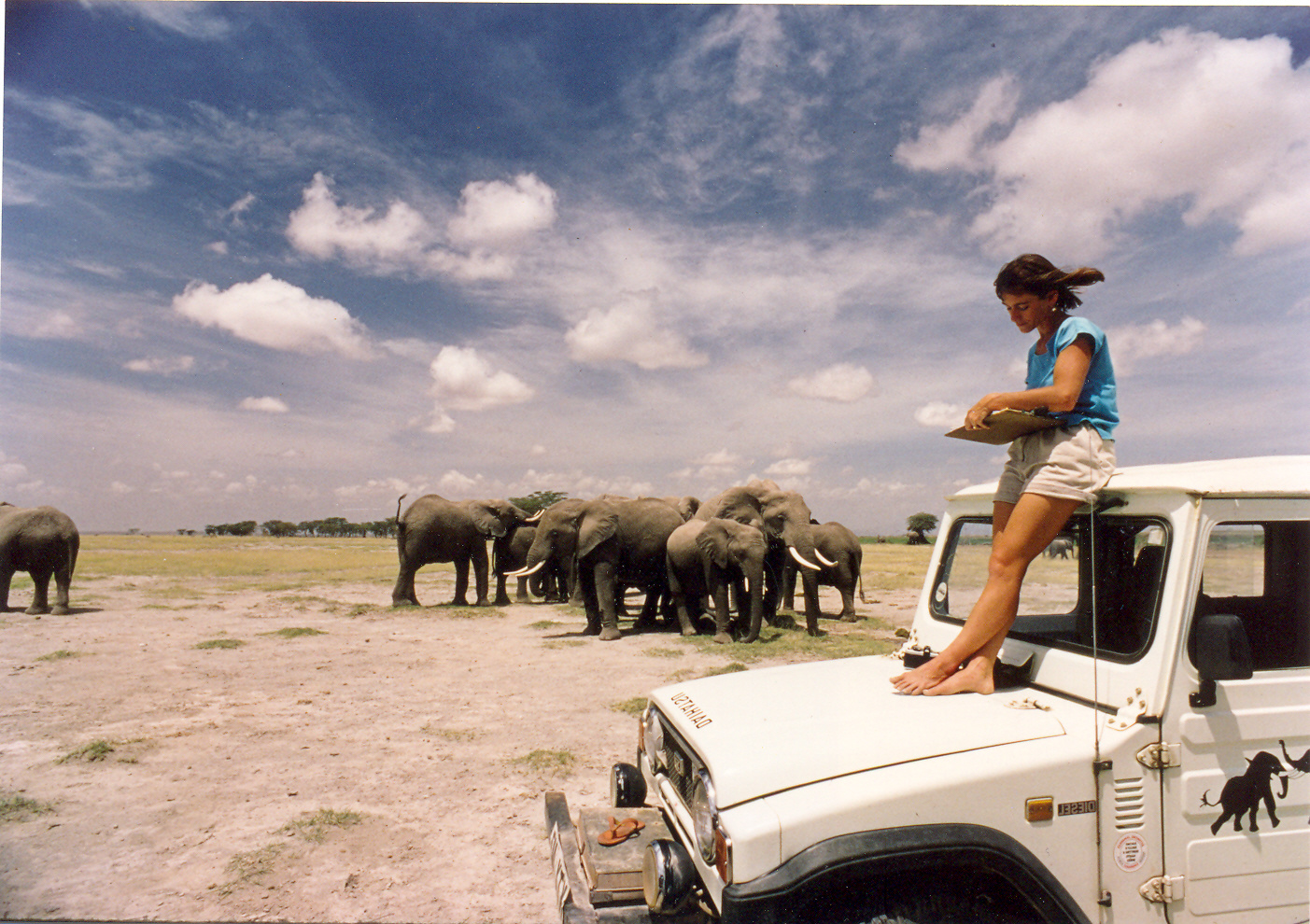
Cynthia Moss arrived in Amboseli National Park in 1972 as a young American researcher with a journalism background and emerging interest in elephant natural history. She had first encountered African elephants while working for a wildlife organization in Tanzania. The research program she established, first informally and later as the Amboseli Elephant Research Project, began with documenting elephant behavior and social organization through daily observation from a vehicle in the park. Within a few years, it became clear that Amboseli elephants had complex social lives, stable multi-generational families, individual personalities, and long-term relationships and learning abilities.
This challenged conventional scientific understanding of the species at the time. The ability to recognize and track individuals across years produced the first comprehensive long-term life history database for a wild elephant population. It fundamentally changed how scientists understood elephant cognition and social structure.
The research technique that enabled the Amboseli study is individual identification through ear patterns. Each elephant carries a unique combination of tears, holes, and notches in its ears accumulated through life. These result from thorns, elephant interactions, and environmental wear. Moss and her team photographed every elephant’s ears and built a photographic catalogue that expanded from dozens to hundreds within the first decade.
This created a population record later expanded across more than fifty years of continuous monitoring. The identification system now includes over 3,000 individually named and numbered elephants across five generations. It remains the most comprehensive wild elephant database in existence. It forms the foundation for modern research on elephant cognition, behavior, and conservation science globally.
What the Research Has Revealed About Elephant Society
The Amboseli research established the matriarchal family unit as the core structure of African elephant society. This required decades of observation to confirm beyond earlier anecdotal understanding. A typical Amboseli elephant family includes a matriarch, her adult daughters, their offspring, and young males before they leave for bachelor groups.
The matriarch is the oldest female and holds critical ecological memory for survival. She guides decisions about water sources, migration routes, and social relationships across generations. Her knowledge determines family survival outcomes in droughts and environmental stress. Families that lose a matriarch face measurable declines in survival and reproductive success in following years.
The research also revealed highly complex inter-family relationships that persist across decades. Elephant families maintain long-term social histories that influence greeting behavior and conflict patterns. Some families show repeated affiliative interactions, while others display structured avoidance or aggression based on past matriarch-level interactions.
These relationships extend across generations, demonstrating long-term social memory. The Amboseli database makes these patterns visible by linking current behavior to historical records spanning twenty to thirty years. This provides a rare longitudinal view of non-human social systems at a generational scale.
Specific Research Findings and Their Importance
Elephant Intelligence and Communication
Amboseli research contributed significantly to understanding elephant cognition and self-awareness. Experiments involving mirror recognition and playback of calls from deceased individuals showed strong emotional and social responses. When recorded calls of a deceased matriarch were played back, surviving family members displayed agitation and searching behavior. This indicates long-term memory and recognition of individual vocal identities. These findings would not be possible without decades of individually documented life histories.
Infrasound communication in elephants was also documented in connection with Amboseli research. Elephants produce low-frequency calls below the human hearing range that travel several kilometers. These signals coordinate movement, warn of threats, and maintain contact between distant groups. Behavioral changes observed during silent transitions often reflect responses to these inaudible signals. This discovery transformed interpretation of elephant behaviour in the field. It explains many coordinated movements that appear spontaneous to human observers.
Conservation Applications of the Research
The Amboseli research has had direct conservation impact across Africa. Findings show that matriarch loss significantly reduces family survival rates. This has influenced anti-poaching strategies, prioritizing older females. These individuals carry the most ecological and social knowledge within elephant populations. Their loss creates long-term disruption beyond simple population reduction metrics.
The research also documented elephant responses to human threat recognition, including learned distinctions between different human groups based on historical experience. This highlights the complexity of human-elephant conflict dynamics. It shows that elephants retain and transmit behavioral responses across generations. These insights inform more nuanced conservation and management strategies than population counts alone.
The population recovery after the 1980s poaching crisis is also well documented. The Amboseli elephant population declined sharply during this period before gradual recovery. However, social structures remained disrupted for decades. Lost matriarchs, broken family units, and knowledge gaps affected herd stability. This demonstrates that conservation success involves more than numerical recovery. It includes restoration of social systems and intergenerational knowledge.
Visiting Amboseli With the Research in Mind
How the Research Enriches the Safari Experience
Named Families and Individual Recognition
Amboseli guides often recognize individual elephant families by ear patterns and physical characteristics. This skill develops through long-term exposure to the research population. Guides can identify specific families, explain matriarch histories, and describe current family dynamics. This transforms elephant viewing into encounters with known individuals rather than anonymous wildlife. Each sighting becomes part of a documented narrative spanning decades.
Travelers benefit from requesting guides familiar with the Amboseli Elephant Research Project. This ensures deeper interpretive insight during game drives. Reading Cynthia Moss’s works, including Elephant Memories and Echo of the Elephants, enhances understanding before arrival. Familiarity with even a few documented family histories changes how elephant encounters are perceived. It replaces general observation with recognition of ongoing life stories.
Plan Your Safari
An Amboseli safari designed around the elephant research context connects wildlife viewing with one of the world’s most important long-term animal studies. African Wild Trekkers incorporates research-based interpretation into Amboseli itineraries and selects guides with strong elephant identification experience for deeper engagement.
The package includes accommodation near swamp habitats, guided game drives with elephant family recognition expertise, park fees, internal flights, and pre-trip research materials. Combining Amboseli with Laikipia or Maasai Mara creates a comparative elephant experience across Kenya’s ecosystems.
Contact African Wild Trekkers at africanwildtrekkers.com/contact with your travel dates, and we will design your Amboseli elephant research safari within 24 hours.