Dhow Sailing Tanzania: Sailing the Indian Ocean on a Traditional Wooden Vessel
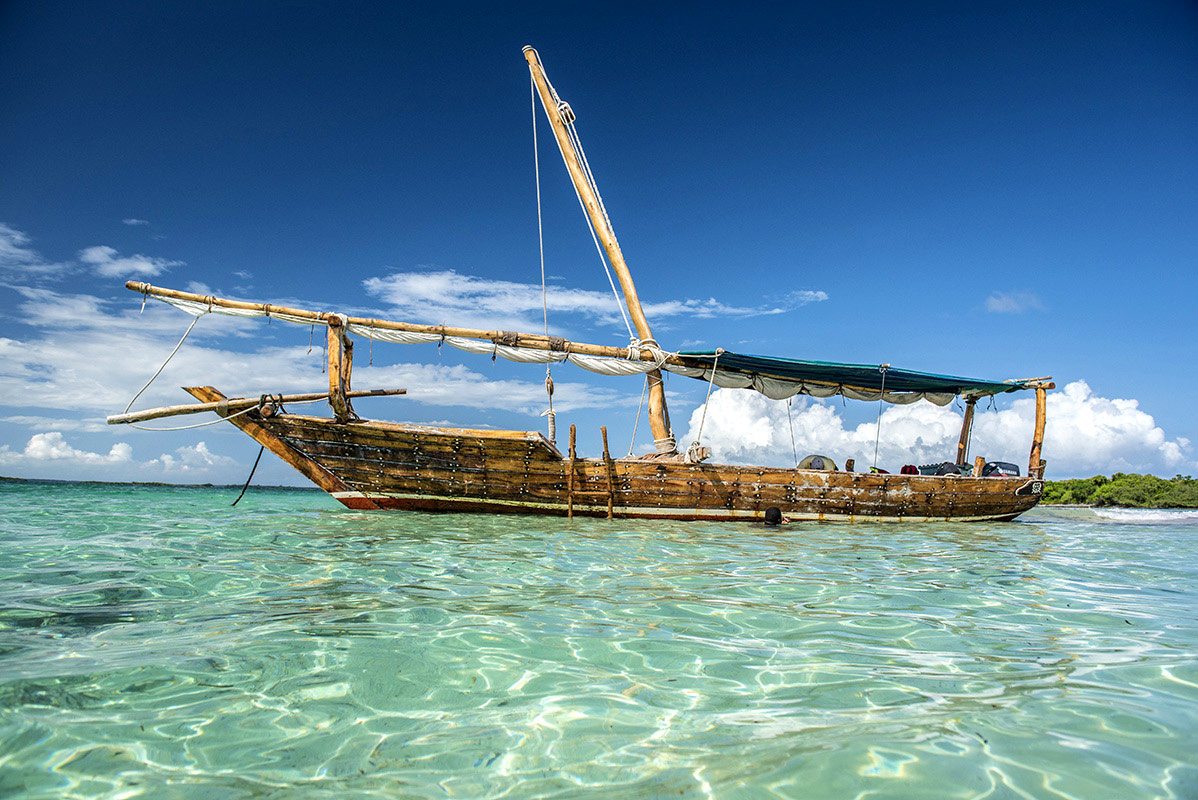
The dhow is the traditional sailing vessel of the Indian Ocean’s East African coast. It has been built and sailed from the same harbours, using the same keel-less hull forms and the same lateen triangular sail, for at least 1,000 years.
The dhow trade connected East Africa’s Swahili coast to Arabia, Persia, and India. It carried ivory, slaves, gold, and spices on the monsoon winds that reverse direction twice each year. That monsoon wind system still defines the Zanzibar coast’s sailing calendar today.
The dhow’s sailing technique is inseparable from the monsoon. The skilled dhow captain reads wind and current with the same knowledge that his predecessors applied when the sailing vessel was the Indian Ocean’s primary technology of long-distance connection. Sailing on a traditional dhow off Zanzibar places the visitor inside this living maritime tradition rather than observing it from a museum or a tourist beach.
How Traditional Dhows Are Built and Sailed
Zanzibar’s dhow building tradition survives at several locations on the island’s coast. The most active boatyard is at Nungwi on the northern tip of the island. The builders use adzes to shape the hull planks by hand. They join the planks with wooden pegs and sew the earlier sections with coir rope in the most traditional construction method.
Modern dhow construction uses metal fastenings for the main hull structure while maintaining the traditional hull form and sailing rig. The lateen sail is a triangular canvas or synthetic sail mounted on a long yard that angles upward from the mast’s base.
The yard is repositioned on the opposite side of the mast when the dhow tacks or jibes. Operating the yard during a tack is the most physically demanding crew task on a sailing dhow. It requires the entire crew’s coordinated effort on larger vessels. Furthermore, the dhow’s shallow, keelless hull allows sailing in water depths that keel boats cannot enter, giving access to the reef margins and sheltered sand banks where the best anchoring and swimming spots are found.
Sunset Dhow Cruises
The sunset dhow cruise is the most popular and widely available dhow experience off Zanzibar. Operators in Stone Town and Nungwi run daily sunset cruises that depart in the late afternoon and return after dark.
The cruise follows the coast in the evening breeze, which is reliably consistent in the 16:00 to 19:00 window on most days. The sunset light on the Indian Ocean from the deck of a moving dhow is among the most photographically rich experiences that Zanzibar offers.
The light turns the water from deep blue through purple to the gold reflection of the setting sun during the 60 to 90 minutes of the cruise. Traditional Swahili food and drinks are served on board.
Overnight Dhow Charters
Overnight dhow charters provide the complete version of the traditional dhow experience. A private charter covers a two to five day sailing route between Zanzibar’s coast and the surrounding islands. Pemba Island, the Mnemba Atoll, and the sandbanks south of Zanzibar’s main island are typical overnight charter destinations.
The dhow anchors in sheltered bays for the night. The crew prepares meals using a small charcoal burner on deck. Swimming and snorkelling at anchor points provides activity during the midday hours when the wind drops.
The night at anchor on a dhow, with the boat gently swinging on its mooring line and the stars overhead unobstructed by any land-based light source, is one of the Indian Ocean’s most peaceful sleep experiences. Moreover, the interaction with the dhow crew across several days of shared sailing provides the most genuine engagement with Zanzibar’s maritime culture that any shore-based activity can approach.
Plan Your Safari
Sunset dhow cruises from Stone Town operate year-round and require no advance booking beyond 24 hours. The most consistent sailing conditions occur between June and October during the kaskazi monsoon season when the north-east wind provides reliable afternoon sailing.
Overnight charter dhows require advance booking of 2 to 4 weeks depending on the season. Charter costs cover the vessel, crew, food, and basic sleeping equipment. Adding a dhow component to a Tanzania safari requires a Zanzibar coastal extension of at least two nights. Three to five nights allows meaningful time for both exploration of Stone Town and a sailing experience of appropriate duration.
African Wild Trekkers includes Zanzibar dhow sailing in Tanzania coastal extensions and Indian Ocean charter programmes. Contact us to plan a Tanzania safari that combines the Serengeti wildlife circuit with the living maritime tradition of East Africa’s Swahili coast.