Marabou Stork Size: Facts About Africa’s Most Imposing and Unusual Stork
The marabou stork is Africa’s largest stork and one of the largest flying birds on earth. It stands up to 1.5 metres tall with a wingspan reaching 3.7 metres making it the widest wingspan of any living bird. Despite these extraordinary dimensions, the marabou stork is one of East Africa’s most frequently encountered large birds. It is equally comfortable scavenging at wildlife kills in national parks, feeding at fish markets on the shores of Lake Victoria, and roosting in enormous colonies in the trees of East African cities.
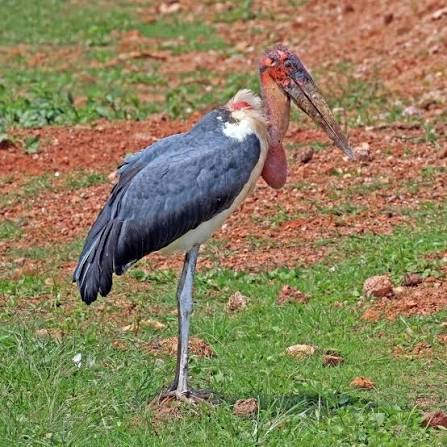
The marabou stork’s appearance is distinctive and instantly recognisable. The bare pink head and neck, the enormous wedge-shaped bill, the pink throat pouch, and the combination of black upperparts and white underparts create a bird that looks simultaneously prehistoric and deliberately ungainly. Despite its appearance, the marabou in flight is a graceful soarer that rides thermals at great heights alongside vultures.
Size and Physical Features
Adult marabou storks reach body weights of 5 to 9 kilograms. The wingspan of 3.2 to 3.7 metres rivals the wandering albatross for the greatest wingspan of any living bird. The bill is large, straight, and powerful up to 34 centimetres long and is used to reach deep into carcasses and to probe in shallow water for fish and invertebrates.
The neck feathers are absent or reduced in adult birds. This bare-necked adaptation is shared with other scavenging birds including vultures and is thought to facilitate cleaning after deep feeding in carcasses where feathers would trap blood and other materials.
Scavenging and Diet
Marabou storks are highly opportunistic feeders. In wildlife areas they attend vulture gatherings at carcasses and use their powerful bills to access meat and organs that smaller-billed scavengers cannot reach. They also follow predators and gather at kill sites in the expectation of feeding opportunities after the predator has fed.
In aquatic environments, marabou storks wade in shallows and at fish market waste sites to feed on fish scraps, frogs, and aquatic invertebrates.
Furthermore, marabou storks in urban environments have learned to exploit human food waste at landfills, markets, and abattoirs. These urban populations are healthy and growing despite the species’ conservation challenges in more remote areas.
Where to See Marabou Storks in East Africa
Marabou storks are present throughout East Africa wherever food resources are available. Uganda’s Kampala carries one of East Africa’s most spectacular urban marabou populations. The city centre trees host roost colonies of hundreds to thousands of birds that create an extraordinary urban wildlife spectacle.
The shores of Lake Victoria at Entebbe and Kisumu carry marabou storks in large numbers at fish processing areas. Tanzania’s Lake Victoria shore near Mwanza and the fish markets around the lake all attract significant marabou gatherings.
In wildlife areas, the species is reliably encountered at vulture carcass gatherings in the Serengeti, Maasai Mara, and at the stork colonies that establish near East Africa’s larger wetland areas during the breeding season. Arusha’s town trees and the Lake Manyara area in Tanzania carry accessible marabou populations within the northern Tanzania circuit.
Plan Your Birding Safari
Marabou stork sightings require no specialist effort in East Africa. Any East Africa safari that passes through open savanna, wetland edges, or urban areas will encounter marabou storks without any dedicated searching.
Uganda’s Kampala city roost colonies provide the most dramatic single concentration of marabou storks in the region. A short drive into Kampala’s centre on the way to or from the airport allows observation of hundreds of roosting birds at remarkably close range in the city’s roadside trees.
African Wild Trekkers designs East Africa safari itineraries that include Uganda’s urban wildlife highlights alongside the country’s national parks. Contact us to plan a safari that captures the full range of East Africa’s extraordinary large bird diversity.