Bearded Vulture Africa: The Bone-Dropping Mountain Giant
The bearded vulture, also known as the lammergeier, is one of the most extraordinary birds on the African continent. It has evolved a feeding specialization found in no other bird in the world—it feeds almost exclusively on the bones of dead animals. The bearded vulture drops large bones from heights of 50 to 150 meters onto rocky surfaces called ossuaries to smash them into manageable pieces. The bone marrow and fragments released by this smashing technique provide the high-fat, nutritious food source that sustains the species through the harsh highland winters of its mountain habitat.
The bearded vulture in Africa inhabits the high mountain ranges of Ethiopia, Kenya, and the highlands extending southward through Tanzania and South Africa. In East Africa, the Ethiopian highlands provide the most accessible population for safari visitors, with the Bale Mountains and the Semien Mountains carrying the continent’s most reliably viewable bearded vulture populations.
Identification
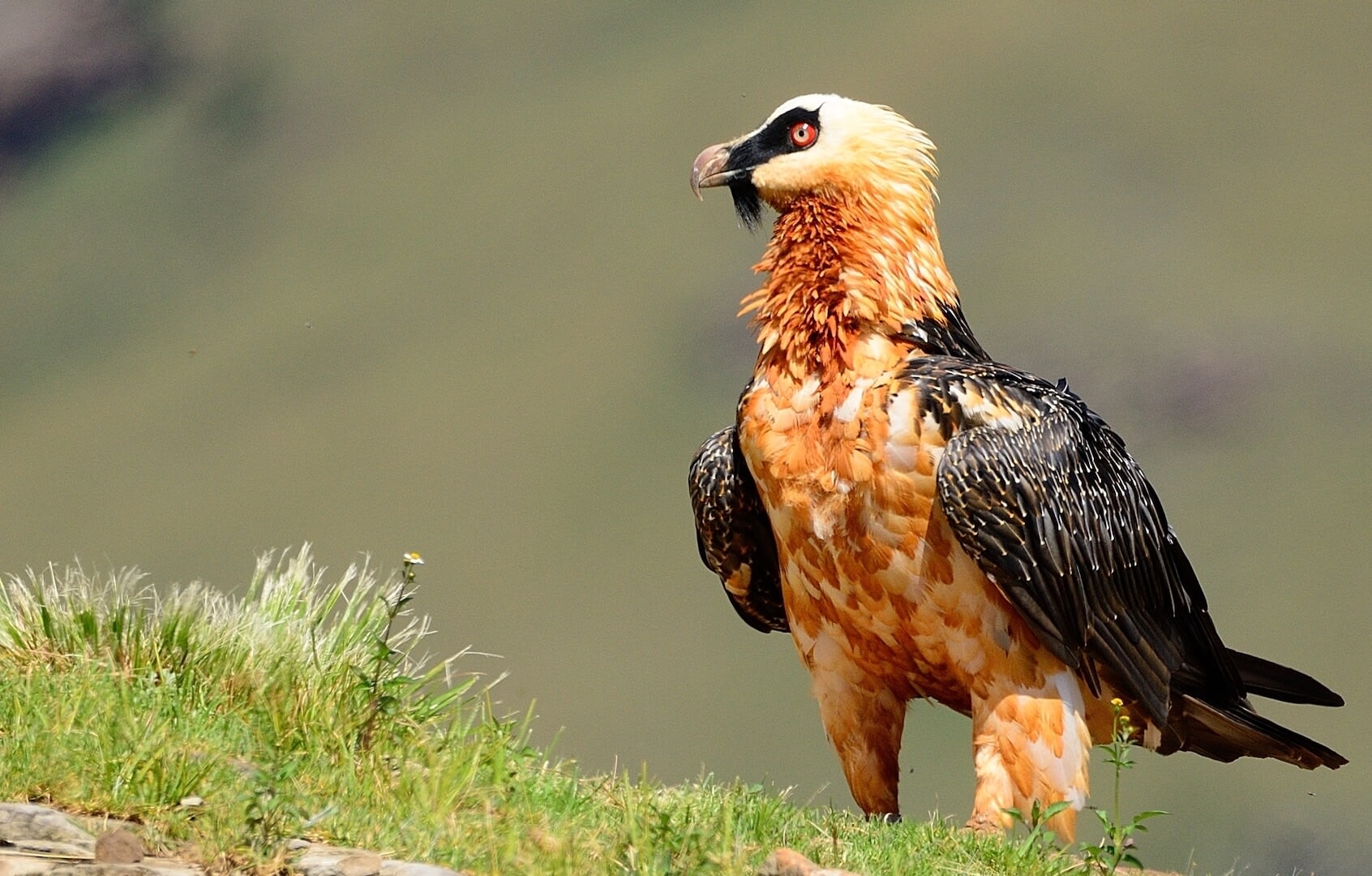
The adult bearded vulture is an enormous bird with a wingspan of up to 2.83 meters. The head and underparts are cream to orange-rufous. The upperparts are dark grey-black. The tail is long and wedge-shaped, unlike the rounded or squared tails of other African vultures. The distinctive facial “beard” consists of a cluster of black bristle feathers below the bill at the chin and throat.
The eye is yellow with a vivid red orbital ring. The eye color and the beard distinguish the bearded vulture from all other large soaring birds in Africa at close range. The orange-rufous underpart color of many adults is produced by deliberate dust bathing in iron oxide-rich soil—not by natural pigmentation. Wild individuals that do not engage in this dust-bathing behavior show paler, cream-white underparts.
Immature bearded vultures are dark brown throughout the body. The pale underpart and rufous color of adults develop gradually over 5 to 7 years of maturation. Young birds at various stages of this transition show a confusing range of intermediate plumages before the full adult pattern is established.
Bone Dropping Behavior
The bearded vulture’s bone-dropping technique is one of the natural world’s most remarkable examples of tool use. The bird carries bones to traditional ossuary sites—rocky outcrops and cliff faces—and drops them repeatedly from height until they break. The bird then descends to collect the exposed marrow and bone fragments.
The accuracy required for productive bone dropping is developed through practice. Young birds show low success rates when first attempting the technique. Adult birds develop such precise targeting of familiar ossuary sites that they regularly crack bones on the first or second drop. This skill improvement over years of practice represents a form of cultural learning transmitted within family groups at established sites.
Furthermore, the bearded vulture’s highly acidic stomach allows it to digest bone entirely, including the calcium and phosphorus that other scavengers cannot access. This dietary specialization means the bearded vulture occupies an ecological niche at the carcass cycle that no other species can fill, making it an irreplaceable component of the mountain ecosystem’s nutrient cycling.
Where to See Bearded Vultures in Africa
Ethiopia’s Bale Mountains National Park provides East Africa’s most accessible bearded vulture sightings. The Sanetti Plateau above 3,800 metres holds resident pairs that soar regularly over the plateau edges. The Bale Mountains Eco-Lodge provides accommodation within the plateau zone and excellent daily bearded vulture viewing from the lodge grounds.
Ethiopia’s Semien Mountains National Park near Gondar carries another accessible population. The park’s dramatic cliff and escarpment landscapes provide the updraughts that bearded vultures use for soaring and the rocky surfaces that function as ossuary sites for their bone dropping.
Kenya’s Mount Kenya and the Aberdare Mountains carry bearded vultures in their highest alpine zones above 3,500 meters. Sightings at these Kenya sites are less reliable than at the Ethiopian mountain parks but represent the southernmost extent of the East African population range.
Plan Your Birding Safari
Bearded vulture sightings in East Africa require visiting Ethiopia’s highland mountain parks. The Bale Mountains provide the most reliably productive sightings for visitors specifically targeting this species. Any Ethiopia birding itinerary that includes Bale Plateau will encounter bearded vultures on most days without specialist searching.
Ethiopia combines bearded vulture watching with the endemic Ethiopian wolf, the gelada baboon, and a rich list of Ethiopian bird endemics in the Bale and Semien parks.
African Wild Trekkers designs Ethiopia safari itineraries combining highland birding with the country’s extraordinary endemic wildlife. Contact us to plan an Ethiopia safari that targets the bearded vulture alongside the country’s unique mountain wildlife community.