Hadada Ibis Facts: East Africa’s Loudest and Most Familiar Garden Bird
The hadada ibis is one of East Africa’s most familiar birds for a simple reason — its call. The loud, strident “ha-da-da” call delivered repeatedly in flight and on the ground is one of the most immediately recognisable sounds of East Africa’s gardens, parks, and open grassland environments. Any camp, lodge, or garden in the region that has hadada ibis in the vicinity will be introduced to the species through its unmistakable call long before the birds are seen. The call is so loud and so characteristic that it cannot be confused with the call of any other bird in the region.
The hadada ibis is common across East Africa’s suburban and agricultural zones and is equally at home in city parks and camp lawns as it is in open savanna and wetland edge habitats. It is one of the species most frequently pointed out by experienced safari guides to first-time visitors because the combination of its loud call and its regular presence in camp environments makes it impossible to overlook.
Identification
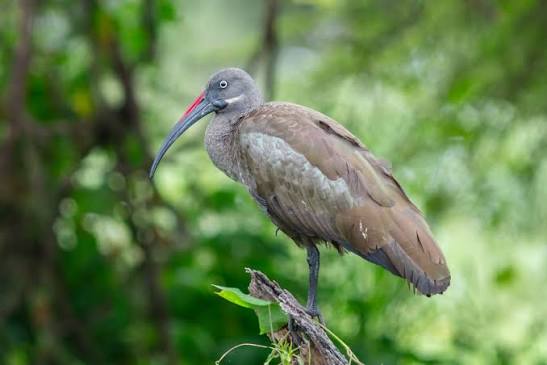
The hadada ibis is a large bird measuring 76 to 89 centimetres. The plumage is olive-brown with iridescent green and purple on the wing coverts that is visible in good light as a metallic sheen. The head shows a pale grey crown and a bare reddish face patch around the eye. The bill is long, dark, and decurved with a distinctive red stripe on the upper mandible near the base.
The iridescent wing sheen is the most visually striking feature of the species. In direct morning light, the wings of a hadada ibis standing on a lawn show a deep bronze-green to purple iridescence that transforms what initially appears to be a dull brown bird into one of the more colourful large birds in the garden. This iridescence is not visible in poor light conditions and the bird’s appearance changes dramatically depending on the angle of light.
The call is the most useful identification feature of all. The loud “ha-da-da” or “ha-ha-hadada” call given in flight and on the ground is completely distinctive. The birds call repeatedly during flight, often creating a continuous calling sequence throughout the entire duration of a flight between feeding areas. Any observer who hears the call once has established an identification that will serve for all future encounters.
Behaviour and Feeding
Hadada ibis feed by probing moist soil, lawn grass, and muddy waterside areas for earthworms, insects, snails, and other invertebrates. The long decurved bill probes deep into soft soil with a rapid, methodical movement that covers a feeding area systematically. Groups of 3 to 20 birds often feed together in the same garden lawn or field, spread across the area in a loose formation.
The species is comfortable feeding around humans in low-disturbance environments. Camp and lodge gardens that provide mown grass and moist soil attract hadadas to close range at all hours of the day. Morning grass walks before the game drive departs regularly produce hadada ibis foraging on the lawn at ranges below 5 metres.
Furthermore, hadadas roost communally in groups of 10 to 50 birds in large trees near their feeding areas. The evening return to roost and the morning departure from roost are accompanied by extended calling sequences that can provide the alarm clock function in camp well before the official wake-up time.
Distribution in East Africa
The hadada ibis is common across East Africa’s highland and mid-altitude zones from Uganda through Kenya and into northern Tanzania. The species is particularly abundant in the suburban and agricultural environments of highland East Africa where garden lawns and moist soil provide productive feeding year-round.
Nairobi’s suburban gardens and parks carry enormous hadada populations. Kampala’s gardens and the green spaces around Entebbe all hold the species in high densities. The highland areas of Tanzania around Arusha carry hadadas in the agricultural and garden zones around the town.
The species is less common at lower altitudes and in the dry savanna zones where moist soil for probing is less consistently available. It is replaced in these drier environments by the African sacred ibis and the hadada becomes rarer below approximately 1,000 metres altitude in most of its East African range.
Plan Your Birding Safari
Hadada ibis encounters require no specialist effort in the highland zones of Uganda, Kenya, and Tanzania. The species is a daily garden presence at most camps and lodges in these areas and introduces itself loudly to every visitor on their first morning at any highland East Africa destination.
The combination of the extraordinary call, the surprising iridescence of the wings in good light, and the species’ complete comfort with human presence makes the hadada ibis one of the most engaging garden wildlife encounters on any East Africa highland safari.
African Wild Trekkers designs East Africa safari itineraries at highland and wetland destinations where the hadada ibis is part of the daily garden wildlife experience. Contact us to plan a safari that captures the full diversity of East Africa’s remarkable ibis and waterbird community.