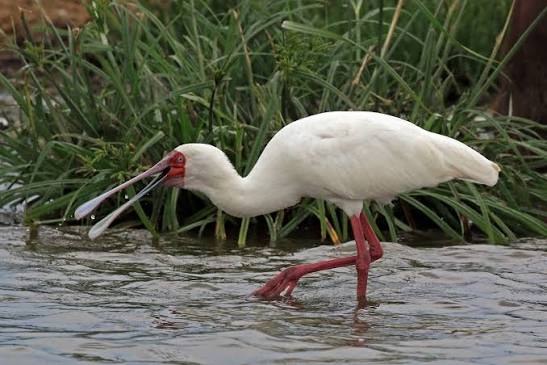
African Spoonbill: East Africa’s Most Distinctively Billed Waterbird
The African spoonbill carries one of the most immediately recognisable bill shapes in the bird world. The bill is long, straight, and flattened into a broad spatula at the tip — the “spoon” shape that gives the species its name. This spoon-shaped tip is used in a distinctive sweeping feeding movement through shallow water that no other East African waterbird replicates. Once seen, the spoonbill’s feeding action is unforgettable.
The species is the only spoonbill species native to sub-Saharan Africa. It inhabits shallow freshwater wetlands, lake shores, and the calm inlets of larger water bodies throughout the region.
Identification
The adult African spoonbill is entirely white with a bare pink and red facial mask and a long pink-and-grey spatulate bill. The facial skin and the bill are the most distinctive features visible even at considerable distance. The all-white plumage and the unique bill shape together create an immediately recognisable bird at any viewing range.
In flight, the spoonbill shows the neck extended straight ahead in the ibis and stork posture rather than the neck-folded posture of herons and egrets. The all-white flight silhouette with the neck extended and the characteristic bill shape visible from the side identifies the species immediately even in brief overhead flight views.
Feeding Method
The African spoonbill feeds by wading through shallow water with the bill held partially open and submerged, sweeping it from side to side in a rhythmic scything motion. The tactile receptors in the spoon-shaped bill tip detect small fish, crustaceans, and aquatic invertebrates that contact the bill surface during the sweep. When contact is made, the bill snaps shut with the same rapid reflex closure shared with the yellow-billed stork’s tactile fishing method.
The sweeping action is distinctive and hypnotic to watch. The bird wades steadily forward while the bill sweeps in a continuous side-to-side motion that covers the maximum water volume per unit of walking distance. This systematic coverage of the shallow zone is the most efficient feeding strategy available for a bird harvesting small, mobile prey from turbid, low-visibility water.
Spoonbills often feed in loose groups of 3 to 15 individuals working the same shallow area simultaneously. The group feeding provides each individual with the additional security of multiple watching eyes while all members concentrate on the submerged bill movement rather than predator detection.
Where to See African Spoonbills in East Africa
African spoonbills are present at shallow wetland and lake margin habitats throughout East Africa. They are most reliably encountered at sites where shallow, calm water less than 30 centimetres deep provides the ideal sweeping feeding conditions. Uganda’s Kazinga Channel margins, Kenya’s Rift Valley lake shores, and Tanzania’s shallow lake and river edge habitats all carry accessible populations.
The Kazinga Channel boat cruise in Uganda’s Queen Elizabeth National Park produces regular spoonbill encounters along the channel margins. Birds stand in the shallow areas between papyrus clumps and feed with the sweeping bill action visible clearly from the passing boat at close range.
Kenya’s Lake Baringo and Lake Naivasha both carry spoonbill populations in their shallow shore areas accessible from standard lake shore birding walks and boat activities. Tanzania’s Lake Manyara and the Ngorongoro Crater floor lake margin provide additional reliable spoonbill locations within the Tanzania northern circuit.
Plan Your Birding Safari
African spoonbill sightings are achievable on standard waterside activities at East Africa’s major wetland destinations. The species requires shallow water access and is most reliably found on boat activities and lake shore walks where the shallow margin habitat is accessible without specialist detour.
Watching the sweeping feeding action at close range is one of the most satisfying observational experiences of any East Africa waterbird birding session, combining the unusual bill morphology with the rhythmic feeding behaviour in a single prolonged close-range encounter.
African Wild Trekkers includes East Africa’s wetland boat activities and lake shore birding in safari itineraries for maximum waterbird diversity. Contact us to plan a safari that captures the full range of East Africa’s waterbird feeding specialisations from the spoonbill’s sweep to the kingfisher’s plunge.