African Sacred Ibis: From Ancient Egypt to East Africa’s Modern Wetlands
The African sacred ibis carries one of the most remarkable cultural histories of any bird in the world. In ancient Egypt, the sacred ibis was worshipped as the embodiment of Thoth, the god of wisdom, writing, and knowledge. Millions of ibis were mummified and offered as religious sacrifices at the temples of Thoth across Egypt over thousands of years. The species was so closely associated with Egyptian civilisation that its image appears on hieroglyphic carvings, paintings, and artefacts that span the entire length of Egyptian cultural history from the earliest dynastic period onward.
Today, the sacred ibis is extinct in Egypt but thrives throughout sub-Saharan Africa. In East Africa, it is a common and widely distributed waterbird present at lakes, rivers, wetlands, and open agricultural land across Uganda, Kenya, and Tanzania.
Identification
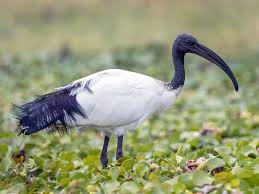
The adult African sacred ibis is a striking bird. The head and neck are entirely bare and black. The body plumage is white with a fringe of dark blue-black ornamental plumes drooping over the back and tail in breeding adults. The long, curved bill is dark grey-black. The legs are dark grey.
In flight, the sacred ibis shows white wings with black wingtips. The combination of the white body, black bare head, and black wingtips creates a bold black and white pattern visible at considerable distance. The characteristic ibis flight posture with the neck extended straight ahead unlike the neck-folded posture of herons distinguishes it from all heron species in flight even before the colour pattern is assessed.
The call is a harsh, croaking sound quite unlike the calls of the spoonbills, herons, and egrets that share its wetland habitats.
Feeding Behaviour and Habitat
Sacred ibis feed by probing their long, curved bills into soft mud, shallow water, and moist soil for worms, insects, crustaceans, and other invertebrates. The curved bill is effective for extracting buried prey from mud and the shallow substrate at waterside habitats. The birds feed in loose groups of several to dozens of individuals, walking systematically through the feeding area with constant bill probing.
The species is equally comfortable feeding at waterside mud flats, in open grassland, and at the edges of agricultural land. Ploughed fields attract sacred ibis in numbers because the turned soil exposes earthworms and insects that would otherwise be inaccessible beneath the grass mat.
Garbage dumps, abattoirs, and fish markets attract sacred ibis alongside marabou storks in areas where these food sources are available. This adaptability to human-modified environments has contributed to the species maintaining high population levels despite significant wetland loss across parts of its range.
Where to See Sacred Ibis in East Africa
Sacred ibis are present throughout East Africa’s wetlands, open grassland, and agricultural zones. The species is common at every East Africa wetland destination and is encountered on virtually every game drive that includes a lake shore or river crossing within the region.
Uganda’s Queen Elizabeth National Park, Kenya’s Rift Valley lakes, and Tanzania’s northern circuit parks all carry accessible sacred ibis populations without requiring specialist access. The species is one of the first ibis species that first-time East Africa visitors encounter and provides an easy introduction to the ibis family.
Breeding colonies are established in mixed-species heron colonies across the region. Active breeding colonies allow close observation of the ornamental back plumes of breeding adults that are less evident outside the breeding season.
Plan Your Birding Safari
African sacred ibis sightings are guaranteed on any East Africa safari that passes through wetland or open grassland habitats. The species requires no specialist effort and is encountered multiple times on any standard safari itinerary across the region.
The combination of the species’ extraordinary cultural history and its common daily presence in the East African landscape makes the sacred ibis one of the most evocative wildlife encounters on any safari that connects the natural world of East Africa with the ancient civilisations of the Nile Valley.
African Wild Trekkers designs East Africa safari itineraries through the full range of the region’s wetland and grassland habitats. Contact us to plan a safari that captures the complete waterbird diversity of East Africa’s extraordinary lakes, rivers, and wetland systems.