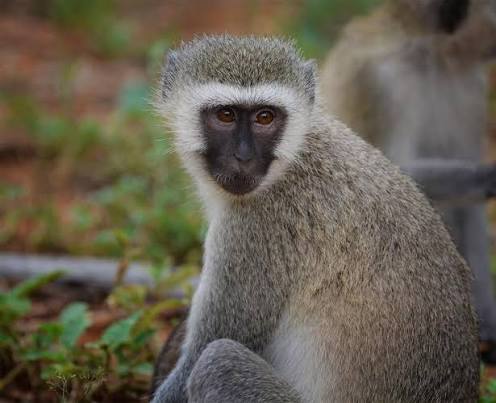
Vervet Monkey Africa: The Alarm-Calling Primate of East Africa’s Open Woodland
The vervet monkey produces different alarm calls for different predators. A snake alarm call produces a specific response group members stand upright and look at the ground. An eagle alarm call produces a different response group members look up and dive for cover. A leopard alarm call produces yet another group members run for trees. This predator-specific alarm call system was one of the first demonstrations that non-human primates produce calls with specific referential meaning a discovery that fundamentally changed the understanding of animal communication. The vervet monkey, often dismissed as a background nuisance on safari, is one of the most scientifically significant primates in East Africa.
What Is a Vervet Monkey?
The vervet monkey, Chlorocebus pygerythrus, is a medium-sized Old World monkey. Adults weigh between 3.5 and 8 kilograms. Body length reaches 40 to 60 centimetres with a tail of 48 to 75 centimetres. The coat is grey-green on the back and paler almost white on the underparts. The face is black with a white brow band. The hands, feet, and tail tip are black. Adult males carry vivid blue scrotal skin with red penile skin a colour combination used in male display and status signalling. This male colouration is unique among East African primates and immediately distinguishes adult male vervets from all other monkey species.
The Alarm Call System
Dorothy Cheney and Robert Seyfarth’s research on vervet monkeys in Kenya’s Amboseli National Park in the 1970s and 1980s established the referential nature of vervet alarm calls through playback experiments. Playing a recording of the snake alarm call to a resting group triggered standing and ground-looking behaviour. Playing the eagle alarm triggered upward scanning and cover-seeking. Playing the leopard alarm triggered tree-climbing. These responses occurred even when no predator was visible proving that the calls conveyed specific information about predator type rather than simply signalling general alarm.
Infants learn to produce accurate alarm calls through observation and social correction initially producing alarm calls for non-threatening animals of the right size class (calling eagle alarms for any large bird), then refining call production toward accurate, predator-specific use as they observe adult responses.
Social Structure
Vervet monkeys live in troops of 10 to 70 individuals. Groups contain multiple adult males and multiple adult females with offspring. Female rank is matrilineally inherited and stable over time. Males transfer between troops at sexual maturity, joining neighbouring groups rather than breeding in their birth group. Grooming, coalition formation, and alliance maintenance mirror the olive baboon’s social complexity in a smaller-bodied primate.
Habitat and Range
Vervet monkeys occupy savanna woodland, forest edges, and riverine forest across most of sub-Saharan Africa. They avoid true desert and dense lowland rainforest. In East Africa they appear throughout Kenya, Tanzania, and Uganda wherever woodland and forest edge habitat exists. Highly adaptable, vervet troops persist in agricultural margins, lodge gardens, and town edges where food availability compensates for increased human contact.
Plan Your Safari
Vervet monkeys appear in virtually every East Africa national park and conservancy. The Maasai Mara’s woodland zones, Amboseli’s fever tree forest, Samburu’s riverine trees, and Uganda’s Kibale margins all hold troops. Amboseli is particularly appropriate for vervet observation given the long research history at the site guides at Amboseli can identify individuals and explain the alarm call research in context. Stopping the vehicle near a troop and listening for alarm call sequences reveals the predator-monitoring function in real time.
African Wild Trekkers includes primate behaviour as part of the full wildlife experience on East Africa safaris. Contact us to plan an itinerary that explores the communication and social complexity of East Africa’s primates.