Yellow-billed Stork: East Africa’s Most Elegant Wading Stork
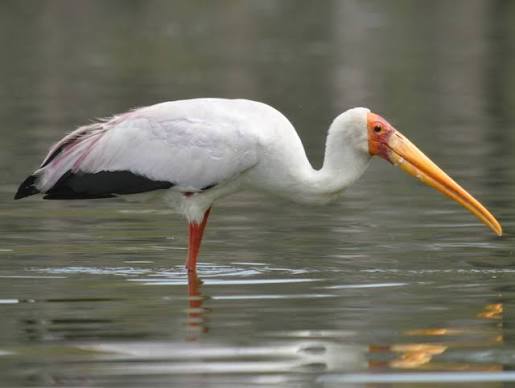
The yellow-billed stork is one of East Africa’s most graceful waterbirds. Its combination of white plumage washed with pale pink on the back and wings, a vivid yellow bill, and a bare red facial mask creates a colour composition that makes it one of the most photogenic stork species on the continent. The species wades in shallow water with a slow, deliberate hunting method that relies on touch rather than sight to locate prey beneath the water surface.
The species is widespread across sub-Saharan Africa wherever shallow freshwater provides the aquatic food resources it requires. In East Africa, it is common at the margins of lakes, rivers, and wetlands throughout the region and is one of the most consistently encountered waterbirds on game drive routes that include water crossings and lake shores.
Identification
The adult yellow-billed stork is a large wading bird measuring 97 to 105 centimetres. The plumage is white with a rosy-pink flush on the back and wings in breeding birds. This pink flush fades in non-breeding birds to leave the plumage more uniformly white. The bill is yellow and slightly decurved at the tip. The bare facial skin is vivid red-orange.
The legs are pinkish-red. In flight, the wings show dark primary and secondary flight feathers contrasting with the white inner wing area.
Juveniles show brown-grey plumage that gradually whitens over 2 to 3 years of development toward adult plumage. The yellow bill and red facial skin are present in juveniles but are less vivid than in full adults.
Tactile Fishing Method
The yellow-billed stork’s hunting method is one of the most distinctive of any East African waterbird. Rather than watching the water surface visually for prey, the bird wades with its bill held partially open and submerged in the water. The bill is swept slowly through the water column. When the bill tip makes contact with a fish, frog, or invertebrate, it snaps shut with a reflex speed of approximately 25 milliseconds one of the fastest reflexive closing movements recorded in any bird.
This tactile hunting method is most effective in shallow, slightly turbid water where visual hunting is less productive. The technique allows the stork to feed effectively in conditions where visually hunting herons and egrets have difficulty locating fast-moving prey.
The bill is swept through the water in forward-and-sideways arcing movements as the bird wades slowly forward. This systematic coverage of the shallow water zone produces consistent feeding success throughout the morning and evening activity periods.
Where to See Yellow-billed Storks in East Africa
Yellow-billed storks are present throughout East Africa at lake shores, river shallows, and flooded grassland areas wherever standing shallow water provides adequate prey resources. Uganda’s Kazinga Channel, Kenya’s Rift Valley lakes, and Tanzania’s lake and river margin habitats all carry accessible yellow-billed stork populations.
Uganda’s Queen Elizabeth National Park boat cruise on the Kazinga Channel provides one of the most reliably productive yellow-billed stork encounters in East Africa.
Tanzania’s Lake Manyara National Park’s groundwater forest and the shallow lake margins carry yellow-billed storks in accessible numbers.
Plan Your Birding Safari
Yellow-billed stork sightings are achievable on standard waterside game drives and boat activities at any East Africa destination with shallow lake or river access. No specialist effort is required at appropriate wetland destinations.
Uganda’s Kazinga Channel boat cruise provides the closest and most prolonged yellow-billed stork encounters in East Africa, combining the species with hippos, crocodiles, and a remarkable diversity of other waterbirds in a standard two-hour boat activity.
African Wild Trekkers designs East Africa safari itineraries that include waterway boat activities for maximum waterbird diversity including yellow-billed stork encounters at close range. Contact us to plan a safari that captures East Africa’s exceptional stork and waterbird community.