Zorilla Africa: The Striped Polecat That Out-Stinks Every Predator on the Savanna
The zorilla produces one of Africa’s strongest scent defenses. Its anal glands release a sulfur-based spray that can temporarily blind predators at close range. The smell can travel up to 500 meters downwind.
Therefore, even large predators avoid this small carnivore. Lions abandon attacks, leopards retreat, and Cape hunting dogs disengage. The spray causes severe eye and nose irritation within seconds.
The zorilla’s black-and-white coat also sends a clear warning. This bold pattern advertises its powerful chemical defense to predators.
What Is a Zorilla?
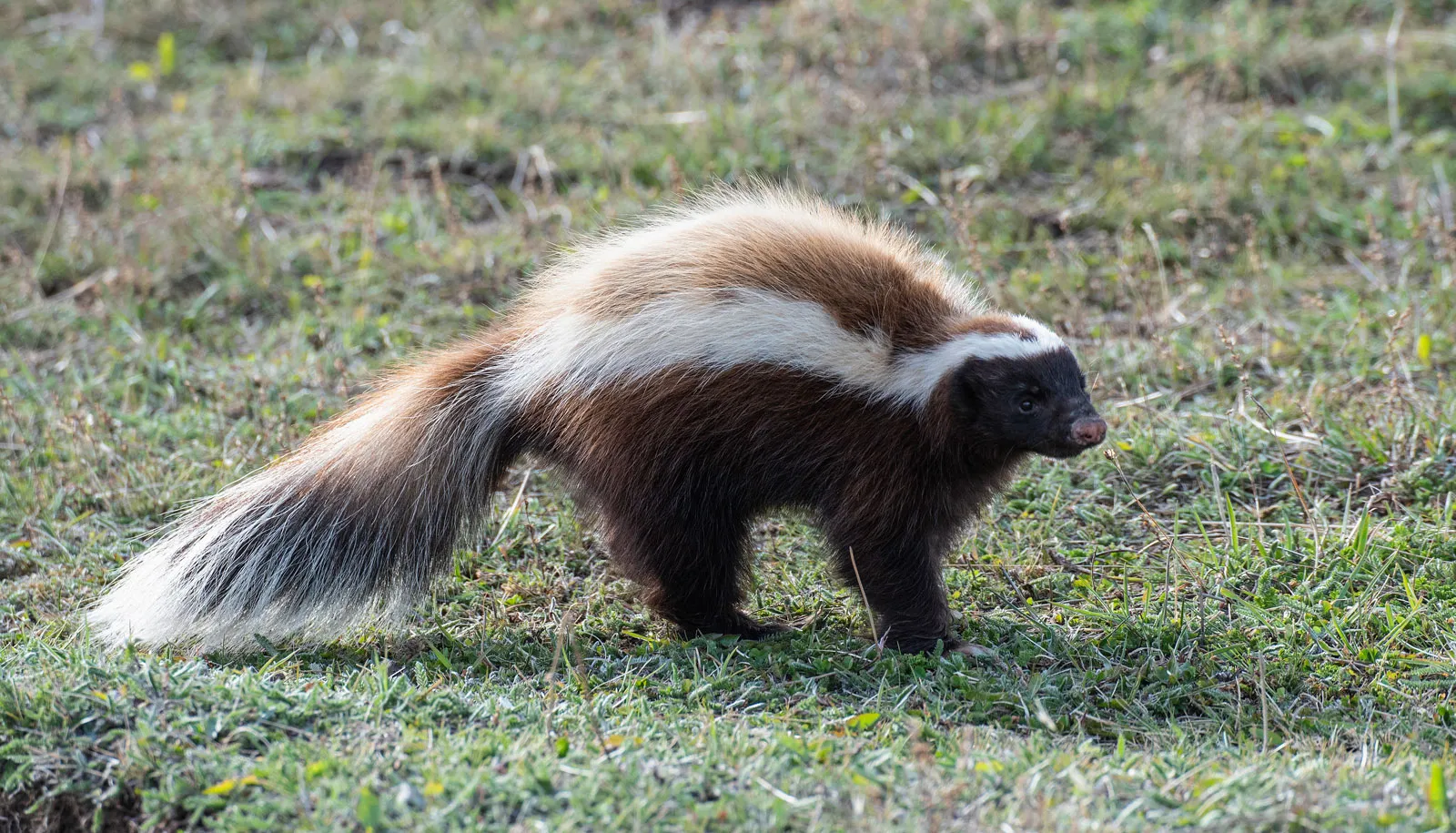
The zorilla, Ictonyx striatus, is an African mustelid related to weasels and polecats. Adults weigh 0.4 to 1.4 kilograms. Their bodies reach 28 to 38 centimeters, with tails measuring 20 to 30 centimeters.
The coat has a striking pattern. The underparts and face are black, while four white stripes run from the head to the tail base. The tail is mostly white.
This high-contrast coloring is called aposematic coloration. It warns predators about the zorilla’s chemical defense. Young predators quickly learn this warning after a single encounter.
The zorilla has a typical mustelid body shape. It has a long body, short legs, and a broad head. Large scent glands sit behind the ears. Its long curved claws help it dig.
The hind legs have shorter claws. The zorilla moves with a bouncy, arched-back trot and can cover ground quickly.
Scent Defence: The Spray Mechanism
The zorilla’s anal glands produce a musk similar to skunk spray. It can aim the secretion toward predators from up to one meter away.
Before spraying, the zorilla raises its tail, arches its back, and stamps its feet. This warning display often makes predators retreat.
If a predator ignores the signal, the zorilla sprays directly at the face. The sulfur compounds cause tearing, nasal burning, and temporary vision problems.
Recovery usually takes 10 to 15 minutes. Most predators avoid repeating the experience.
Nocturnal Lifestyle and Diet
Zorillas are strictly nocturnal animals. During the day, they rest in abandoned burrows, rock crevices, or thick vegetation.
After sunset, they hunt alone across their territory. Their diet includes mice, rats, lizards, snakes, frogs, insects, scorpions, and bird eggs.
They also attack venomous snakes. Their thick skin and possible venom tolerance help them tackle cobras and puff adders.
The zorilla kills prey with a precise bite behind the skull. This technique is common among mongooses and other small carnivores.
Range in East Africa
Zorillas live across much of sub-Saharan Africa. They inhabit savannas, dry woodlands, rocky areas, and farmland edges.
However, they avoid dense forests and extremely dry deserts. East African parks in Kenya, Tanzania, and Uganda support zorilla populations.
Night drives in open habitats offer the best chances of sightings. Their black-and-white coat reflects spotlight beams clearly.
Plan Your Safari
Night drives in Kenya’s Laikipia conservancies and Tanzania’s Ruaha and Ngorongoro provide excellent zorilla viewing opportunities.
When approached by a vehicle, a zorilla rarely runs. Instead, it raises its tail, stamps its feet, and continues foraging.
This confident behavior creates a memorable small carnivore encounter. The sighting may last briefly, but it remains unforgettable.
African Wild Trekkers designs East Africa safari itineraries with night drive programs targeting the full range of small nocturnal carnivores. Contact us to plan a safari that reveals East Africa’s remarkable after-dark predator diversity.