Defassa Waterbuck Facts: The Water-Dependent Antelope of East Africa’s Rivers
The waterbuck smells. This is not an insult — it is an important biological fact. The waterbuck’s skin produces a greasy, musky secretion from specialized sebaceous glands across the body surface. This secretion waterproofs the coat during the waterbuck’s frequent wading and swimming behavior. It also gives the animal its distinctive strong smell, detectable by a human nose from several meters downwind. Predators detect the scent at much greater distance. The oily secretion may deter ectoparasites and make the waterbuck a somewhat unattractive prey choice by taste—lions take waterbuck but less readily than same-sized alternative prey where available.
Identifying the Defassa Waterbuck
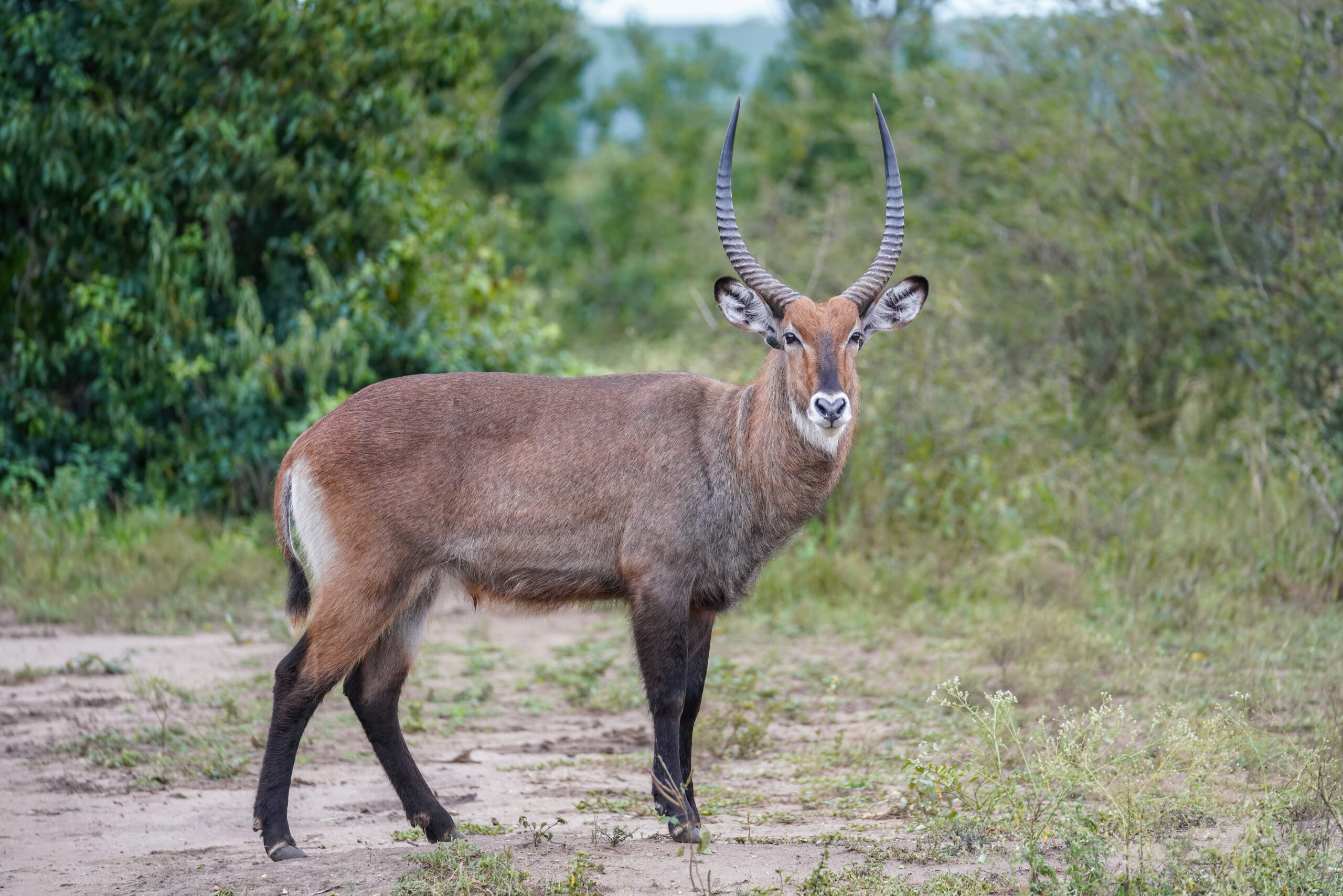
Two waterbuck subspecies occur in East Africa. The Defassa waterbuck, Kobus ellipsiprymnus defassa, carries a solid white circle on the rump—a complete oval or ring enclosing the tail. The ellipsen waterbuck, the eastern subspecies, carries a white horseshoe-shaped marking open at the bottom rather than a closed circle. This rump mark difference is the most reliable field separation between the two subspecies. Defassa waterbucks dominate in Uganda, Rwanda, western Kenya, and western Tanzania. Ellipsen waterbucks replace them in eastern Kenya, eastern Tanzania, and the drier eastern Rift zones.
Adults weigh between 160 and 262 kilograms. Shoulder height reaches 1.2 to 1.36 meters. Only males carry horns—long, forward-sweeping, and heavily ridged, reaching 55 to 99 centimeters. The coat is coarse, greyish-brown to red-brown with paler underparts. White markings appear on the muzzle, throat, and above the eyes in addition to the distinctive rump marking.
Water Dependence
Waterbucks drink daily and maintain home ranges within a few kilometres of permanent water. Dry-season drought that eliminates surface water from an area drives waterbucks out of that habitat completely — they follow water sources rather than enduring the dry season in place as water-independent species do. Waterbucks wade into rivers and marshes readily. Pursued by predators, they enter deep water and swim — a behaviour that most savanna predators do not follow. This water-escape strategy gives waterbucks a predator evasion option unavailable to most other large antelopes.
Herd Structure and Male Territories
Waterbuck society divides into territorial males, female herds, and bachelor male groups. Territorial males hold riparian zones along riverbanks and lake margins—the water-adjacent habitat that females prefer. Female herds of 5 to 30 animals move through the overlapping territories of multiple males, feeding in the riparian vegetation and retreating to water when threatened. Bachelor males occupy lower-quality habitat away from permanent water, waiting to take over a territory when an established territorial male ages or weakens. Territorial combat between males involves dangerous horn-locking fights that occasionally cause serious injury.
Range in East Africa
Defassa waterbucks occur across Uganda, Rwanda, western Kenya, and western Tanzania wherever permanent rivers, lakes, or marshes provide the water they require. Queen Elizabeth National Park in Uganda holds large populations along the Kazinga Channel and the Ishasha River. Kenya’s Maasai Mara river systems and Lake Nakuru’s margins carry Defassa waterbucks. Tanzania’s western lake zone and the Serengeti’s river corridors hold populations.
Plan Your Safari
Uganda’s Queen Elizabeth National Park produces the finest defassa waterbuck viewing in East Africa. The Kazinga Channel’s banks carry large herds year-round, visible on both the boat safari and the Kasenyi plains drives. Kenya’s Lake Nakuru fenced park holds resident waterbucks visible throughout the circuit. Maasai Mara river crossings during the wildebeest migration reveal waterbucks standing in the shallows—unfazed by the dramatic chaos of thousands of wildebeest crossing around them.
African Wild Trekkers designs Uganda, Kenya, and Tanzania safari itineraries through East Africa’s best riparian wildlife habitats. Contact us to plan a safari that reveals the full diversity of East Africa’s water-dependent antelope community.