Flamingos at Lake Natron Tanzania: Africa’s Most Spectacular Natural Phenomenon
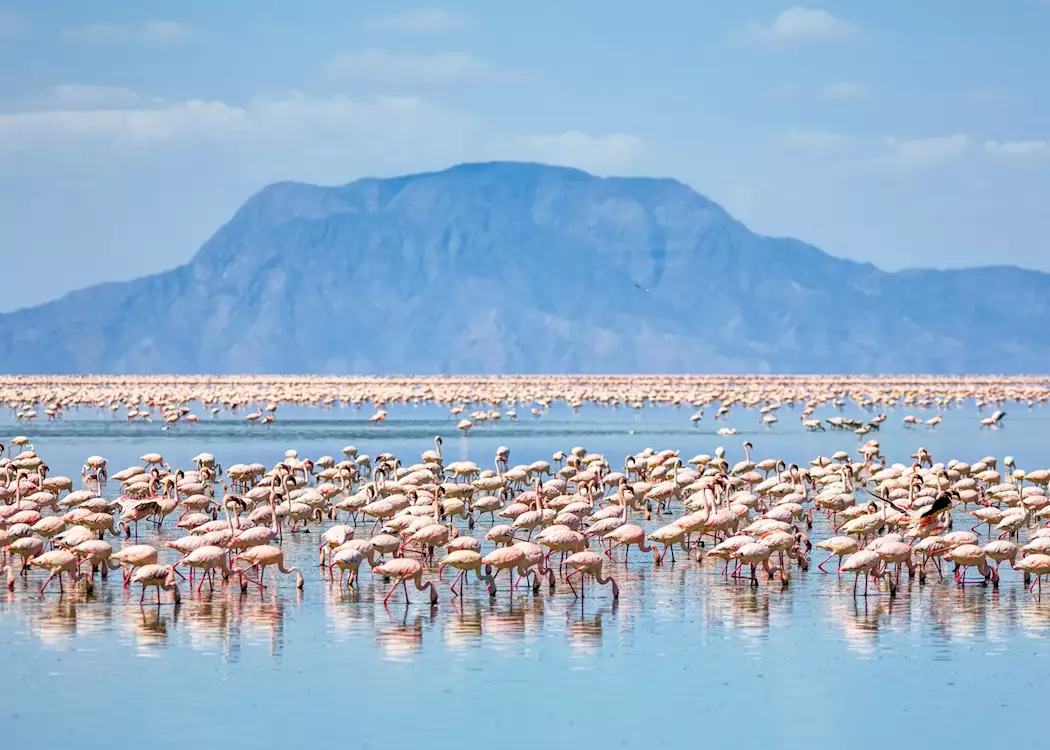
Lake Natron in northern Tanzania is one of Africa’s most otherworldly landscapes. It holds the world’s most important breeding site for the lesser flamingo. At its peak, two to four million lesser flamingos gather on the lake’s soda surface — the world’s largest concentration of this species. From an aircraft, the pink mass is visible from altitude. Standing at the lake edge, the sound and smell reach you before the birds come into full view. Lake Natron sits off the standard northern circuit safari route and requires a deliberate detour. For travellers with a passion for wildlife spectacle at extreme scale, no other East Africa destination delivers anything comparable.
Lake Natron and Its Flamingos
Why the Lake Hosts Millions of Flamingos
The Chemistry That Creates the Spectacle
Lake Natron ranks among the most chemically hostile environments on earth for most life. The lake sits in a volcanic tectonic zone at the foot of Ol Doinyo Lengai volcano. Highly alkaline springs supply its water, raising the pH to between 9 and 10.5 — more caustic than bleach — and heating surface water to temperatures that can exceed 60 degrees Celsius in certain areas. The salt concentration and alkalinity create conditions where almost no organism except specific algae, bacteria, and salt-adapted shrimps can survive. This hostile chemistry, which would kill or seriously injure most animals contacting the water directly, is precisely what makes Lake Natron the lesser flamingo’s preferred breeding site in Africa.
Lesser flamingos breed on Natron’s exposed soda pans, building mud nest mounds that rise above the lake’s surface in the centre where the caustic water forms a natural barrier. Terrestrial predators cannot cross it. A lion or leopard attempting to reach the nest mounds across Lake Natron’s soda flat would suffer severe chemical burns before covering even a fraction of the distance.
This chemical defence makes Natron the world’s safest flamingo nesting location. The species returns year after year because no predator can penetrate it. The flamingos’ salt-adapted skin, eye membranes, and specialised filter-feeding bills let them exploit a resource that nothing else can reach.
The Scale of the Flamingo Colony
During breeding years, the lesser flamingo colony at Lake Natron ranks as the largest single gathering of any bird species in the world after the red-billed quelea. Flamingos synchronise breeding with the lake’s water level and salinity conditions, so breeding success varies significantly between years. Aerial counts during peak breeding have recorded two to four million birds on and around the lake simultaneously.
Nest densities on the central soda pans place nests within centimeters of each other. From the lake shore, the colony’s presence first reaches you as sound — a continuous roar of wing beats, calls, and disputes from millions of birds — and then as sight: the lake’s surface, visible from two kilometres away, transforms from white soda into an unbroken expanse of pink.
Viewing the flamingo colony requires approaching on foot along the lake’s shoreline area or by shallow-draft vehicle during periods when water level permits. The birds are sensitive to disturbance during breeding, and responsible viewing means staying at distances that do not trigger colony abandonment — typically from the shore rather than crossing toward the nest mounds.
Even at shore distance, the scale of what you observe is difficult to process. Millions of individual birds, each distinctly pink, each calling, feeding, or resting, create a visual and acoustic experience that no photograph adequately captures. African Wild Trekkers builds Lake Natron visits with responsible viewing guidelines built in, ensuring the full spectacle without impacting breeding success.
Visiting Lake Natron: Logistics and Access
Getting There and What to Expect
How to Reach Lake Natron from Arusha
Lake Natron sits approximately 180 kilometres northwest of Arusha. The road leaves the main northern circuit highway at Makuyuni and travels north through Maasai pastoral land to the lake’s south shore. The drive takes approximately four to five hours. The route is partially tarmac and partially rough gravel — a standard 4×4 is essential for the final section regardless of season, as the gravel surface deteriorates in wet conditions.
The route passes through dramatic Rift Valley scenery with views of Ol Doinyo Lengai volcano — the world’s only active carbonatite volcano — and the expansive Maasai pastoral landscape that has changed little in a century.
Light aircraft charter from Arusha or Kilimanjaro reduces the journey to approximately forty-five minutes and lands at the lake’s small airstrip near the camp area. Charter cost for two to four passengers runs approximately USD 800 to 1,200 depending on aircraft type and departure airport. Flying allows a day trip from Arusha rather than an overnight stay, though the overnight option is far more rewarding.
The flamingo colony behaves differently at dawn and dusk than at midday, and a single night allows viewing in both light conditions. Most Lake Natron camps are simple tented properties rather than luxury operations, reflecting the lake’s off-circuit position and limited infrastructure in this remote Rift Valley zone.
Ol Doinyo Lengai and What Else Lake Natron Offers
Lake Natron’s position at the foot of Ol Doinyo Lengai — the only active volcano in East Africa that erupts carbonatite lava — adds a geological dimension that no other Tanzania destination provides alongside wildlife viewing. Climbers depart camp at midnight for the summit, reaching the crater at dawn — a physically demanding nine-to-ten hour round trip on steep volcanic ash slopes.
The reward is a crater view of an active volcano and a dawn panorama over the Rift Valley and Lake Natron below. The climb is not a technical mountaineering objective. It is a steep hiking challenge that requires basic fitness and appropriate footwear. Local Maasai guides who know the mountain’s current activity level lead all climbs from the lake’s camp area.
The Engare Sero area near Lake Natron’s south shore holds ancient footprints preserved in volcanic ash from an eruption approximately 19,000 years ago. The site represents the largest collection of early hominin footprints outside of Laetoli — also in Tanzania.
The Engare Sero footprints include tracks of women, men, and children moving in groups across what was wet ash at the time of deposit. The ash hardened into tuff that preserved the impressions to the present day. A guided visit transforms the Lake Natron stop into a multi-dimensional Tanzania experience combining flamingo spectacle, geology, and human prehistory. African Wild Trekkers includes the footprint site visit in all Lake Natron itineraries.
Plan Your Safari
Lake Natron suits travellers with specific interest in flamingo viewing, geological landscapes, and off-circuit destinations that most Tanzania visitors never discover. African Wild Trekkers incorporates Lake Natron as a one-to-two night extension from the northern circuit, typically routing through Karatu or directly from Arusha before rejoining the Serengeti or Ngorongoro itinerary. The team manages road logistics, camp bookings, and flamingo viewing timing based on current colony activity reports from the lake area.
Every Lake Natron booking from African Wild Trekkers includes the Arusha transfer, camp accommodation and full board, flamingo viewing guide services, and the Engare Sero footprint site visit. The team advises on optimal timing for flamingo colony activity based on the current year’s lake level and breeding season status. Breeding success varies significantly between years, and the team advises honestly on what to expect during specific visit dates. All reservations are confirmed in writing before any deposit is requested.
Contact African Wild Trekkers at africanwildtrekkers.com/contact with your Tanzania travel dates and Lake Natron interest and we will build a personalised flamingo safari extension within 24 hours.