Kruger Park vs Maasai Mara: South Africa vs Kenya — Which Is Better?
Kruger National Park vs Masai Mara: Africa’s Two Great Safari Reserves Compared
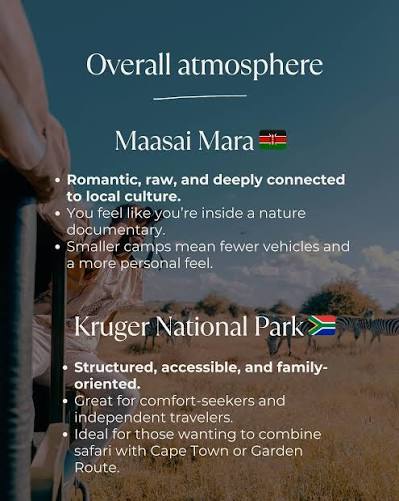
The comparison between them is one of the most frequently asked questions in safari planning. Both deliver outstanding Big Five wildlife encounters. Both have excellent tourism infrastructure and guiding ecosystems. But they deliver their wildlife experiences in fundamentally different ways, in very different landscapes, at very different prices, and with different strengths and weaknesses. One will be a better choice than the other depending on the type of traveler and the specific safari priorities involved.
Landscape and Scale
The most immediately obvious difference between Kruger and the Mara is scale and landscape character. These differences shape the entire experience of visiting each reserve.
Kruger: Africa’s Vast Bush Camp
Kruger National Park covers approximately 19,500 square kilometers. An area roughly the size of Wales or the state of New Jersey. This makes it one of Africa’s largest national parks. The park’s scale creates a safari experience where any single day’s driving covers a tiny fraction of the total park area. The sense of immensity is a defining characteristic of the Kruger experience. The vegetation is primarily bushveld: dense, mixed thorn-bush and open woodland that limits visibility compared to the open grassland of East African parks. Wildlife hides in the vegetation rather than moving across open plains. Game drives require more patient scanning. Finding a lion pride in thick bush carries a different quality from the open-plains sightings that East Africa’s grasslands provide.
The southern sections of Kruger, accessible from Johannesburg in a five-hour drive, hold the highest Big Five concentrations in the park. The private reserves adjoining Kruger’s western boundary. Sabi Sand, Timbavati, Kapama. And others. Offer the best wildlife experiences in the greater Kruger ecosystem. Leopard sightings in Sabi Sand are so reliable that these reserves market them as an expectation rather than a possibility. Off-road access in these private reserves delivers proximity to wildlife. Particularly leopard and lion. That the public park’s restrictions cannot match. The accommodation in the private reserves is also significantly more luxurious than Kruger’s public rest camps.
The Masai Mara: Open Savannah Drama
The Masai Mara’s defining quality is its open grassland landscape. It provides visibility across vast distances and creates the panoramic wildlife photography conditions that have made it the world’s most photographed safari destination. Cheetahs hunting in the open, lion prides visible for kilometers across flat plains, and wildebeest herds stretching to the horizon during the migration. These are visual experiences that the Mara’s open terrain uniquely enables. Kruger’s bushveld cannot replicate them. The Mara River, which cuts through the reserve’s northern section, provides the dramatic crossing sequence during the July to October migration. This is arguably the single most spectacular seasonal wildlife event available anywhere on earth.
The Mara’s smaller size—approximately 1,510 square kilometers for the national reserve itself, expanded by surrounding private conservancies and Maasai community areas—concentrates wildlife in a more contained area than Kruger’s vast expanse. This produces higher encounter frequencies per hour of driving. The trade-off is the Mara’s peak season. Particularly July through October during the migration. Sees significantly more vehicles at popular sightings than Kruger’s public areas. This can affect the intimacy of encounters at the most heavily visited wildlife locations.
Wildlife: Strengths of Each Reserve
The wildlife comparison between Kruger and the Mara reveals that each has distinct strengths in specific species and encounter conditions.
Where Kruger Wins
Kruger has a decisive advantage over the Mara in white rhino density. South Africa holds the world’s largest white rhino population. Kruger’s white rhinos — particularly in the southern sections — appear with a regularity that makes them almost expected rather than exceptional on a game drive. Kenya’s rhino population, devastated by historical poaching, is recovering but remains at very low numbers concentrated in specific conservancies rather than distributed through the Masai Mara system. If rhino sightings are a priority, Kruger is the clear choice. The private Sabi Sand reserves adjacent to Kruger also deliver leopard encounters of exceptional proximity and frequency. Sabi Sand is widely regarded as the single best leopard-viewing destination in Africa. This gives Kruger’s private reserve sector a species-specific advantage that few other safari destinations can claim.
Kruger’s self-drive option is a further advantage for certain traveler types. Renting a car and driving your own game drive through Kruger’s public road network. Choosing your own pace, stopping where you want, spending as long as you like with a sighting. Creates a safari experience of genuine personal engagement. The guided vehicle model of East Africa’s national parks does not provide this in the same form. For travelers who value autonomy and spontaneity in their safari experience, Kruger’s self-drive culture is a meaningful differentiator from the Mara’s guide-dependent model.
Where the Mara Wins
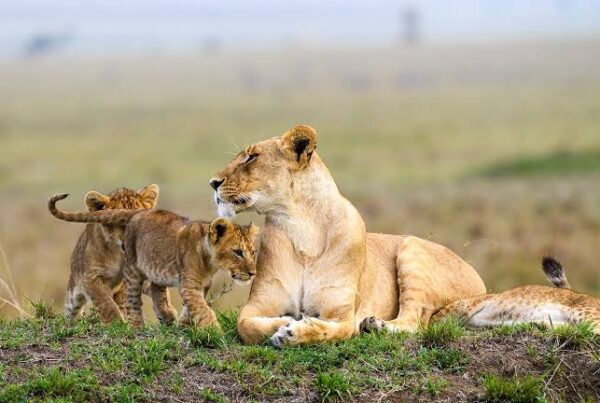
The Masai Mara wins decisively in cheetah and open-country lion encounters and the wildebeest migration. Kenya’s cheetah population in the Mara ecosystem is one of Africa’s healthiest. The open plains provide the hunting conditions that allow cheetah behavior to unfold end-to-end in a way that Kruger’s bush vegetation cannot. The migration crossing spectacle has no equivalent in Southern Africa. Kruger has no migratory species that cross major rivers in the way the wildebeest cross the Mara. The visual and emotional impact of watching 1.5 million animals in motion is simply not available outside East Africa. The Mara’s resident big cat population. Including several well-known and individually named lion prides and cheetah families. Delivers encounters throughout the year that make the Mara a consistently outstanding wildlife destination even outside migration season.
The Masai Mara also connects naturally to the broader East African experience in a way that Kruger does not. A Mara visit can extend to gorilla trekking in Uganda, a Serengeti safari in Tanzania, or Kilimanjaro. All within the same East Africa regional orbit. This creates multi-country itinerary depth that a Kruger-centered South Africa trip provides only by adding intercontinental connections.
Plan Your Safari
For travelers who have decided the Masai Mara and East Africa’s open savannah experience is the right choice, African Wild Trekkers designs Kenya safari itineraries that include the Mara alongside Amboseli and Samburu. And Ol Pejeta options depending on species priorities and available days. Every Kenya package includes experienced Maasai naturalist guides, quality tented camp accommodation, and full park fee coverage.
Kenya Masai Mara safaris can be combined with Uganda gorilla trekking, Rwanda primate trekking, Tanzania Serengeti, or Kilimanjaro to create multi-country East Africa itineraries of any length and focus. Every combination is handled as a single integrated package from airport arrival to departure.
Contact African Wild Trekkers at africanwildtrekkers.com/contact with your travel dates and wildlife priorities, and we will design the right Kenya safari itinerary within 24 hours.