Lake Edward Uganda: Queen Elizabeth’s Rift Valley Wildlife Lake
Lake Edward, Uganda, sits at the heart of Queen Elizabeth National Park and offers one of the country’s richest wildlife experiences. The lake forms part of the Albertine Rift Valley system and lies along the Uganda-DRC border. It connects with Lake George through the Kazinga Channel, creating a productive aquatic ecosystem.
The lake covers about 2,325 square kilometers and supports diverse wildlife. Its waters contain fish species such as Nile perch and tilapia. Therefore, the lake attracts large numbers of birds, hippos, and other animals. Visitors exploring Queen Elizabeth National Park often discover that Lake Edward, Uganda, provides some of the park’s most memorable encounters.
The lake’s surrounding habitats include savanna, wetlands, and forest patches. As a result, visitors can enjoy boat cruises, game drives, birdwatching, and cultural experiences within the same area. Lake Edward, Uganda, represents one of the best places to combine water-based and land-based safari activities.
Kazinga Channel and Lake Edward Uganda Wildlife
Boat Cruise on the Kazinga Channel
The Kazinga Channel boat cruise provides the main wildlife experience connected to Lake Edward, Uganda. Boats depart from the Mweya Peninsula and travel between Lake George and Lake Edward. The channel attracts some of the highest concentrations of aquatic wildlife in Queen Elizabeth National Park.
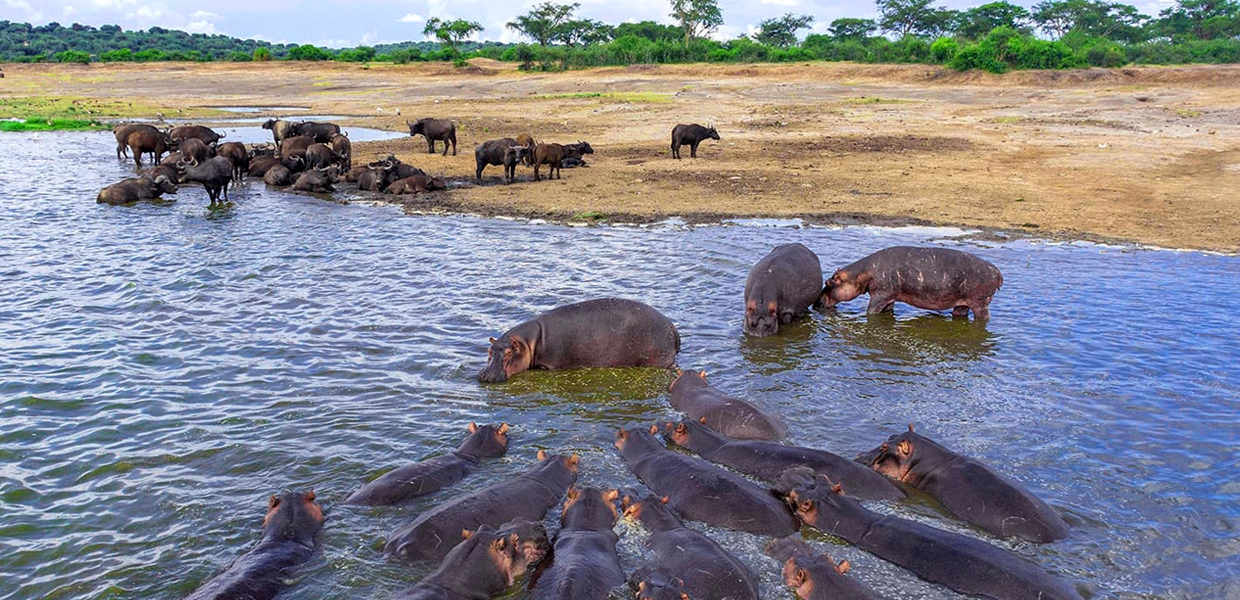
During the cruise, visitors often see large hippo groups resting along the banks. Some pods contain dozens of individuals gathered in shallow waters. Additionally, Nile crocodiles appear along the shoreline while elephants and buffalo approach the water to drink. The short distance between the boat and wildlife creates excellent photography opportunities.
The birdlife along the Kazinga Channel is equally impressive. Visitors can spot African fish eagles, goliath herons, saddle-billed storks, and yellow-billed storks. Furthermore, pelicans and terns gather around areas with high fish activity. Birdwatchers can record many species during a single cruise, especially during morning departures.
Lake Edward Uganda Waterbirds
Lake Edward, Uganda, supports one of Uganda’s most diverse waterbird populations. The lake shoreline provides important feeding and nesting areas for many species. Large colonies of cormorants and African darters gather around suitable roosting sites near the water.
During boat cruises, visitors may also see whiskered terns and white-winged terns moving across the lake surface. The meeting point between the Kazinga Channel and Lake Edward creates especially productive birding conditions. Therefore, both beginners and experienced birdwatchers can enjoy excellent sightings.
The surrounding lakeside grasslands also attract many mammals. Uganda kob, topi, waterbuck, and elephants frequently move through these areas. Additionally, warthogs and olive baboons use the shoreline habitats throughout the day. The lake acts as a central resource for many species living within the park.
Lake Edward, Uganda: Fishing and Communities
Fishing Communities on Lake Edward, Uganda
Lake Edward, Uganda, supports fishing communities that depend on the lake’s resources. Katunguru, located near the Kazinga Channel, provides one of the best places to observe local fishing activities. Early morning visits offer opportunities to see fishermen bringing in their daily catch.
Nile perch, tilapia, and mudfish remain important commercial species in the area. However, fishing activities follow conservation regulations to protect fish populations. Therefore, local livelihoods and environmental protection work together within the lake ecosystem.
Visitors can learn about traditional fishing methods and the importance of Lake Edward, Uganda, to nearby communities. These cultural interactions add another dimension to a Queen Elizabeth National Park safari. They show how people and wildlife share this unique landscape.
Ishasha Sector and Lake Edward Uganda
The Ishasha sector lies along the southern shores of Lake Edward, Uganda, and offers a different safari experience. The area is famous for its tree-climbing lions, which rest on large fig trees during the day. Visitors traveling through Ishasha also enjoy views of the lake landscape and surrounding savanna.
The road through Ishasha provides opportunities to see elephants, buffalo, Uganda kob, and other wildlife. Additionally, clear weather sometimes allows views across the lake toward the Democratic Republic of Congo. Combining Ishasha with the Kazinga Channel creates a complete Lake Edward, Uganda, experience.
A two-night stay in the Mweya area allows enough time for boat cruises and game drives. Visitors adding an Ishasha extension can explore the southern section without rushing. Therefore, longer stays provide a more rewarding understanding of the park’s diverse habitats.
Plan Your Safari
A Lake Edward, Uganda, safari works best with two to three nights in Queen Elizabeth National Park. Visitors should include a Kazinga Channel boat cruise, lakeside game drives, and cultural experiences near fishing communities. Those interested in tree-climbing lions should add time in the Ishasha sector.
The best boat cruise experiences usually occur during the dry seasons from June to September and December to February. However, the lake remains productive throughout the year. Booking cruise schedules early during peak months helps secure preferred departure times.
African Wild Trekkers designs Queen Elizabeth National Park itineraries that include Lake Edward, Uganda; the Kazinga Channel; Ishasha lions; and community experiences. We create balanced safari programs that combine wildlife, landscapes, and cultural encounters.
Contact African Wild Trekkers to plan your Lake Edward Uganda adventure. We design personalized Uganda safari itineraries that showcase every highlight of this remarkable Rift Valley destination.