Matoke, Uganda: Dish: The Heart of Uganda’s Food Culture
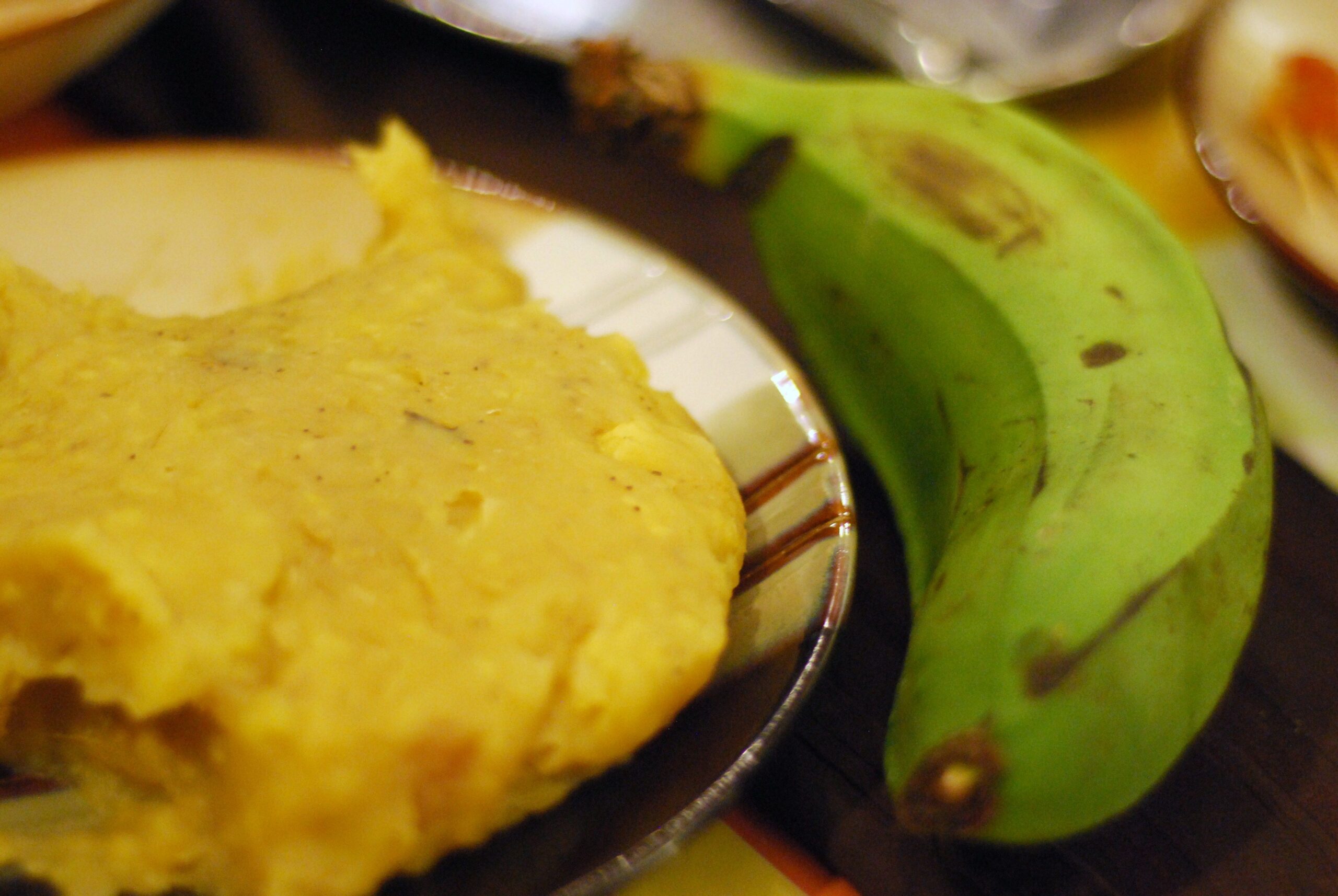
Matoke is Uganda’s most eaten and culturally important dish. It consists of green, unripe East African highland bananas. People steam the bananas until soft and mash them into a thick, pale-yellow meal.
The Matoke Uganda dish appears at almost every meal in Buganda and western Uganda. It holds a cultural role similar to rice in Asia or bread in Europe. Matoke banana plants cover hillsides and gardens across central and western Uganda. Their dense green plantations define the landscape of these regions.
Visitors driving through Buganda or Fort Portal see vast matoke farms along the roads. These farms show the importance of matoke cultivation in Uganda’s agriculture and food culture.
The Matoke Uganda dish reflects Uganda’s unique banana-growing traditions. Farmers use a specific green highland banana variety called Musa acuminata. This banana produces a starchy, unsweet fruit that requires cooking before eating.
It differs from sweet dessert bananas and coastal cooking bananas. It also differs from beer bananas grown in southwestern Uganda for banana wine. The matoke banana grows between 900 and 1,800 meters above sea level.
This altitude matches Uganda’s most populated farming areas in central and western regions. The connection between matoke cultivation and human settlement developed over centuries. Farmers selected and preserved banana varieties that suited Uganda’s climate and food needs.
Matoke Uganda Dish Preparation and Serving
How the Matoke Uganda Dish is Cooked
Traditional matoke Uganda dish preparation begins with selecting firm, green, unripe bananas from the garden. The outer peel is removed with a knife, and the inner skin is left intact during the steaming process to prevent discolouration. The peeled bananas are wrapped in banana leaves and placed in a steaming pot over boiling water with a rack that keeps the banana bundle above the water. The matoke Uganda dish steams for 45 minutes to one hour until the bananas are completely soft throughout. The banana leaves impart a subtle flavor to the matoke as it steams. Opening the banana leaf bundle releases a distinctive steaming aroma that is one of Uganda’s most characteristic food smells.
Mashing the steamed bananas into the finished matoke Uganda dish uses a wooden spoon or a traditional banana leaf paddle depending on the cook’s preference. The mashing process produces a smooth, stiff consistency when done well, without lumps. The color of a well-prepared matoke Uganda dish is a uniform pale yellow with a slightly waxy appearance. The Matoke Uganda dish served at restaurants and lodges comes in a rounded-mound portion alongside the accompanying sauce. The texture is distinctly different from mashed potato in being firmer and less fatty. Most Ugandan cultural guides describe the matoke Uganda dish as having a mild, slightly earthy flavor that takes on the character of whatever sauce accompanies it.
What Accompanies the Matoke Uganda Dish?
Groundnut stew is the most traditional accompaniment for the matoke Uganda dish and appears in every Ugandan home and restaurant that serves traditional food. The groundnut sauce provides richness, protein, and flavor that the neutral matoke absorbs readily. Chicken stew, goat stew, and beef stew all pair with the matoke Uganda dish in regional and family cooking across central Uganda. Nile tilapia in a tomato and onion sauce is the most popular fish accompaniment for the matoke Uganda dish in the Lake Victoria basin area. Beans cooked with tomato, onion, and turmeric provide a budget-friendly daily accompaniment for the matoke- Uganda dish in households across the country.
Fermented sauces and dried fish condiments supplement the matoke- Uganda dish in some regional traditions. Smoked dried tilapia from Lake Victoria, crumbled over in a Matoke Uganda dish, provides an intense umami flavor in the lakeside communities of the Ssese Islands and the Entebbe shore. The nakati green leaf sauce cooked with groundnuts adds a bitter, nutritious vegetable dimension to the matoke Uganda dish meal in areas where this leaf grows abundantly. Restaurants that serve quality Ugandan local cuisine offer matoke, a Ugandan dish, with a choice of accompaniments that allows visitors to build their own tasting experience across multiple sauce types in a single meal.
Cultural Significance of the Matoke Uganda Dish
Matoke Uganda Dish in Buganda Culture
The Matoke Uganda dish holds deep cultural meaning in Buganda Kingdom society. It represents more than daily food. It reflects identity, unity, and tradition.
Families give matoke as gifts during weddings, funerals, and naming ceremonies. This practice shows respect, connection, and community belonging. The banana plant also holds spiritual importance in Buganda culture. Different banana varieties serve different cultural and ceremonial purposes.
During burial rituals, banana leaves may cover the deceased. This tradition connects matoke culture with important spiritual beliefs. Therefore, matoke offers insight into Buganda’s social and spiritual life.
The traditional Buganda wedding ceremony, known as kwanjula, features elaborate matoke preparations. The bride’s family presents large amounts of matoke to the groom’s family. The dish arrives in traditional pots during a ceremonial procession.
The quality and quantity of matoke show the family’s hospitality and social status. This tradition makes matoke a symbol of family honor and relationships. Visitors attending a kwanjula ceremony experience the cultural importance of matoke firsthand.
Matoke Across Uganda
The Matoke Uganda dish dominates central and western Uganda. However, other regions prefer different staple foods. Northern Uganda mainly uses millet bread and sorghum porridge.
Eastern Uganda uses cassava, sweet potatoes, and maize. Some communities also eat matoke where banana farming is possible. The Teso and Karamoja regions rarely grow matoke due to their lower rainfall and drier climate.
The distribution of matoke reflects Uganda’s geography and farming patterns. Visitors can see these food differences while travelling across the country.
Matoke is available in many Uganda safari lodges and camps. Lodges in Bwindi, Kibale, Queen Elizabeth, and Murchison Falls often serve it with local dishes.
Guests can enjoy matoke alongside rice, chapati, and chips. Ordering matoke shows interest in Ugandan cuisine. Guides and lodge staff usually welcome this curiosity.
Some lodges also offer Ugandan cultural dinners. These experiences feature matoke with traditional sauces and local accompaniments. Such meals allow visitors to connect with Uganda’s food heritage
Plan Your Safari
Try the matoke- Uganda dish at a local restaurant in Kampala before departing for the national parks to establish a baseline experience of the dish in its most authentic preparation. Request the Matoke Uganda dish as your starch option at every lodge meal rather than choosing rice or chips. Ask lodge staff or guides which local market or village prepares the best matoke Uganda dish in the area for the most genuine cooking experience.
African Wild Trekkers introduces clients to the Matoke, Uganda,ganda, dish and Uganda’s local cuisine as part of the safari cultural experience. We arrange village meal visits, market stops, and lodge Uganda cuisine evenings for clients who want food culture as part of their Uganda journey alongside the wildlife program.
Contact African Wild Trekkers to plan a Uganda safari that includes Uganda food culture experiences. We respond within 24 hours and design itineraries where the Matoke, Uganda, dish and the country’s broader food traditions feature alongside the national parks wildlife program.