Mount Kenya Flora: Giant Plants and Ancient Forest on Africa’s Second-Highest Peak
Mount Kenya flora is one of the most extraordinary botanical communities on the African continent. The mountain’s altitude range from 1,500 metres to 5,199 metres creates a series of distinct vegetation zones. Mount Kenya flora changes dramatically with each altitude band, from rainforest to bamboo to moorland to Afro-alpine desert. The most famous Mount Kenya flora species are the giant groundsel and giant lobelia of the upper moorland zone. These extraordinary plants grow to three to five meters in height and dominate the Mount Kenya flora landscape above 3,500 meters. No other landscape in Kenya produces this alien, otherworldly botanical spectacle.
Mount Kenya flora has fascinated botanists since the first scientific expeditions of the late 19th century. The isolation of the mountain’s upper zones created evolutionary pressure for gigantism in several Mount Kenya flora families. Lobelias, groundsels, and heathers all developed oversized forms in response to the extreme mountain conditions. These giant Mount Kenya flora species survive freezing nights, intense UV radiation, and dramatic daily temperature swings. Understanding how Mount Kenya flora adapts to these conditions is one of Kenya’s most interesting botanical stories. Trekking through the Mount Kenya flora zones from base to summit reveals this evolutionary story in a single ascending journey.
Mount Kenya Flora Zones
Montane Forest, Mount Kenya Flora
The lower slopes of Mount Kenya hold dense montane forest below 2,500 meters. Mount Kenya flora in this zone includes African olive, cedar, and podocarpus as the dominant canopy trees. Epiphytic orchids inhabit the mossy cedar bark throughout the Mount Kenya flora montane forest zone. These small orchids flower in the misty season, months from March to May. Wild fig trees in the Mount Kenya flora lower forest provide food for colobus monkeys and a rich bird community. African violets carpet the forest floor in the shadier gully sections of the Mount Kenya flora forest zone.
Mount Kenya’s flora: a bamboo forest forms a distinct band from 2,300 to 2,700 meters on the wetter mountain aspects. This bamboo zone creates a dense, cathedral-like tunnel of vegetation through which the mountain trails pass. Mount Kenya flora: bamboo is African highland bamboo reaching five to eight meters in height. Elephants, buffalo, and giant forest hogs all inhabit the Mount Kenya flora bamboo zone. The bamboo flowering event happens every 30 to 40 years and produces massive seed crops that attract huge numbers of birds and rodents to the Mount Kenya flora bamboo zone.
Moorland Mount Kenya Flora
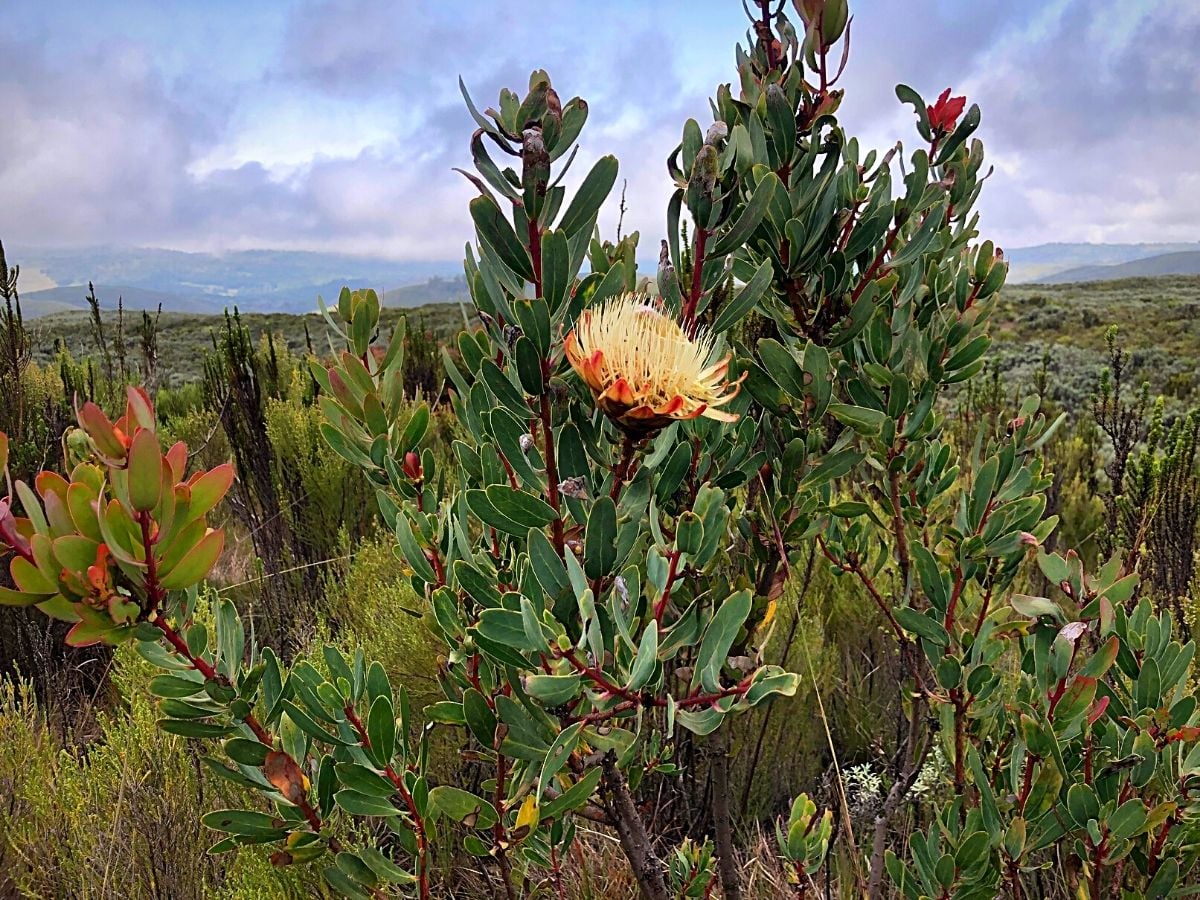
The Mount Kenya flora moorland begins above 3,000 meters, where the forest tree canopy opens completely. Heather moorland dominates the lower moorland section of the Mount Kenya flora zone. Tree heathers reach four to five meters in height at the lower moorland and create a dense low canopy. Everlasting flowers in yellow and white cover the open moorland ground between the Mount Kenya flora heather clumps. These everlasting blooms remain preserved on the plant long after the peak flowering period. The Mount Kenya flora moorland heather creates the most characteristic landscape feature visible from a distance in the middle mountain zone.
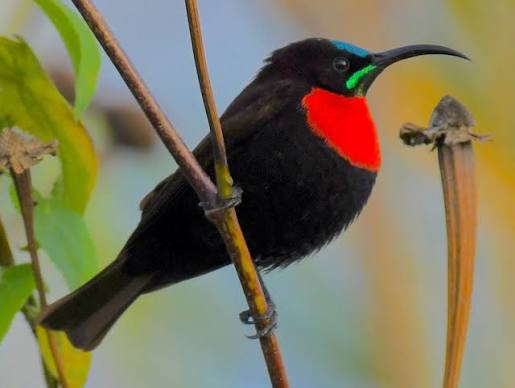
Giant lobelia is the defining Mount Kenya flora species of the mid to upper moorland zone. Lobelia telekii and Lobelia gregoriana are the two giant lobelia species at Mount Kenya. Their tall spike inflorescences reach three meters in height above a basal rosette of silvery-green leaves. Mount Kenya flora: giant lobelias grow beside stream edges and on boggy slopes throughout the 3,200- to 4,200-meter zone. The scarlet-tufted sunbird feeds exclusively on giant lobelia flowers and is an inseparable part of the Mount Kenya flora giant lobelia ecological community. Finding a scarlet-tufted sunbird at a Mount Kenya flora giant, a lobelia, is one of Kenya’s most beautiful wildlife moments.
Giant Senecio Mount Kenya Flora
Giant Groundsel in the Mount Kenya Flora
Also known scientifically as Senecio, it is the second most iconic Mount Kenya flora giant plant. Senecio keniodendron grows as a tree reaching five meters in height in the upper moorland zone. This Mount Kenya flora giant groundsel has a distinctive rosette of leaves at the top of a bare trunk. The trunk surface is covered in dead leaf bases that insulate the growing tip from nightly frost. Giant groundsel colonies at Mount Kenya’s high-altitude flora sites create one of Africa’s most surreal and photogenic landscapes. A field of 50 giant ground-rollers at 4,000 meters under the summit glaciers is an image unlike anything else in Kenya.
Mount Kenya’s giant groundsel adaptation to freezing temperatures is extraordinary. The Senecio rosette leaves fold inward each night to protect the central growing bud from frost damage. Each morning they unfold as temperatures rise. This daily movement cycle is one of the most remarkable plant behaviors in the Mount Kenya flora community. The leaf cavities of the giant groundsel also trap warmth from the previous day’s sun, creating a microclimate around the growing bud. These Mount Kenya flora adaptations to extreme altitude conditions have fascinated plant physiologists for decades.
Afro-alpine Mount Kenya Flora
Above 4,500 meters, Mount Kenya flora becomes extremely sparse in the Afro-alpine desert zone. Only the most cold-tolerant Mount Kenya flora species survive at this altitude. Tussock grass holds on between bare rock and scree in the lower Afro-alpine Mount Kenya flora zone. Cushion plants form compact mats between rock sections above 4,500 meters. These cushion-plant- and Mount Kenya flora species reduce wind exposure and retain moisture in the ultra-dry alpine conditions. The summit rocks of Batian and Nelion carry virtually no Mount Kenya flora beyond occasional lichen and moss communities.
The Nival Zone, Mount Kenya flora above the glaciers, is limited to cryophilous bacteria and algae. These microscopic Mount Kenya flora organisms color the glacier ice in pink and green shades on close inspection. This snow and ice microbial community represents the absolute upper limit of Mount Kenya flora at 5,199 meters. Glacial retreat on Mount Kenya has dramatically reduced the area covered by Mount Kenya flora glacial communities. The Mount Kenya glaciers have reduced by 93 percent since 1900. This glacial loss affects the meltwater supply for lower-Altitude Mount Kenya flora communities throughout the moorland zone.
Plan Your Safari
Plan a Mount Kenya trek of four to six days to experience the full range of Mount Kenya flora zones from montane forest to giant lobelia moorland and giant groundsel. The Sirimon and Chogoria routes access the most impressive Mount Kenya flora-moorland sections with the largest giant lobelia colonies. Book a certified Mount Kenya guide and mountain rescue registration before departure from any trailhead gate.
African Wild Trekkers arranges Mount Kenya trekking packages that combine the botanical Mount Kenya flora experience with the wildlife of the surrounding Nanyuki highland safari conservancies. We book guides, porters, and highland accommodation for all Mount Kenya flora trekking programs.
Contact African Wild Trekkers to trek through the Mount Kenya flora zones. We respond within 24 hours and design complete Mount Kenya trekking programs that access the extraordinary giant plants of the mountain’s upper moorland and Afro-alpine zones.