Bosman’s Potto Africa: The Slow-Moving Nocturnal Primate of Uganda’s Forest
The potto moves so slowly that many predators overlook it. This is not just a saying. Instead, its main defense relies on extreme stillness and very slow movement. Since many predators detect motion first, the potto often appears like part of the branch.
At night, a potto moves only 5 to 8 meters per minute. Therefore, even a hunting owl may struggle to separate it from bark and moss. Over time, the potto has perfected the art of staying present while remaining almost invisible.
What Is a Potto?
Bosman’s potto, Perodicticus potto, belongs to the lorisiform primate group. This group includes African galagos and Asian lorises. Adults weigh between 0.85 and 1.6 kilograms. Their bodies reach 30 to 39 centimeters, while their short tails measure only 3 to 10 centimeters.
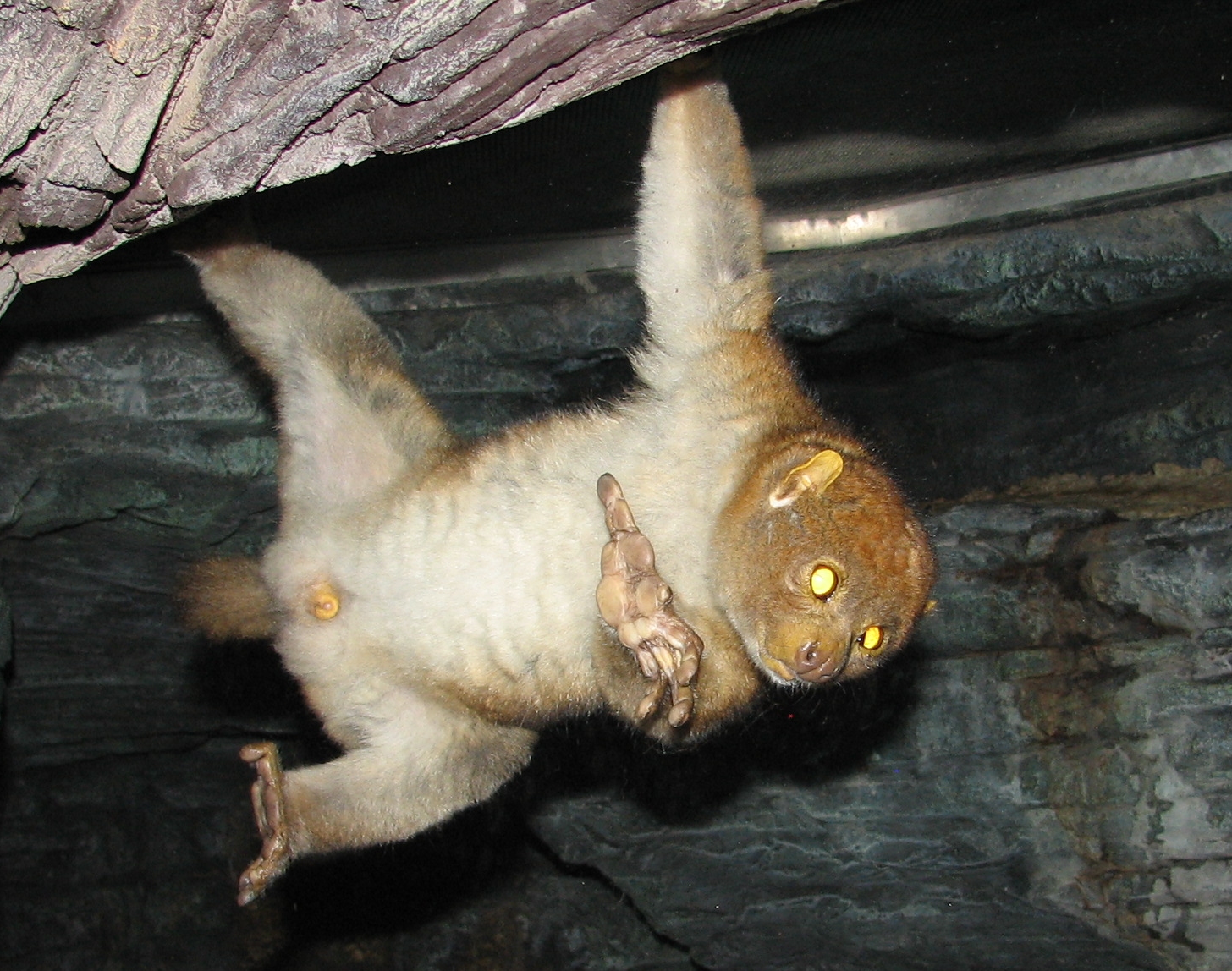
The potto has a thick, soft, brownish-grey coat. As a result, it blends easily with tree bark and moss-covered branches. Its broad hands and feet provide a powerful grip, allowing it to hold onto branches securely.
Its index finger is highly reduced, creating a wider gap between the second and third fingers. Therefore, the potto grips round branches more effectively. Large forward-facing eyes improve night vision.
However, because the eyes cannot rotate, the potto turns its entire head to follow movement.
The Toxic Neck Glands
The potto has a unique defense system on the back of its neck. It carries raised vertebral spines covered with thick skin and glandular secretions.
When threatened, the potto lowers its head and exposes this spiny neck area. Consequently, predators that bite the neck receive a chemical deterrent. This mild toxin discourages further attacks.
Combined with its powerful grip, this defense makes it extremely difficult for predators to remove a potto from a branch.
Nocturnal Life and Diet
Pottos are strictly nocturnal. During the day, they remain motionless in thick vegetation or flatten themselves against branches.
After sunset, they slowly move through the canopy while searching for food. Their diet includes fruits, tree gum, insects, and small vertebrates.
Tree gum forms an important part of their diet. Unlike many primates, pottos have a specialized digestive system that helps them process this resource.
Therefore, they face less competition from fruit-eating canopy species.
Range in Uganda
In Uganda, pottos live in forest areas such as Kibale National Park, Bwindi Impenetrable Forest, Budongo Forest, and the Rwenzori Mountains.
They also occur in Rwanda’s Nyungwe Forest and the Democratic Republic of Congo’s rainforest regions. However, they depend entirely on closed-canopy forests and cannot survive in open habitats.
Finding a potto during a night forest walk requires expert guidance. Guides search for the red-orange eye shine before identifying the motionless animal resting on a branch.
Plan Your Safari
Uganda’s Kibale National Park offers some of East Africa’s best opportunities to spot pottos. Specialist night walks near the Kanyanchu Research Centre use red-filter spotlights to reduce disturbance and improve sightings.
Additionally, Bwindi’s community forest walks can reveal these rare nocturnal primates. Seeing a potto sitting quietly several meters above the forest floor, with its eyes reflecting the torchlight, creates one of Africa’s most unusual wildlife experiences.
African Wild Trekkers arranges specialist night forest walks in Uganda’s Kibale National Park for visitors seeking East Africa’s rarest nocturnal primate experiences. Contact us to plan a Uganda forest safari that goes beyond the daytime circuit.