African Golden Cat Facts: The Forest Phantom of Uganda’s Dense Canopy
The African golden cat is one of the least-known wild cats in Africa. Camera trap programmes in Uganda’s Bwindi Impenetrable Forest and Kibale National Park confirm its presence, but actual visual sightings by safari visitors or researchers happen so rarely that comprehensive behavioural data remains sparse. The golden cat occupies dense forest understorey, moves primarily at night, and actively avoids open clearings where detection becomes possible. It is classified as Vulnerable on the IUCN Red List. Most wildlife photographers who have spent decades in East Africa have never seen one.
What Is an African Golden Cat?
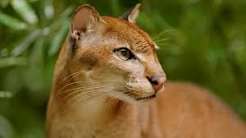
The African golden cat, Caracal aurata, is a medium-sized wild cat most closely related to the caracal and the serval. Adults weigh between 5.5 and 16 kilograms. Body length reaches 61 to 102 centimetres with a tail of 16 to 46 centimetres. The coat shows extraordinary colour variation individuals range from bright golden-orange through red-brown to dark grey, with some melanistic (black) individuals recorded. Spots, stripes, or plain coat patterns appear across the colour range with no consistent pattern. This coat variability led early naturalists to describe multiple separate species before genetic work confirmed a single species with wide phenotypic variation. The face carries a paler chin and throat, faint facial markings, and relatively small rounded ears compared to the long-tufted ears of the caracal.
Forest Hunter: Prey and Hunting Strategy
African golden cats hunt in dense forest understorey. The prey list includes rodents, small monkeys, birds, small duikers, and hyraxes. Camera trap data from Gabon and Uganda records golden cat predation on small forest ungulates and birds. The dense forest habitat means hunting relies on ambush and close-range pounce rather than the open-country pursuit strategy of the caracal or cheetah. The golden cat’s stocky build, powerful forelimbs, and relatively short tail — reflecting less need for aerial balance than canopy specialists — suit the short-range forest ambush role.
Camera trap footage from Kibale Forest captured an African golden cat in the process of hunting red colobus monkeys — climbing actively into the lower canopy to reach colobus resting sites. This arboreal hunting behaviour, confirmed on camera, revealed a more vertically versatile hunter than the strictly terrestrial hunting mode assumed from the body structure alone.
Secretive Behaviour
African golden cats avoid human presence consistently. Camera trap captures require weeks of continuous trap operation. Direct visual encounters in forests where the cats are confirmed present through camera evidence are extremely rare. The cat hears vehicle engines and human footsteps from considerable distance and retreats into dense understorey before any observer reaches the area. No habituation to human presence has been documented for this species in any African forest. The combination of forest density, nocturnal activity, and active avoidance behaviour makes the African golden cat genuinely one of the most difficult large mammals to encounter intentionally anywhere in Africa.
Range in East Africa
African golden cats occur in Uganda’s Bwindi, Kibale, and Rwenzori forest parks. Kenya’s montane forests — Kakamega, Aberdare, and Mount Kenya — hold small populations. Tanzania’s western forest zones carry individuals. Camera trap evidence confirms presence across the Albertine Rift’s forest belt.
Plan Your Safari
No reliable encounter strategy exists for the African golden cat. Camera trap deployment in suitable forest habitat over extended periods produces the best photographic evidence. Guided night forest walks in Kibale and Bwindi occasionally produce brief sightings when guides follow forest cat tracks or respond to disturbance calls from small mammals in the understorey. The realistic expectation for any visitor targeting the African golden cat specifically is that they will likely not see one — but that the forests required to search for it contain extraordinary wildlife that makes any effort thoroughly worthwhile.
African Wild Trekkers designs Uganda forest safari itineraries through the best African golden cat habitat in East Africa. Contact us to plan a Uganda forest safari combining the realistic wildlife goals with the remarkable forest primate and bird diversity of Kibale and Bwindi.