Northern Circuit Kilimanjaro: Longest Route Highest Success Rate
The Northern Circuit: Kilimanjaro’s Ultimate Route for Serious Climbers
The Northern Circuit is the longest and most remote route on Kilimanjaro. It traverses the mountain’s rarely visited northern slopes over nine days in conditions that feel closer to expedition climbing than standard trekking. It also holds the highest documented summit success rate of any Kilimanjaro option — consistently above 95 percent. Its extended acclimatization profile gives the body maximum time to adapt to altitude before the final push. Climbers who want the best possible chance of reaching Uhuru Peak and who can invest nine days on the mountain choose the Northern Circuit as the definitive Kilimanjaro experience.
What Makes the Northern Circuit Different
The Northern Circuit distinguishes itself from all other Kilimanjaro routes through the territory it covers and the experience it delivers at virtually every stage of the ascent.
Route Geography and Exclusivity
The Northern Circuit begins at Londorossi Gate on the western side of Kilimanjaro. The same starting point as the Lemosho Route. Instead of heading directly toward the summit via the southern face, it turns north after the Shira Plateau. It then traverses the entire northern half of the mountain before approaching the summit from the east via the Rongai Valley. This circuit covers terrain that no other route accesses. It passes through the remote Meru Glacier zone, the Lent Hills, and the School Hut area. And the vast northern wilderness that sees almost no other climbers. Spending days walking across a pristine high-altitude landscape without another group in sight is genuinely exceptional on a mountain that feels crowded on its more popular southern routes.
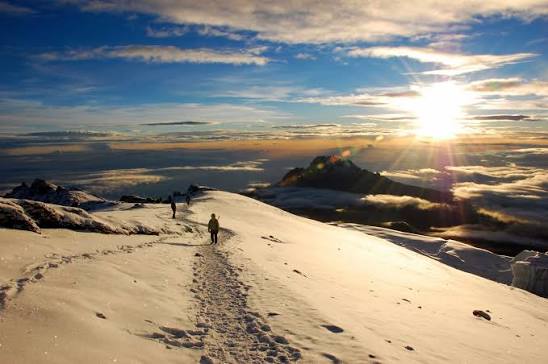
The northern approach to the summit delivers views of Kilimanjaro’s glaciers from angles that southern route climbers never see. The Credner and Drygalski glaciers on the northern ice field are among the most dramatic remaining ice formations on the mountain. The perspective from the northern plateau looking back toward Kenya and north Tanzania creates a geographic context for the climb that differs entirely from the southern routes’ view toward the Tanzanian lowlands. Wildlife encounters, including Cape buffalo, eland, and elephant, occasionally occur on the lower northern slopes, adding a safari dimension that southern routes rarely provide.
The Acclimatisation Advantage
The Northern Circuit’s nine-day structure provides more acclimatization time than any other standard Kilimanjaro route. This directly translates into the highest summit success rates on the mountain. The route’s slow ascent profile across the northern slopes maintains a gradual altitude gain over several days, with nights at lower elevation than the day’s high point. This follows the classic altitude adaptation principle of climbing high and sleeping low. By the time a Northern Circuit climber reaches Kibo Hut or School Hut for the summit push, nine days of progressive altitude adjustment have prepared the body in optimal physiological conditions.
The practical implication is that Northern Circuit climbers typically arrive at the final camp feeling stronger and more confident than climbers on shorter routes. The Northern Circuit significantly reduces the acute mountain sickness symptoms. Headache, nausea, fatigue, disturbed sleep. That commonly affects climbers on five- and six-day routes during the critical middle days. The body has had more time to produce additional red blood cells and adapt cardiovascular function. The summit push from Kibo or School Hut typically covers the same terrain as other routes. But climbers arriving after nine days of acclimatization rather than five or six perform measurably better.
Day-by-Day Route Overview
The Northern Circuit covers significantly more terrain than shorter routes and passes through a greater variety of ecological zones and landscapes. The day-by-day progression delivers a different visual experience at each stage.
Western and Northern Approach
Days one through four of the Northern Circuit follow the Lemosho Route approach: Londorossi Gate to Big Tree Camp through rainforest, then onto the Shira Plateau across open moorland to the Shira Caves and Shira 2 camps. On day four, rather than turning southeast toward the Lava Tower as Lemosho climbers do, the Northern Circuit branches north across the Shira Plateau to Moir Hut. This begins the traverse of the mountain’s remote northern face. The camp at Moir Hut at 4,200 meters is one of the quietest and most atmospherically isolated locations on the mountain. It offers views across the northern wilderness that most Kilimanjaro climbers never see.
Days five through seven traverse the northern slopes through terrain that alternates between high alpine desert and rocky moraine. And the extraordinary high-altitude lichen fields that characterize the mountain’s northern zone. The camps at Buffalo Camp, Third Cave Camp, and School Hut progress gradually around the mountain’s northern and eastern flanks, maintaining the slow altitude gain that makes the route’s acclimatization so effective. The northern face receives less sun than the southern routes, making days cooler and nights colder. Plan your sleeping gear and packing accordingly.
Summit Push and Descent
The Northern Circuit’s summit push departs School Hut on the eastern slopes around midnight. It ascends via the Hans Meyer Cave to Gilman’s Point on the crater rim before traversing to Uhuru Peak. This summit approach differs slightly in character from the Lemosho and Machame summit routes. Which ascend via the Rebmann Glacier direction and approach the rim at Stella Point. The Gilman’s Point approach gives climbers a different experience of the summit crater and the final stretch to Uhuru. The endpoint—the highest point in Africa at 5,895 meters—is the same regardless of approach direction.
Descent from Uhuru follows the Mweka route through the southern face. Descent camps are at Millennium Camp or High Camp before the final exit to Mweka Gate. Most Northern Circuit packages include a rest day at the descent camp to allow recovery after the summit push before the final walk out through the rainforest. This rest day is a genuine luxury compared to the rushed descent schedules on shorter routes. Arriving at Mweka Gate rested rather than exhausted is one of the Northern Circuit’s underappreciated final advantages.
Who the Northern Circuit Is For
The Northern Circuit suits climbers who prioritize summit success above all else and want the most complete and least crowded Kilimanjaro experience available. And can spend nine days on the mountain rather than seven. The additional two days compared to the Lemosho Route add meaningful cost in park fees and staff wages. And food. Typically $300 to $500 per person above the equivalent Lemosho package. The summit success rate premium and the experiential advantages of the northern route represent genuine value for most climbers who make the comparison carefully.
The Northern Circuit is also the best option for climbers who have previously attempted Kilimanjaro on a shorter route and turned back due to altitude sickness. The extended acclimatization profile specifically addresses the physiological conditions that cause altitude-related turnaround. Many climbers who failed to summit on a six-day attempt successfully reach Uhuru on a subsequent Northern Circuit climb. No route eliminates altitude sickness risk entirely. Individual susceptibility remains impossible to predict. But the Northern Circuit reduces it more than any other standard option.
Plan Your Safari
Northern Circuit bookings require the same advance planning as other Kilimanjaro routes, with peak season dates filling well ahead of travel. The nine-day commitment means combining the Northern Circuit with a Tanzania safari extension requires careful itinerary planning to fit within typical holiday allowances. Most climbers who do this build a 14 to 16-day Tanzania trip combining the climb with three to four safari days in the Serengeti or Ngorongoro.
African Wild Trekkers operates Northern Circuit climbs with experienced KINAPA-certified guides, full porter welfare compliance, and quality mountain camping equipment. And comprehensive pre- and post-climb logistics that make the full Tanzania trip seamless. You can add Serengeti safari, Ngorongoro Crater, and Zanzibar extensions to Northern Circuit packages.
Contact African Wild Trekkers at africanwildtrekkers.com/contact with your preferred climb dates, and we will confirm availability and provide a full Northern Circuit itinerary within 24 hours.