Nyungwe Owl-Faced Monkey: Discovering One of Africa’s Most Beautiful Forest Primates
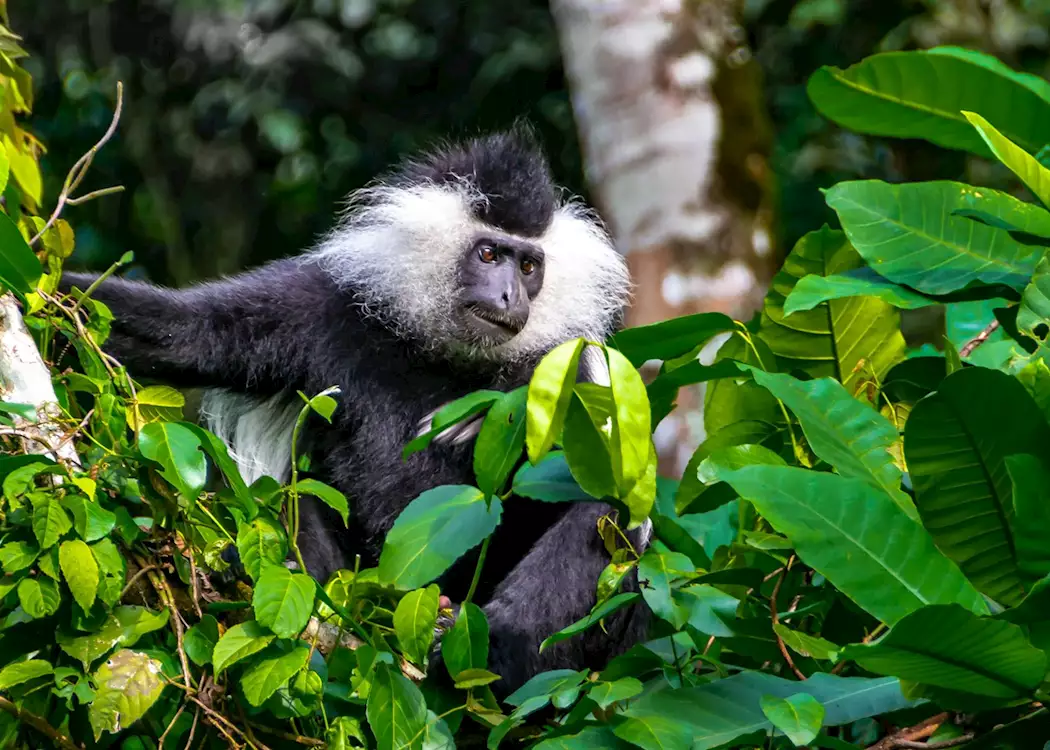
The owl-faced monkey, also called Hamlyn’s monkey, is one of Nyungwe Forest’s most unique primates. It gets its name from its large, forward-facing eyes and unusual facial markings. These features give the monkey an owl-like appearance. Its olive-gray fur and white stripe from the nose to the chin make it easy to identify. The face stands out clearly among Nyungwe’s rich primate population.
The owl-faced monkey lives only in the montane forests of the Albertine Rift. Its range includes parts of the eastern Democratic Republic of Congo, western Rwanda, and Uganda. Nyungwe Forest protects an important population of this species. However, visitors see it less often than Angola colobus and red colobus monkeys do.
Habitat and Behaviour
The owl-faced monkey prefers mid-elevation montane forests with dense vegetation. It usually stays deep inside the forest rather than near open areas. Therefore, visitors have better chances of seeing it on longer trails that enter the forest interior.
Unlike many African monkeys, the owl-faced monkey spends a lot of time on the ground. It moves quietly through the forest floor while searching for food. This behavior makes it different from canopy species such as colobus monkeys.
A ground-level encounter offers a special wildlife experience. Visitors can often observe the monkey at eye level as it moves through the vegetation. These close sightings allow photographers to capture detailed views of the species.
The owl-faced monkey usually lives in small groups of two to five individuals. However, larger groups may gather temporarily when food becomes available. Nyungwe’s ranger guides understand the movement patterns of these monkeys. As a result, they can help visitors search in areas with recent sightings.
Finding Owl-Faced Monkeys in Nyungwe
The best opportunities to see owl-faced monkeys come from longer forest trails. The Imbaraga and Muzizi trails pass through suitable habitats for this species. Therefore, visitors should choose routes that explore deeper sections of Nyungwe Forest.
An early start also improves the chances of an encounter. The species moves quietly, so visitors should walk slowly and remain patient. A calm approach increases the possibility of observing the monkey without disturbing it.
However, sightings remain unpredictable. Owl-faced monkeys have secretive habits and occur in smaller numbers than some other primates. Even so, experienced guides can improve the chances of finding them by following recent activity signs.
Visitors sometimes confuse owl-faced monkeys with L’Hoest’s monkeys. Both species share similar forest habitats in Nyungwe. However, the owl-faced monkey has a clear white facial stripe and large forward-facing eyes. These features help separate it from L’Hoest’s monkey.
Nyungwe’s Primate Research and Conservation
Nyungwe Forest supports important primate research programs. These studies help scientists understand monkey populations, feeding habits, and habitat needs. Furthermore, research helps conservation teams protect less-studied species such as the owl-faced monkey.
Tourism also supports primate conservation in Nyungwe. Visitors contribute through forest permits and guided activities. The revenue helps fund park management, ranger patrols, habitat protection, and research projects.
As a result, every visitor helps support the protection of Nyungwe’s unique ecosystem. This conservation work benefits the owl-faced monkey and the many other species that depend on the rainforest.
Plan Your Nyungwe Primate Safari
The owl-faced monkey offers a rewarding experience for travelers exploring Nyungwe Forest. While colobus monkeys are easier to find, this rare primate provides a more exclusive wildlife encounter.
Spending two or three nights in Nyungwe improves the chances of seeing different primate species. Multiple forest walks also allow visitors to explore different habitats and trails.
African Wild Trekkers creates Nyungwe Forest safari experiences that showcase Rwanda’s incredible primate diversity. Contact us to plan a Rwanda safari through one of Africa’s oldest rainforests and discover the remarkable wildlife it protects.