Nyungwe Red Colobus: Tracking Rwanda’s Endangered Forest Primates
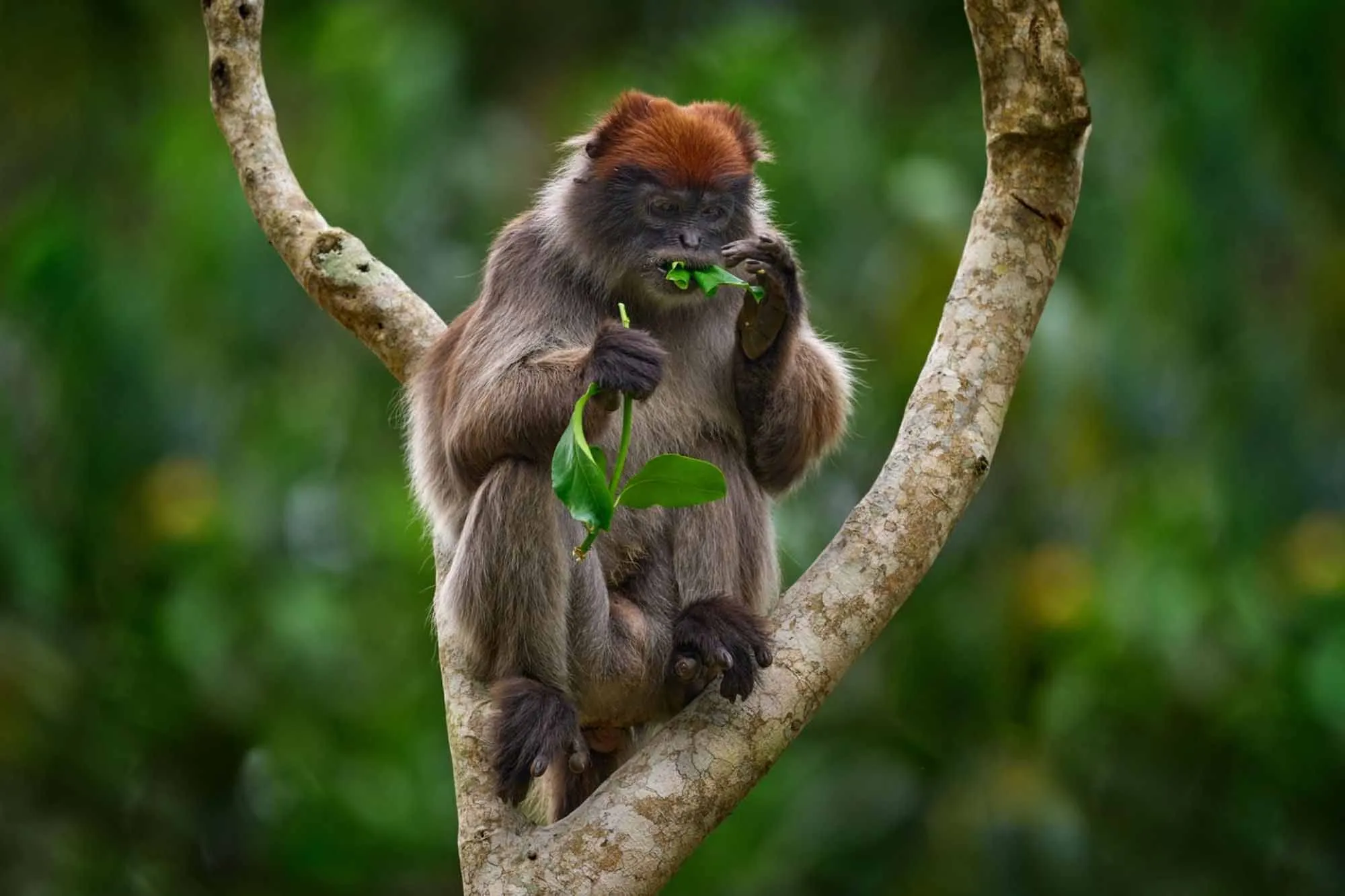
The Ruwenzori red colobus is one of Nyungwe Forest National Park’s most striking and most endangered primate species. Nyungwe holds the largest known population of this Albertine Rift endemic. The species’ range is confined to a handful of forest fragments in western Uganda, eastern DRC, Rwanda, and Burundi. Nyungwe’s intact ancient forest provides the most secure remaining habitat for this species within its entire geographic range.
The red colobus is a large, striking monkey. Adults have a distinctive combination of black and dark red-brown coloring with a pale face and hands. The species is primarily arboreal and feeds heavily on leaves, spending most of its time in the forest’s mid- and upper canopies. Large groups of 50 to 100 individuals create spectacular sightings when the full troop is visible feeding or moving through the canopy above the trail.
Finding Red Colobus in Nyungwe
Red colobus are most commonly encountered on the Igishigishigi, Imbaraga, and Cyamudongo trail routes. They tend to use the mid-elevation forest zones where their preferred tree species are most abundant. The forest rangers who accompany all trail groups in Nyungwe have detailed knowledge of current troop locations. Their guidance is the most reliable means of finding red colobus on any given day.
The best red colobus sightings occur when the troop is actively feeding in canopy trees above an accessible trail. The animals move through the canopy in loose cohesion, with individuals calling to each other and juveniles playing in the outer branches. A full troop in motion through the canopy creates a dramatic display of wildlife that the enclosed forest amplifies in sound and spectacle.
Red colobus live alongside Angola colobus in Nyungwe, and the two species are occasionally seen feeding in the same trees. The color contrast between the two species, with the Angola colobus’s dramatic black and white pattern against the red colobus’s earthy tones, creates striking combined sightings. Seeing two primate species simultaneously is one of Nyungwe’s most rewarding trail experiences.
Conservation Status
The Ruwenzori red colobus is classified as Endangered on the IUCN Red List. Its population has declined due to hunting, habitat loss, and forest fragmentation across most of its range. The Nyungwe population is the most important for the species’ long-term survival. The intact forest the park protects is directly connected to the colobus population it holds.
Deforestation pressure around Nyungwe’s boundaries creates ongoing habitat fragmentation risk. The forest islands around the main park receive insufficient protection in several areas. The Cyamudongo forest fragment to the south, separated from the main park, holds its own red colobus population that is under particular pressure from surrounding agricultural land. Conservation efforts must address both the main park and these surrounding fragments.
Research on the Nyungwe red colobus population provides data essential for understanding the species’ ecology, social structure, and long-term viability. The Wildlife Conservation Society and other organizations conduct ongoing primate research in Nyungwe. This research directly informs management decisions that affect the colobus population’s future.
Other Primates of Nyungwe
Nyungwe holds 13 primate species in total. The full list includes chimpanzee, Angola colobus, red colobus, L’Hoest’s monkey, blue monkey, grey-cheeked mangabey, and several others. No other forest in Rwanda holds comparable primate diversity. Finding multiple species on a single trail walk in Nyungwe is common rather than exceptional.
The guided trail approach in Nyungwe means that ranger knowledge maximizes the number and quality of primate encounters on each walk. Arriving at the Uwinka visitor center early to secure a guide and an early trail departure gives the best chance of finding multiple primate species before they retreat into the forest interior as the day warms.
Plan Your Nyungwe Primate Experience
Two to three nights at Nyungwe allow time for chimpanzee tracking on the first morning, a red and Angola colobus trail, and the canopy walkway during the visit. That combination creates a genuinely comprehensive primate experience at one of Africa’s most remarkable forest primate destinations. Single-day visits are possible but significantly limit what can be experienced.
African Wild Trekkers designs Nyungwe Forest itineraries that maximize primate encounter opportunities alongside the forest’s exceptional birding and canopy walkway experience. Contact us to plan a Rwanda safari that explores the full primate diversity of one of Central Africa’s most important forest ecosystems.