Reforestation Planting Africa: How Safari Visitors Contribute to East Africa’s Forest Recovery
East Africa has lost more than half of its original forest cover in the last hundred years. Agricultural expansion, charcoal production, and settlement pressure have reduced the highland and montane forests of Kenya, Uganda, and Tanzania to fragments — isolated patches surrounded by farmland, separated from each other by kilometres of cleared ground. This fragmentation breaks the ecological connections between wildlife populations and reduces the catchment function of forests that regulate water supplies for millions of people downstream. Reforestation programmes across East Africa work to reverse this fragmentation by replanting native tree species on degraded land at the scale that matters — not single trees, but landscape-scale restoration that reconnects existing forest fragments and restores hydrological function to damaged watersheds. Safari visitors who participate in tree planting activities contribute directly and visibly to this work.
How Reforestation Projects Work
Successful reforestation in East Africa relies on a combination of native species seed collection, community nursery production, and large-scale planting on identified restoration land. Native species are critical foreign plantation species grow faster but provide limited ecological function for the native insects, birds, and mammals that depend on specific native plant chemistry. Community nurseries in highland areas near major forest blocks raise native seedlings for 6 to 12 months before planting. Additionally, community members own and operate these nurseries, generating income from seedling sales to restoration projects. This economic integration makes the community a stakeholder in the reforestation success rather than a bystander to it.
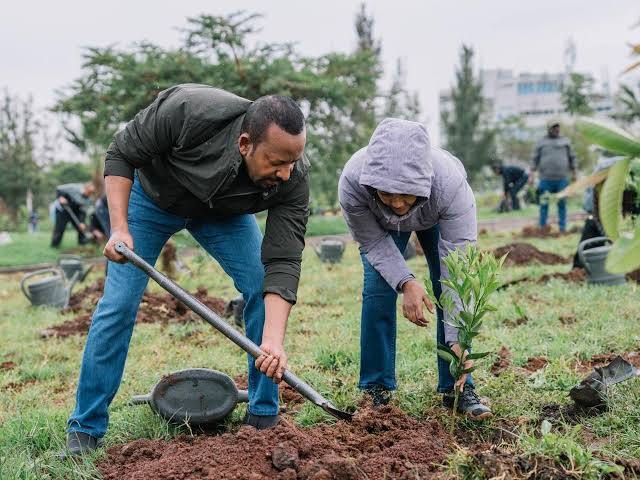
Planting occurs during the rainy season when soil moisture gives seedlings the best establishment conditions. Teams of community members and, in some programmes, safari visitors work together to plant seedlings at marked intervals along a restoration plot. Each planting day covers 500 to 2,000 trees depending on terrain and team size. Follow-up maintenance — weeding, mulching, and replacement of dead seedlings — continues for two years after planting. Furthermore, the planted trees carry GPS coordinates and survival monitoring data, allowing carbon credit verification and programme impact measurement over time.
Kenya’s Reforestation Landscape
Kenya’s most significant reforestation work concentrates on the Aberdare Mountains, Mount Kenya, and the Mau Forest Complex — the three highland forest blocks that feed the Tana, Ewaso, and Nzoia rivers supplying water to most of Kenya’s population. The Aberdare Conservancy and the Kenya Forest Service run visitor tree planting programmes at Aberdare National Park and several community forest areas. The Mount Kenya Trust manages a corridor restoration programme between Mount Kenya National Park and the Ngare Ndare Forest to the north — this corridor allows elephant movement between the two forest areas and provides a direct tree planting participation opportunity for guests at nearby camps.
Uganda and Tanzania Forest Restoration
Uganda’s reforestation focus concentrates on the Albertine Rift forest corridor the chain of highland forests running from Bwindi south through Mgahinga, the Rwenzoris, and the Kibale-Semuliki system. Several eco-lodges in the Bwindi area include tree planting as a standard guest activity. Tanzania’s reforestation programmes operate on the Usambaras, Uluguru, and Udzungwa mountain forests all critically important for endemic species and downstream water supply. Visitor participation is available through community forest projects near Lushoto in the East Usambaras and through several NGO-managed restoration projects near Morogoro.
Plan Your Safari
Tree planting activities typically require half a day and take place in highland areas adjacent to existing forest blocks. The physical activity is moderate — carrying seedlings to the planting site, digging holes, and planting requires basic fitness. The most meaningful participation comes through projects where the guest’s contribution integrates with an existing long-term programme rather than a one-off ceremonial planting. Communicating interest in tree planting when booking allows the tour operator to identify current projects with genuine restoration impact in the itinerary area.
African Wild Trekkers connects guests with genuine reforestation participation programmes in Kenya, Tanzania, and Uganda. Contact us to plan a safari that includes a meaningful conservation contribution alongside the wildlife experience.