Tarangire National Park: An Introduction
Why Tarangire Deserves Its Place on the Northern Circuit
The Tarangire River and Its Role in the Dry Season
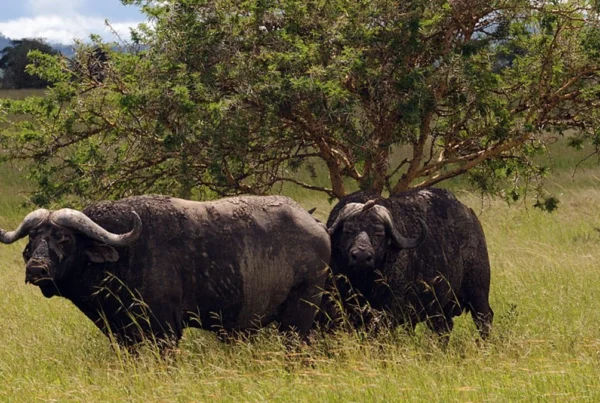
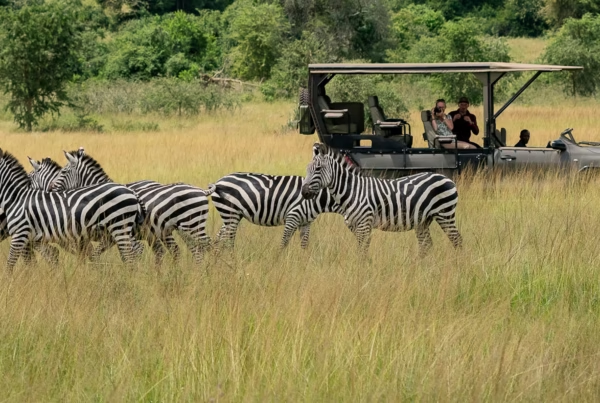
Tarangire National Park sits in northern Tanzania approximately 120 kilometres southwest of Arusha and protects 2,850 square kilometres of dry savanna, riverine forest, and swamp habitat around the Tarangire River — the only permanent water source in the region during Tanzania’s dry season from June through October. This single river creates the ecological phenomenon that makes Tarangire one of East Africa’s most spectacular dry-season wildlife destinations: as the surrounding landscape dries and seasonal water sources disappear, every large mammal species within range of the river concentrates in the park at densities that rival the Serengeti’s peak season without the vehicle concentrations that the Serengeti’s fame attracts. Elephants, buffalo, zebra, wildebeest, and the full supporting cast of antelope species assemble along the Tarangire River’s banks in late August and September in numbers that experienced safari guides describe as the closest thing available in Tanzania to the Serengeti’s dry-season concentrations without the Serengeti’s crowds.
The park’s baobab tree landscape provides the visual context that distinguishes Tarangire from any other northern Tanzania destination — enormous ancient trees, some estimated at over 2,000 years old, whose swollen trunks store hundreds of litres of water and whose bare-branched silhouettes against orange sunset skies create the photographic signature of the Tarangire experience. Unlike the Serengeti’s open grass plains or Ngorongoro’s contained caldera, Tarangire’s landscape announces immediately that the visitor has entered a different ecological register — the baobab country of East Africa’s dry interior rather than the world-famous grassland systems that most Tanzania marketing foregrounds. Photographers who include Tarangire in a northern circuit itinerary specifically for baobab landscape photography return with images that distinguish their Tanzania edit from every other visitor’s standard Serengeti and crater portfolio.
Elephant Populations: Tanzania’s Highest Density
Tarangire National Park supports approximately 4,000 to 6,000 elephants during the dry season peak — one of the highest density concentrations of African elephants in any national park in East Africa. These elephants follow a documented seasonal migration that brings them from the surrounding community lands into the park during the dry season and disperses them back across a 20,000-square-kilometre area during the rains, creating the dry-season concentration that makes Tarangire an elephant destination comparable to Amboseli in density but exceeding it in scale and the variety of habitat through which elephant families move during a single game drive. A morning drive along the Tarangire River’s banks in August or September typically produces encounters with multiple family groups, large tusked bulls, and the inter-family interactions that occur when concentrated populations share limited resource areas.
The Tarangire elephant research programme, operated by Cynthia Moss’s colleagues from the Amboseli Elephant Research Project and carried forward by independent researchers, has documented the seasonal movements and family relationships of individual Tarangire elephants across multiple decades — producing life history records for families that range across the ecosystem’s community land during the rains and converge on the park during the dry season. Guides who have worked in Tarangire for years develop individual recognition of the families that use specific sections of the river corridor each dry season, providing the same depth of personal elephant knowledge that distinguishes Amboseli’s guiding from the anonymous elephant encounters of parks without long-term research investment. Requesting this guide knowledge before booking — through your operator’s selection of specific Tarangire guides rather than defaulting to the camp’s general rotation — delivers a qualitatively different experience from standard game drive guiding.
Wildlife Beyond Elephants
Predators, Rare Species and Birdlife
Tarangire’s predator community includes all of Tanzania’s major carnivores in populations that benefit from the dry-season prey concentrations along the river. Lion prides in Tarangire have developed elephant-hunting specialisms documented by researchers who have observed coordinated lion attacks on adult elephants that would be exceptional or unknown in most African ecosystems — a behaviour that Tarangire’s specific combination of large lion prides and high elephant density may have selected for over generations. Leopard populations use the park’s riverine forest along the Tarangire River and its Silale Swamp margins as primary territory, with more relaxed vehicle tolerance than some other Tanzania parks due to the habituating effect of consistent guide-led vehicle presence over years of tourism in the river zone.
Tarangire offers several species unavailable or rare in the Serengeti and Ngorongoro — the gerenuk’s giraffe-like necked browsing posture appears in the park’s northern drier zones, fringe-eared oryx maintain populations in the southern sections, and the park holds one of Tanzania’s few reliable populations of the rare dry-country specialist the lesser kudu in the dense thickets of the Silale area. Tarangire’s bird list exceeds 550 species — the highest count for any national park in northern Tanzania — driven by the diversity of habitats the park encompasses from dry acacia thornbush to riverine fig and tamarind forest to palm swamp. The yellow-collared lovebird, Ashy starling, and Rufous-tailed weaver are Tarangire specials that birders specifically target, appearing nowhere else in the northern circuit with the same reliability.
When to Visit Tarangire
The dry season from June through October delivers Tarangire’s finest wildlife experience as the Tarangire River’s permanence concentrates animals in the park while surrounding areas dry completely. August and September represent the peak of elephant and general wildlife concentration at the river banks, with game drives along the Tarangire Valley producing sightings of hundreds of elephants in single outings alongside the full complement of resident predators and plains animals. The swamp areas at Silale and Gursi provide permanent water sources in the southern park that concentrate wildlife independently of the main river, creating multiple wildlife hotspots across the park rather than a single linear focus along the Tarangire River alone.
The wet season from November through May disperses wildlife across the park and into the surrounding community lands, but green season Tarangire offers its own rewards — calving animals in January and February, lush vegetation that transforms the baobab landscape from brown and dusty to vibrant green, and the arrival of migratory bird species from November onward that supplement the resident population with European and Asian winter visitors. Accommodation rates in Tarangire drop significantly during the wet season, making January through March visits attractive for budget-conscious travellers who prioritise value and green-season aesthetics over the dry season’s concentrated wildlife density. For most first-time Tanzania visitors, however, the dry season remains the more immediately rewarding choice and the period when Tarangire’s reputation as an elephant destination is most directly delivered.
Camps and Practical Information
Where to Stay and How to Get There
Best Camps in Tarangire
Tarangire’s camp landscape ranges from mobile camps that relocate within the park by season to permanent lodges on the park boundary and large luxury tented establishments inside the park boundary along the river. Oliver’s Camp in the park’s remote eastern sector provides the most bush-immersive experience in Tarangire, operating walking safaris and night drives in terrain that vehicle-access-only visitors never reach, with a guide team whose natural history knowledge extends well beyond the standard game drive skill set. Swala Camp in the park’s Silale area combines luxury tented accommodation with access to the southern swamp ecosystem that Tarangire’s northern entry point visitors rarely explore, producing sightings of fringe-eared oryx and northern giraffe species absent from the main river section.
Tarangire Treetops Lodge on the park’s eastern boundary offers accommodation in treehouse-style units elevated above the bush and accessible by drawbridge ladders that provide a unique architectural experience alongside the standard game drive programme. The lodge’s position on the boundary allows night drives in the adjacent Randilen Wildlife Management Area that supplement the national park’s daytime drive programme with the nocturnal species that park hours prohibit encountering within the formal boundary. For budget travellers, the Kenya Wildlife Service-equivalent Tanzania National Parks (TANAPA) campsites within Tarangire provide basic facilities at rates that make the park accessible at significantly lower cost than the permanent tented camp options.
Plan Your Safari
Tarangire fits naturally into Tanzania’s northern circuit between Arusha and Ngorongoro, adding elephant density and baobab landscape that the standard Ngorongoro-Serengeti circuit lacks. African Wild Trekkers incorporates Tarangire into northern Tanzania packages with one or two nights at the river that delivers the dry season elephant concentration at its best.
The package covers Tarangire camp accommodation, national park fees, internal road or flight transfers between Tarangire, Ngorongoro, and the Serengeti, and specialist guide briefings on current elephant family activity and predator locations within the park. Walking safari permits for the camps that offer this activity are arranged in advance.
Contact African Wild Trekkers at africanwildtrekkers.com/contact with your Tanzania travel dates and we will design your northern circuit itinerary including Tarangire within 24 hours.