Uganda Stork Species: Africa’s Largest Wading Birds on Uganda Waterways
Uganda stork species include eight confirmed species across the country’s wetlands, rivers, and open grasslands. The stork species range from the massive marabou stork at 150 centimetres tall to the smaller African woolly-necked stork in the forest edges. Uganda stork species are reliable and conspicuous on every major Uganda waterway boat trip and game drive. Saddle-billed stork, yellow-billed stork, and open-billed stork all occur regularly along the Nile and the Kazinga Channel. Marabou stork is ubiquitous throughout Uganda from national park carcass sites to Kampala market rooftops. Uganda stork species offer some of the most dramatic large bird photography opportunities available on any Africa safari.
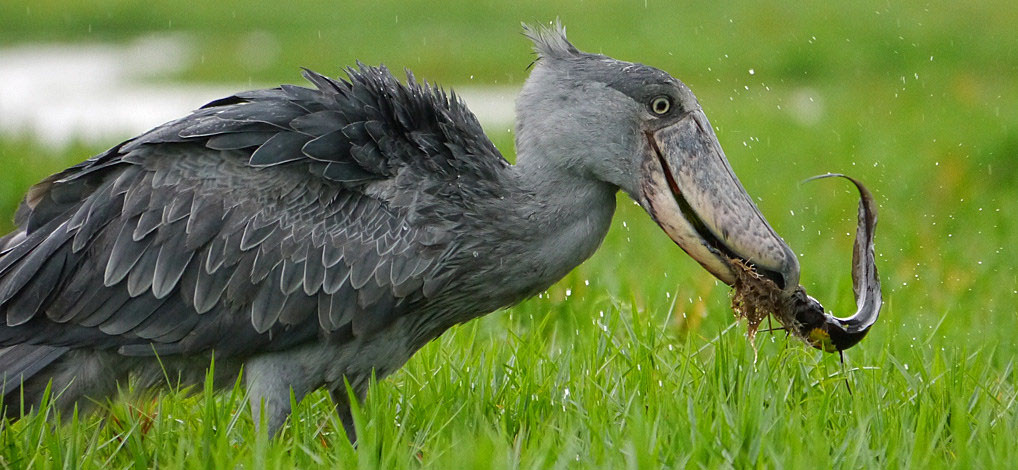
Uganda stork species occupy different feeding niches that separate them at shared water body sites. Saddle-billed stork probes deep water with its enormous multi-coloured bill for large fish. Yellow-billed stork sweeps its open bill through shallow water to catch small fish by touch. African open-billed stork specialises exclusively in freshwater mussels and snails. Marabou stork eats almost anything from carrion to termite alates to small mammals. Understanding these feeding specialisations helps visitors interpret Uganda stork species foraging behaviour accurately at each site.
Key Uganda Stork Species
Saddle-billed Stork Uganda Stork Species
Saddle-billed stork is the most spectacular Uganda stork species in the country. This massive bird stands 145 centimetres tall with a wingspan exceeding 240 centimetres. The bill is enormous, red and black with a distinctive yellow saddle plate at the base. Saddle-billed stork occurs along the Kazinga Channel at Queen Elizabeth National Park year-round. The Murchison Falls Nile boat trip produces saddle-billed stork encounters along the river bank. Lake Mburo National Park holds one to three resident saddle-billed stork pairs at the lake margins.
Saddle-billed stork pairs bond for life and use the same territory for multiple years. Finding a pair feeding together at a Kazinga Channel sandbank is one of Uganda’s finest stork encounters. The colour combination of the bill and the black and white body plumage makes this Uganda stork species the most photographed large waterbird in the country. Saddle-billed stork is sensitive to human approach on foot but tolerates boat approach well. The Kazinga Channel boat allows approach to within 20 metres of resident pairs at known sandbank territories. This close approach produces the finest Uganda stork species portrait photography opportunity in the country.
Yellow-billed and Open-billed Uganda Stork Species
Yellow-billed stork is the most abundant Uganda stork species at wetland fishing areas. It feeds by sweeping its open yellow bill through shallow water to detect prey by touch. Large groups of 20 to 50 yellow-billed storks feed together at productive shallow areas. The Kazinga Channel and Nile banks hold yellow-billed stork concentrations at reliable seasonal fishing spots. This Uganda stork species breeds colonially in mixed-species waterbird colonies at Lake Albert island sites. Breeding colonies with nesting saddle-billed and yellow-billed stork together are spectacular Uganda stork species photography sites.
African open-billed stork is immediately identified by the gap between the bill mandibles at their tips. This gap allows the bird to grip and extract freshwater mussels from their shells efficiently. Open-billed stork occurs in small groups at Uganda wetland sites with abundant mollusc populations. Seasonal flooding at the Murchison floodplain concentrates open-billed stork in the wet season months. Woolly-necked stork is a less common Uganda stork species with distinctive black and white plumage and a woolly white neck collar. It occurs singly or in pairs at forest edge water bodies and is less often seen than the more abundant yellow-billed stork.
Uganda Stork Species at Key Sites
Marabou Stork Uganda Stork Species
Marabou stork is the most frequently encountered Uganda stork species in every environment. This large, bald-headed stork with a dangling pink air sac soars on thermals over all Uganda national parks. Marabou stork roosts colonially in tall trees near Kampala markets and fish landing sites. At Murchison Falls, marabou stork descends on lion and hyena kills for scavenging opportunities. Large groups of marabou stork gather at the Nile bank after hippo deaths in the dry season. A grouping of 50 or more marabou stork at a carcass site creates one of Uganda’s most dramatic vulture-and-stork wildlife spectacles.
Marabou stork is fully habituated to human presence at all Uganda urban and peri-urban sites. The Owino Market in Kampala holds a permanent marabou stork roost in the surrounding trees. These urban birds allow very close approach for photography without any concern about flushing. Urban marabou stork photography in Kampala produces interesting images of the species in an entirely unexpected context. The contrast between the enormous wild bird and the urban market environment creates striking and unusual Uganda stork species imagery. Many visitors find the Kampala market marabou stork more photographically compelling than the same species at a national park carcass site.
Photographing Uganda Stork Species
Uganda stork species photography benefits from a 400 to 600mm telephoto lens in most situations. Saddle-billed stork at Kazinga Channel sandbanks allows close boat approach for frame-filling bill detail shots. Yellow-billed stork feeding groups at shallow water require faster shutter speeds to freeze bill sweeping movement. Setting 1/1000 second captures yellow-billed Uganda stork species feeding behaviour sharply. Marabou stork in flight suits a 300 to 400mm lens to capture the enormous wingspan in frame. Flying saddle-billed stork against blue sky produces Uganda stork species images of exceptional dramatic impact.
Morning light from the east illuminates Uganda stork species feeding at the Kazinga Channel western bank. Positioning the boat with the sun behind produces the warmest light on the bird. Backlit Uganda stork species photography against a sunrise sky creates silhouette images of the distinctive stork flight profiles. Both approaches produce strong Uganda stork species images when applied at the appropriate time of day. The Kazinga Channel boat trip combines both morning front-lit feeding and afternoon backlit flight photography opportunities in a single day visit.
Plan Your Safari
Book a morning Kazinga Channel boat at Queen Elizabeth National Park for the saddle-billed and yellow-billed Uganda stork species encounters. Add the Murchison Falls Nile boat trip for open-billed and yellow-billed stork along the river. Watch for marabou stork at all carcass and market sites throughout the Uganda safari route.
African Wild Trekkers includes Uganda stork species boat trips in all Queen Elizabeth and Murchison Falls itineraries. We arrange morning departures and identify the most productive Uganda stork species sandbank and shallow water sites on the Kazinga Channel route.
Contact African Wild Trekkers to photograph Uganda stork species on your safari. We respond within 24 hours and design Uganda waterway itineraries that access the full range of stork species at the country’s finest lake and river sites.