Uganda Ibis Species: Long-billed Waders of the Pearl of Africa’s Wetlands
Uganda ibis species include four regularly occurring species across the country’s wetlands, grasslands, and woodland edges. The sacred ibis, hadada ibis, glossy ibis, and African spoonbill all occur across Uganda national park sites. Uganda ibis species are among the most visually distinctive waterbirds on any Uganda safari. Their long, decurved bills are immediately identifiable from a distance even without binoculars. Uganda ibis species are most reliably found along the Kazinga Channel, the Nile, and the wetland margins of Uganda’s major lakes. Every major Uganda safari destination produces at least two Uganda ibis species without any specialist searching.
Uganda ibis species fill different ecological roles in the wetland ecosystem. Sacred ibis probes mud and shallow water for invertebrates, frogs, and small vertebrates. Hadada ibis forages in moist grassland and lawn areas for earthworms and soil insects. Glossy ibis feeds in shallow wetlands and flooded grassland for aquatic invertebrates. African spoonbill sweeps its spatula-shaped bill through shallow water to detect prey by touch. Understanding these feeding roles separates Uganda ibis species encounters from simple large-bird identification into genuine wildlife observation of ecological roles.
Key Uganda Ibis Species
African Sacred Ibis Uganda Ibis Species
African sacred ibis is the most common and conspicuous Uganda ibis species at major waterway sites. This large, white-bodied ibis with a bare black head and neck occurs in flocks at every Uganda wetland. The Kazinga Channel holds resident sacred ibis flocks that feed along the muddy channel banks throughout the day. Murchison Falls Nile boat trip produces sacred ibis encounters at the river edge mudflats. Queen Elizabeth, Murchison Falls, and Lake Mburo National Parks all hold reliable sacred ibis populations. Large flocks of 30 to 100 sacred ibis flying in V-formation over Uganda wetlands are a common and spectacular sight.
Sacred ibis breeds colonially at several Uganda waterbird colony sites. Breeding pairs build flat stick nests in trees over or near water alongside other colonial waterbirds. The black-and-white plumage contrast of breeding adults is most vivid during the nesting season. Finding a mixed Uganda ibis species breeding colony with sacred ibis alongside spoonbill and herons is one of Uganda’s finest waterbird encounters. These colonies are active during the dry season months at Lake Albert and Lake Victoria island sites. Colony visits require a boat and advance permission from Uganda Wildlife Authority.
Hadada Ibis Uganda Ibis Species
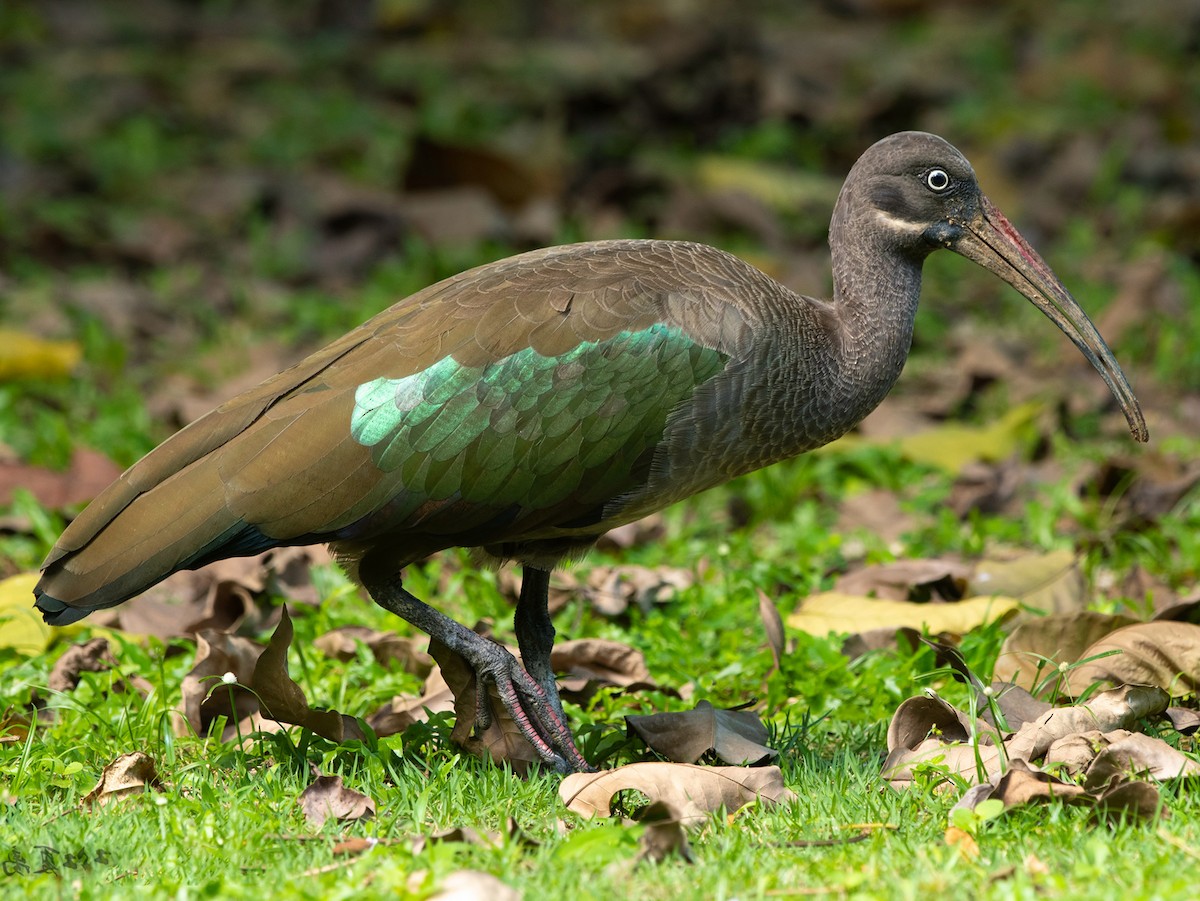
Hadada ibis is the noisiest Uganda ibis species and announces its presence with its loud, three-note call. This large, dark brown ibis with iridescent wing patches inhabits grassland, gardens, and forest edge habitats. The hadada ibis call is one of the most characteristic sounds of Uganda mornings at safari lodges. Uganda safari camp gardens hold resident hadada ibis pairs that forage on the lawns from dawn. Hadada ibis calls at first light often serve as the unofficial wake-up call at many Uganda lodges. Finding this Uganda ibis species requires no effort at any Uganda safari lodge with a garden.
Hadada ibis is the only Uganda ibis species that successfully inhabits the urban Kampala environment. Garden suburbs around Kampala hold large resident hadada ibis populations year-round. The species adapts well to irrigated garden lawns that provide earthworm-rich foraging conditions. Kampala visitors encounter hadada ibis in hotel grounds without any national park visit. This urban adaptability makes hadada ibis the Uganda ibis species most familiar to Ugandan residents. The jarring call remains equally startling whether heard in a national park at dawn or in a Kampala suburb at 06:00.
African Spoonbill Uganda Ibis Species
African spoonbill is technically a member of the ibis family and relates closely to the true Uganda ibis species. It is included in Uganda ibis species field guide sections due to this family relationship. African spoonbill inhabits the same shallow wetland habitats as the Uganda ibis species. The Kazinga Channel holds resident African spoonbill pairs that feed at productive shallow sections. Lake Mburo and Lake Edward also hold African spoonbill at the wetland margins. Murchison Falls boat trips produce African spoonbill records at river sandbanks and mudflats along the Nile route.
African spoonbill feeds by sweeping its spatula bill through shallow water in a side-to-side motion. This distinctive feeding behaviour immediately identifies the species in any mixed Uganda ibis species group. African spoonbill requires water depths of less than 30 centimetres for efficient feeding. The Kazinga Channel sandbanks exposed during the dry season provide ideal African spoonbill feeding habitat. Large groups of 10 to 20 African spoonbill gather at productive sandbank feeding areas. These groups provide extended Uganda ibis species photography sessions at close boat approach distances on the Kazinga Channel morning trip.
Glossy Ibis Uganda Ibis Species
Glossy ibis is the smallest Uganda ibis species and resembles the other ibis species in shape. Its iridescent dark plumage distinguishes it from the white sacred ibis and brown hadada ibis. Glossy ibis occurs in small groups at Uganda wetland margins and flooded grassland areas. Lake Mburo National Park and Lake Bunyonyi hold glossy ibis at suitable shallow feeding areas. This Uganda ibis species is a partial migrant and is more common in Uganda during certain seasonal periods. Glossy ibis numbers at Uganda sites peak during the rains when flooded grassland provides ideal shallow feeding conditions.
The Murchison Falls floodplain grassland holds glossy ibis in the wet season months. These flooded plains attract large mixed waterbird concentrations including glossy ibis, open-billed stork, and various Uganda heron species. A wet season drive through Murchison’s northern floodplain produces a mixed Uganda ibis species and waterbird encounter unmatched in the dry season equivalent. Visiting Murchison Falls during the October to November wet season adds glossy ibis and flooded grassland waterbird diversity to the standard north bank game drive programme. This seasonal variation provides Uganda repeat visitors with a completely different wildlife experience from their previous dry season visit.
Plan Your Safari
Book a Kazinga Channel morning boat at Queen Elizabeth National Park for the most reliable Uganda ibis species encounter. Look for hadada ibis in every Uganda safari lodge garden at dawn each morning. Visit Lake Mburo for glossy ibis and spoonbill at the lake margins during an afternoon game drive.
African Wild Trekkers includes Uganda ibis species boat trips and garden observation briefings in all safari itineraries. We identify the most reliable Kazinga Channel sections for spoonbill and sacred ibis and time the morning boat for the best feeding activity.
Contact African Wild Trekkers to encounter Uganda ibis species on your safari. We respond within 24 hours and design Uganda waterway itineraries that include the full range of ibis family species at Uganda’s finest wetland and lake sites.